An on the road trip along the Silk Road through opulent architectures, majolica tiles, desert, mountains and Soviet brutalism
Impressive, massive, opulent.
Uzbekistan cultural heritage is colossal.
Placed in the Silk Road nodal point and therefore crossroad of goods and merchants and bridge across Europe and Asia, Uzbekistan was home of some of the most bustling trade cities, whose appeal and charm didn’t go lost.
For over 1,400 years the Silk Roads connected the West and the East, allowing merch (no, not only silk) and cultures exchange. Uzbekistan was a nodal point and over the centuries it acted like a collector of civilizations, customs and traditions that merged together in the diverse and attractive culture we encounter today.
The ones that once were colorful, hustling, caravan cities, today are majestic testimonies of a glorious past and evidence of the willingness to become the new must-be tourist destination.
The itinerary: from Khiva to Tashkent
The trip starts in Khiva, next to the Urgench airport, that connects Uzbekistan with many European and Asia destinations. From Khiva the itinerary goes towards Bukhara, Samarkand and it reaches the Capital Tashkent.
First stop: Khiva
Khiva is the smallest and most picturesque city of the Uzbek Silk Road itinerary. Sitting at the outskirts of the desert, the town once served as an oasis and today welcomes the numerous tourist who aim to cross the Silk Road.
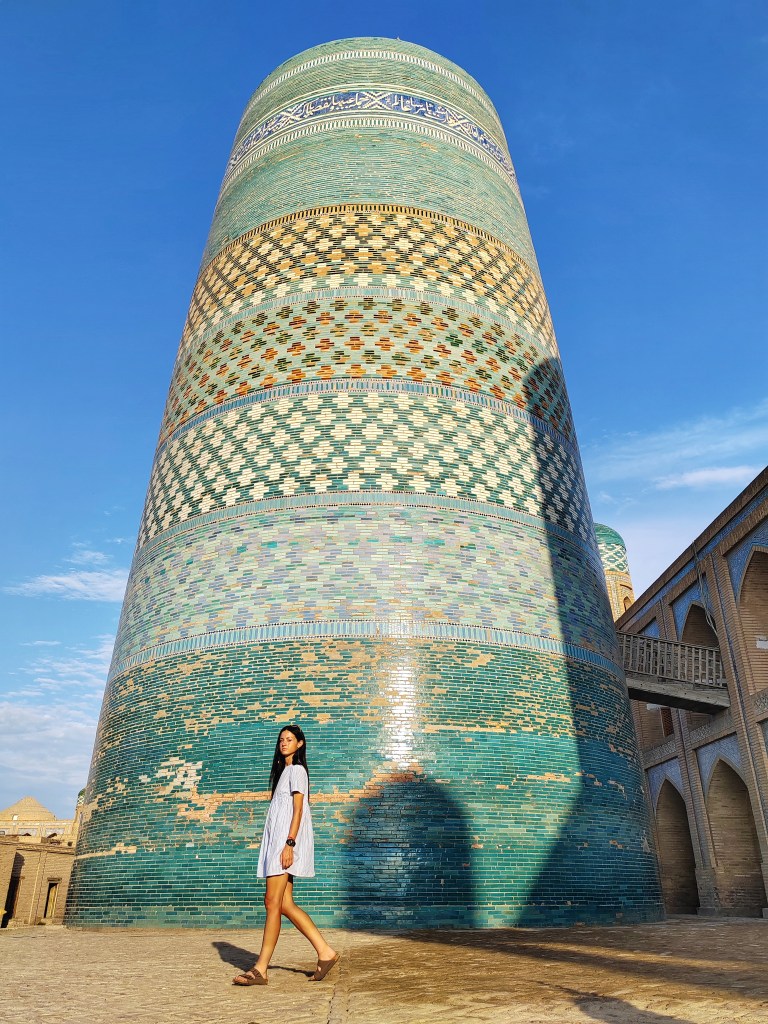
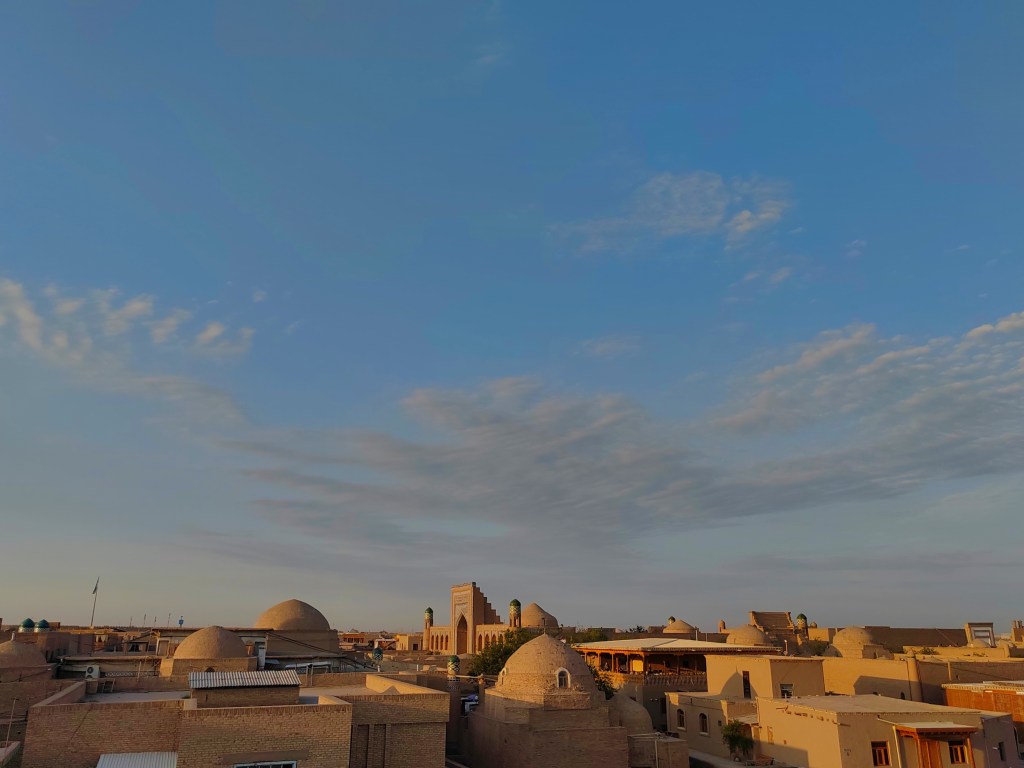
One of the many Minarets of the stunning Itchan KhalaThe view from the old walls surrounding Khiva, enjoy a walk up here at sunsetOne of the many stunning Uzbek sunsets, here in Khiva
The inner fortress of Itchan Kala, Unesco World Heritage, will surprise you and serve as an appetizer of the many adorned and magnificent architectures you will encounter during the journey.
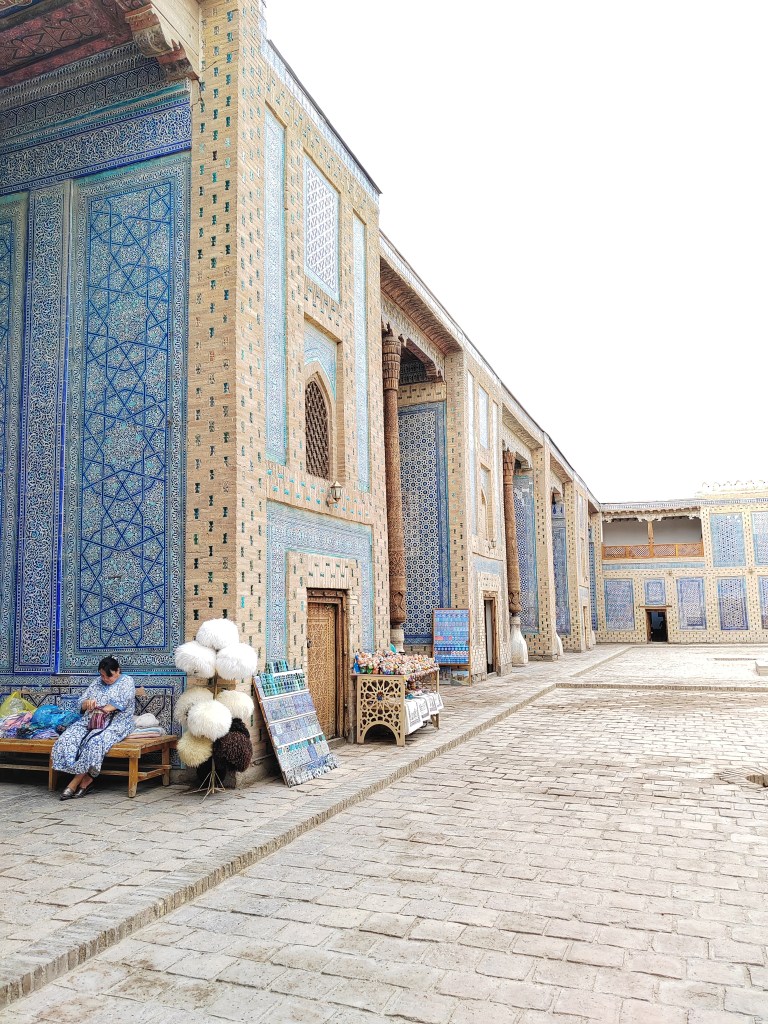
Strolling around Khiva you will be faced for the first time with the many Madrassas, Minarets and Palaces neatly decorated with the distinctive majolica tiles. The town is small, relaxing, and almost too much perfect. This is a feeling sometimes had during the trip: monuments and streets often look too perfect. From one side the restauration processes went deep, giving back perfect antiquities that sometimes seem to lack of that decadent authenticity I am used to. From the other side perfection is part of the Uzbek being: roads, gardens, public spaces and markets are the neatest I ever seen. You won’t see a withered flower in one of the many flourishing gardens you will encounter, neither a spiderweb nestled up on a streetlamp, as for every public property there is a team of people looking after it.
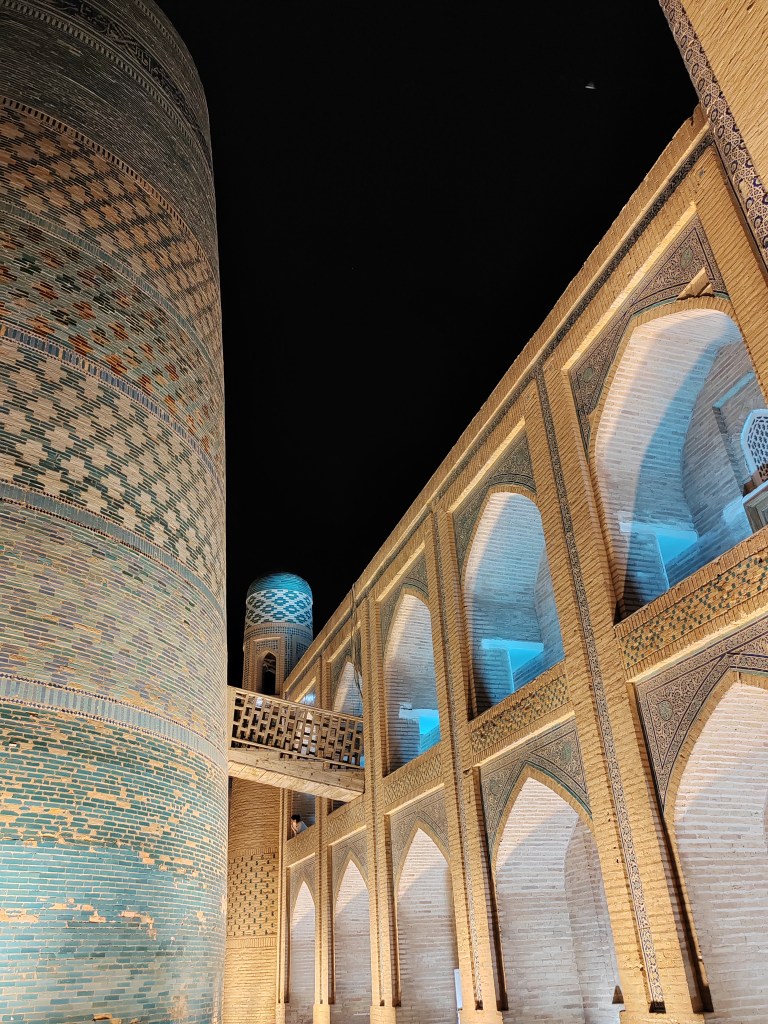
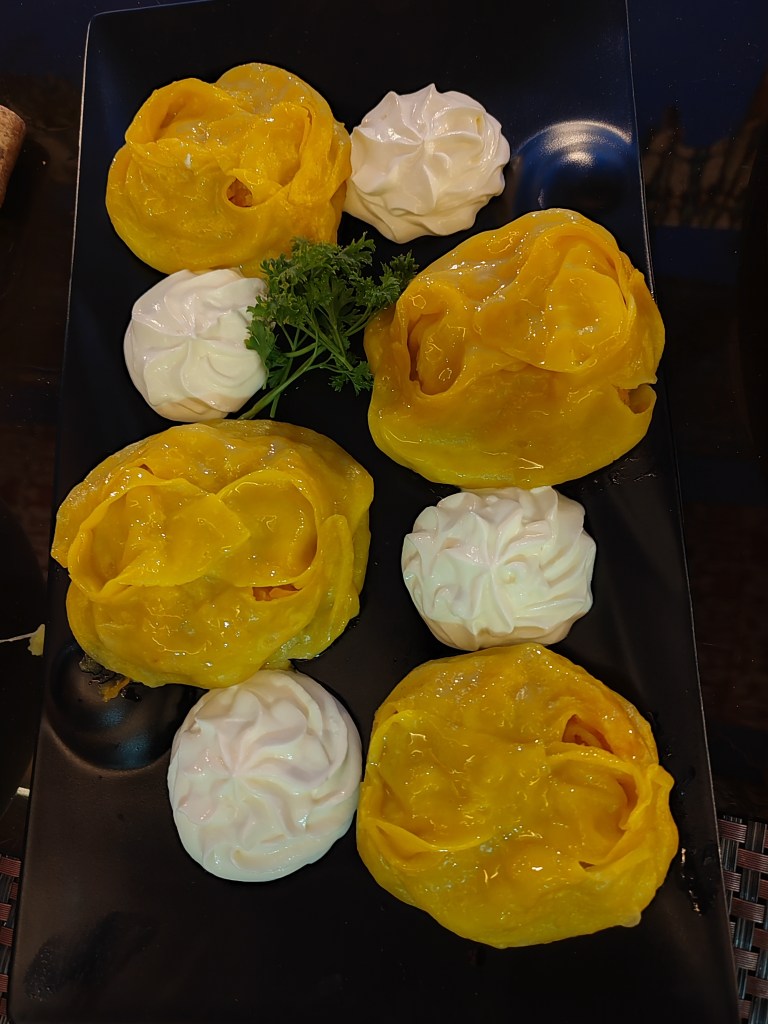
In Khiva you must take a stroll on the city walls, enjoying the sunset from there and head to dinner at the Terrassa Cafè, a tourist restaurant with a lovely terrace, traditional food and also a good vegetarian selection, such as the pumpkin manti, the vegetarian version of the popular dumplings. In the night Khiva turns even prettier: the Itchan Kala is lightened to perfection and light decorations aren’t too invasive, making it very pleasant.
A fine example of Majolica tiles work in Khiva Itchan KhalaThe view from the Terrassa Cafè, reccomended diningKhiva at night: the light work is descrete and very armoniousThe traditional Manti (dumplings) here in their vegetarian variant, filled with pumpkin
From Khiva to Bukhara
To travel from Khiva to Bukhara you have two options: a train only taking 8 hours or a 5 to 6 hours drive through the Kyzylkum, the Uzbek red sand desert. The road isn’t always flawless, but never dramatic and the drive gives you the chance to stop and take in the scenery.
In the Kyzylkum you can also experience a night in one of the many Yurt camps, I skipped this part as I relegated the naturalistic visits to the second part of the trip as from a first look Kyrgyzstan offered more authentic experiences of this kind. Driving through the Kyzylkum I do not regret the decision as the desert looks less exciting than the ones I already visited like Sahara or Wadi Rum. A deviation towards the Aral Lake would have been more interesting, but I had to leave it outside due to the limited time available.
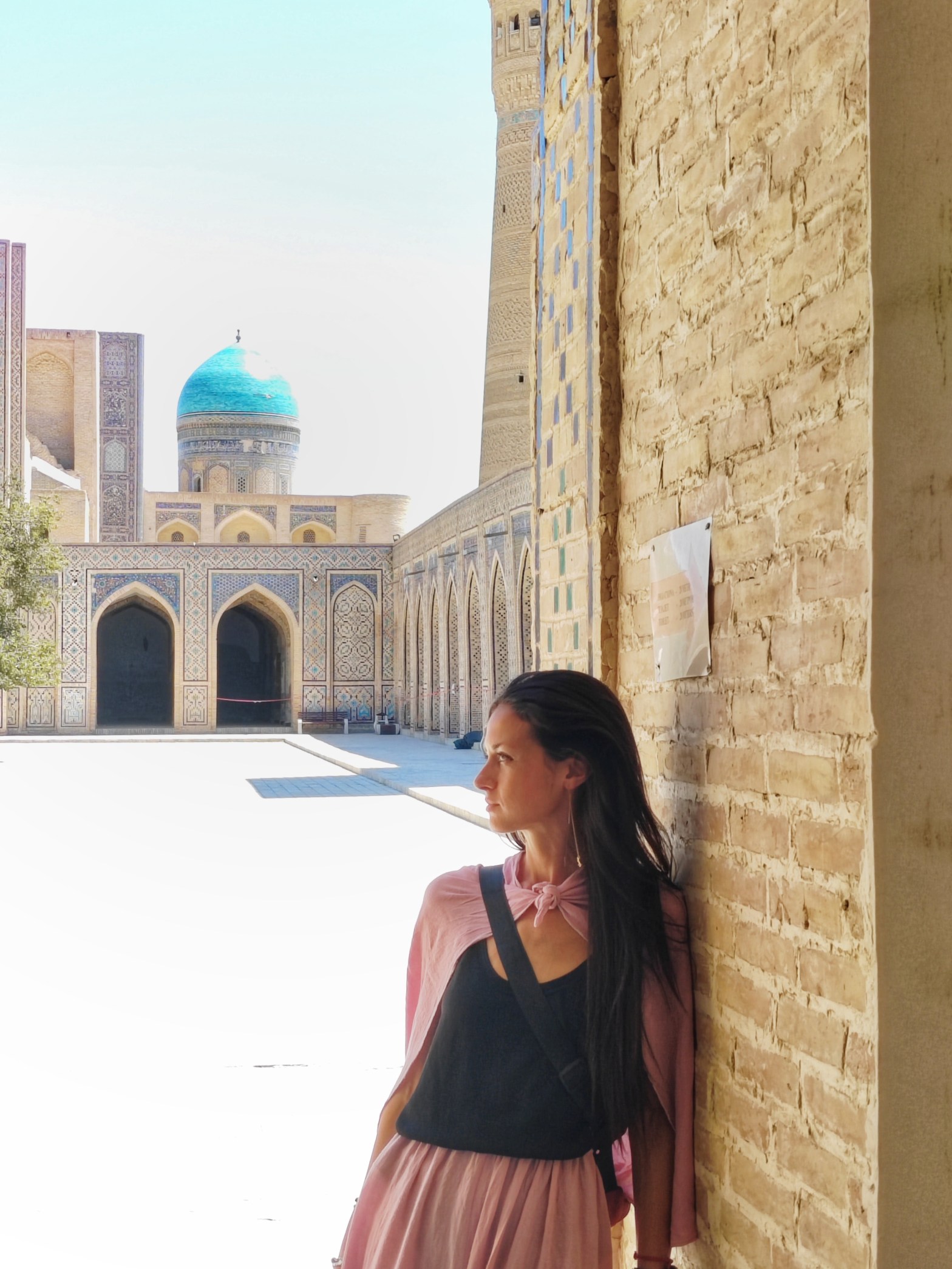
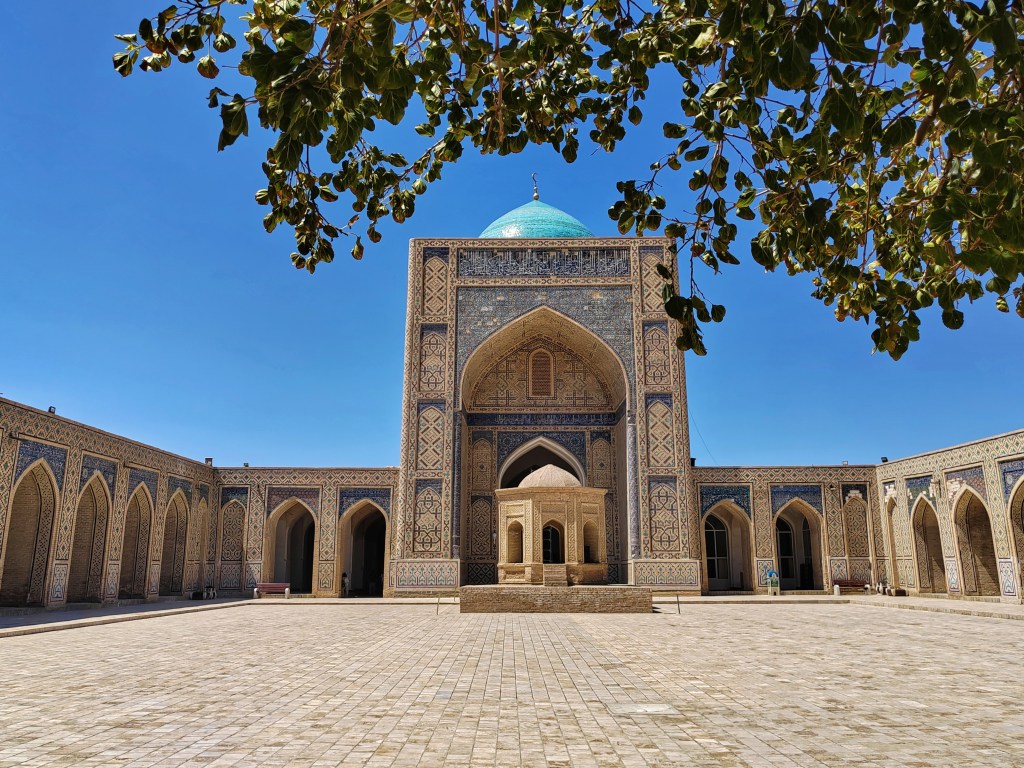
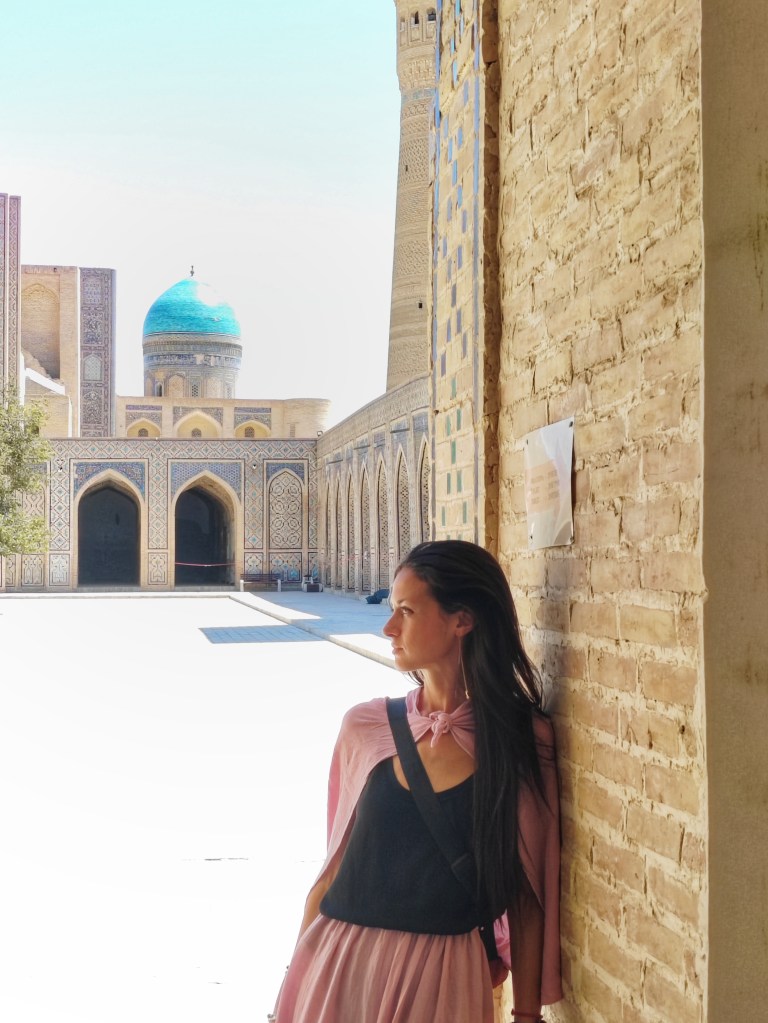
Bukhara is larger than Khiva and smaller and easier to explore than Samarkand. Despite having still limited dimensions, the city is packed with must-see buildings, starting with the beautiful complex of Poi Kalyan, the Ark Fortress, Labi Hauz complex, but also Faysulla Khojayev House and the Markaziy Bazar.
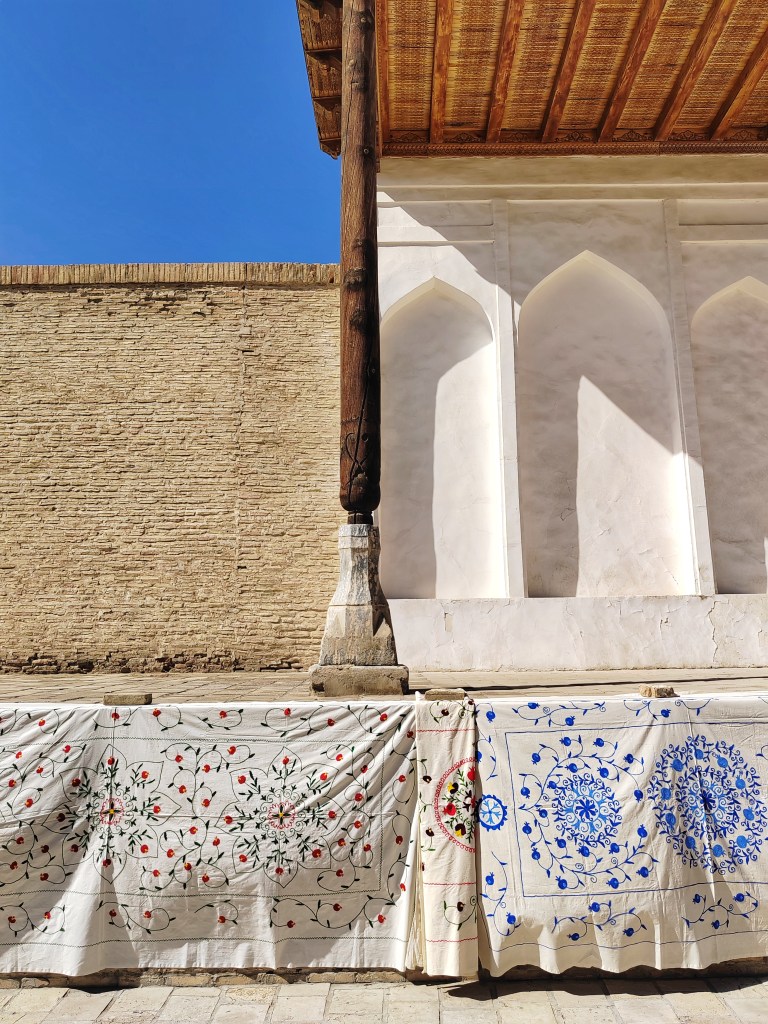
The Poi Kalyan complexExploring the Poi Kalyan old MadrassaTraditional embroidery on table cloths on the display in the Ark Fortress
A few words on Uzbek bazaars
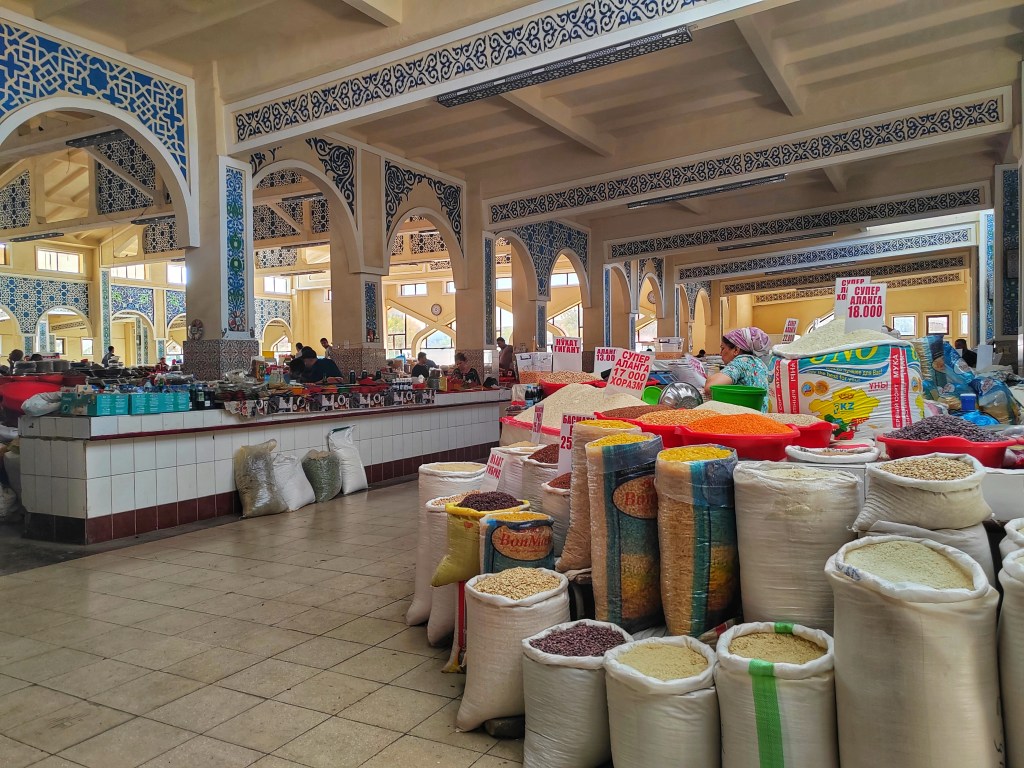
The Bazaar denomination might lead some to misleading as it brings to memory some of the chaotic, noisy, messy and crazy bazaars you might have visited. The only thing Uzbek (and Kyrgyz) bazaars have in common with this imaginary is being bazaars and selling the same goods categories. In Uzbekistan bazaars are neat lines of stalls, ordered, clean, with food diligently covered or refrigerated and uninvasive vendords, you will be surprised.
Bukhara centre is very touristic, for dinner I recommend the new Joy Chaikhana Lounge that sits in what was an old Caravanserai (I love that in almost every language the word Caravanserai is similar, testifying how many roots we all have in common).
Just like Khiva, also Bukhara is all lightened by night, even if the light designer might have exaggerated a little bit. I prefer a more discrete lighting, but the bright blue and orange lights are for sure eye-catching.
Extra tip: on the look for antiquities
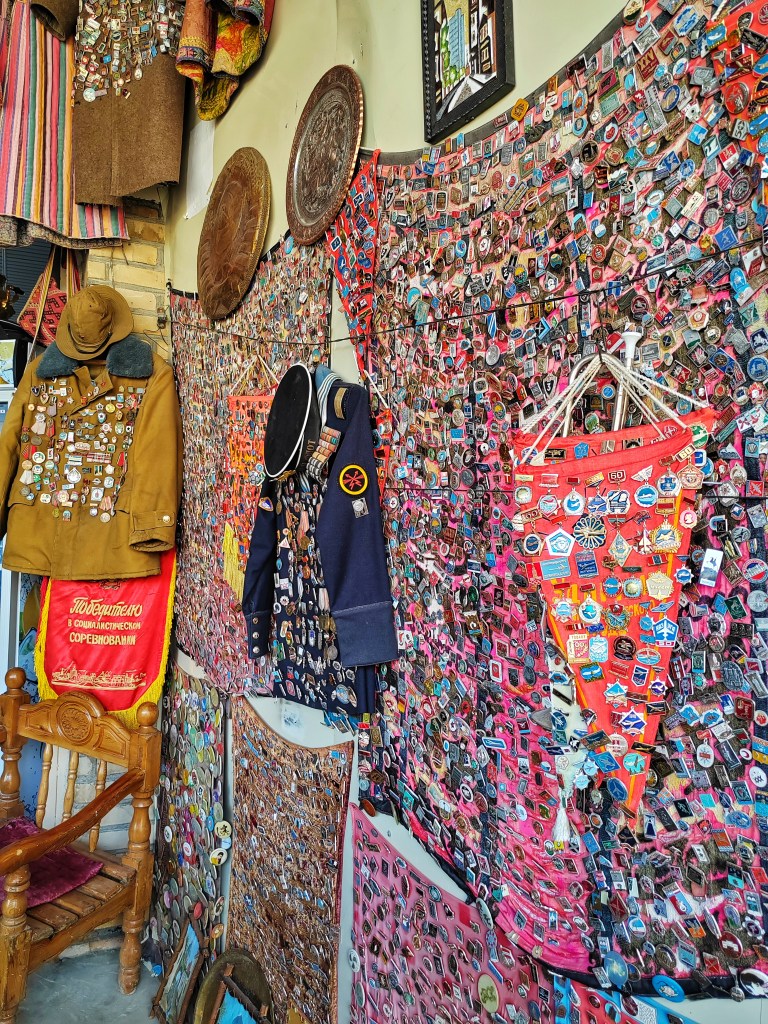
If you like thrifting, flea shops and antiquities, in front of the Chor Minor Madrassah you will find the shop perfect for you. Don’t forget to negotiate the price.
The Markaziy Bazaar in Bukhara, here you can find fruit, spices, pickles, dried fruits and traditional food stalls The restaurant Joy Chaikhana Lounge that is located in an old CaravanseraiSoviet pins and ornaments at an antiquity shop situated in front of the Chor Minor Madrassa
From Bukhara to Samarkand: a stop in Shakhrisabz
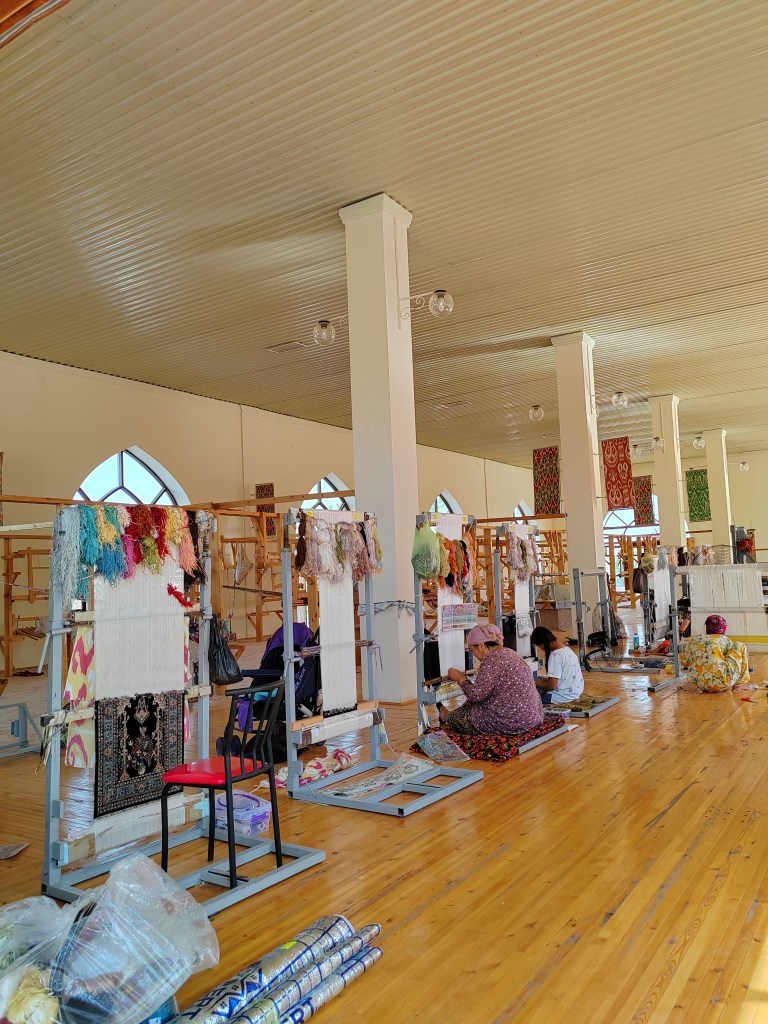
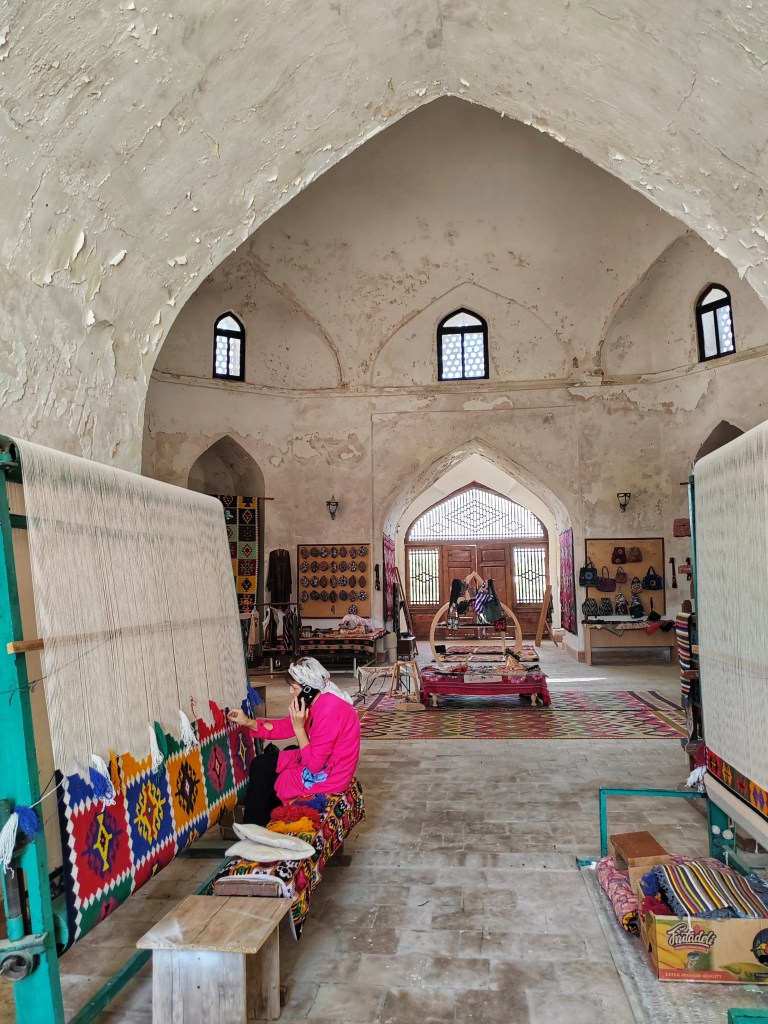
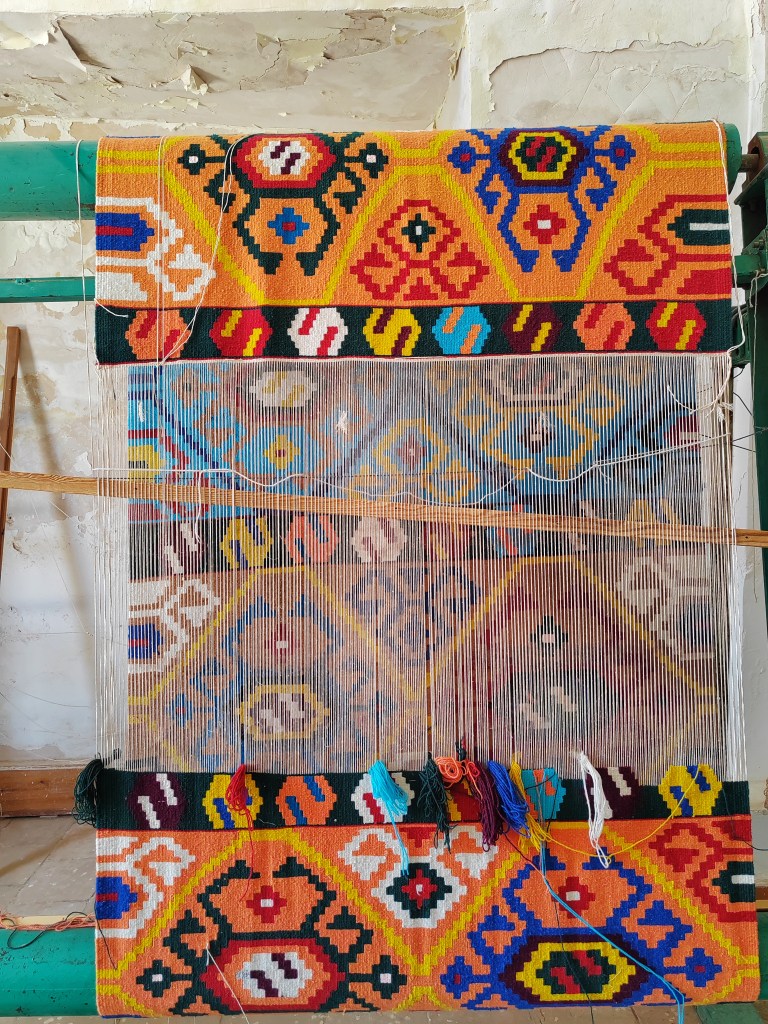
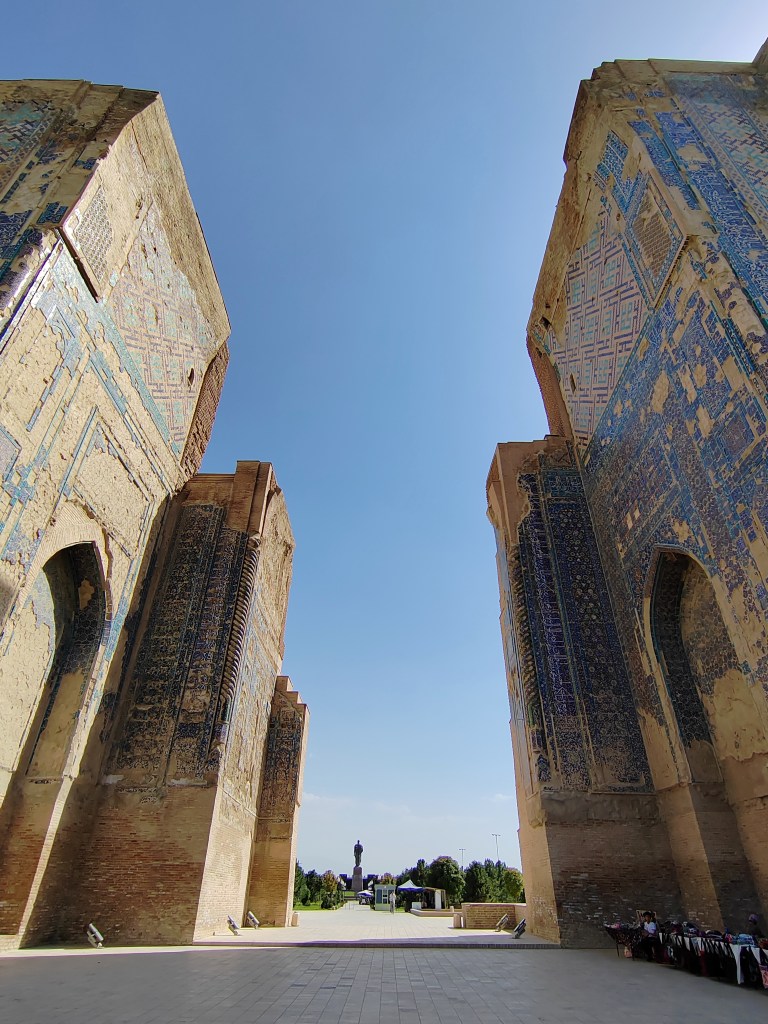
On the way towards Samarkand, I suggest a stop in Shakhrisabz for two main reasons: it is one of the few cases in which you can admire ruins that have not been restored yet and it offers the opportunity to have the most authentic shopping experience in Uzbekistan. Indeed, in tourist destinations where of course mass-produced souvenirs prevail, it can be hard to spot more authentic goods. In Shakhrisabz strolling in the park that brings towards Amir Temur statue, I stumbled upon a women workshop producing the finest silks and cottons and crafting hand-made clothing sold at a very fair price. Next to it, a smaller carpets workshops with a few women working on beautiful rugs. If you want to bring home something truly valuable, go to Shakhrisabz and look for them.
The finest hand made silk and cotton clothing in ShakhrisabzThe women workshop producing fine fabrics Another women workshop in Shakhrisabz, here manufacturing carpetsThe traditional Uzbek carpets, manufacturing a carpet like this takes weeks
Samarkand
Samarkand is the biggest Uzbek Silk road city. Once capital of Uzbekistan, it features the dreamiest ancient buildings and vibrant modern areas.
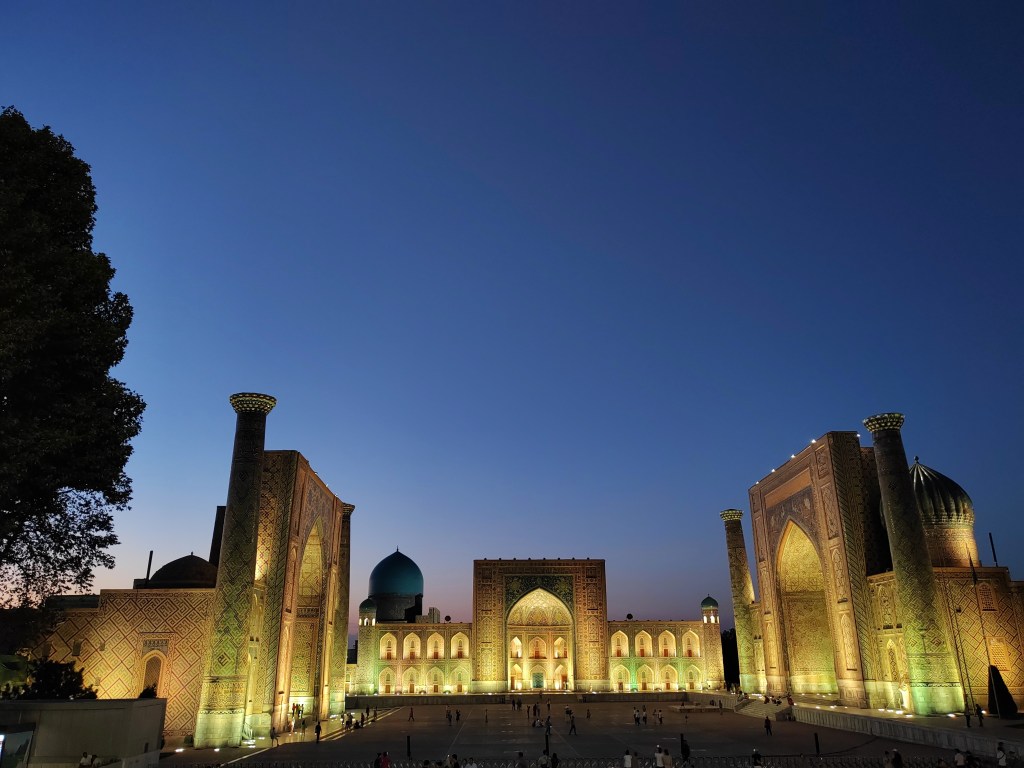
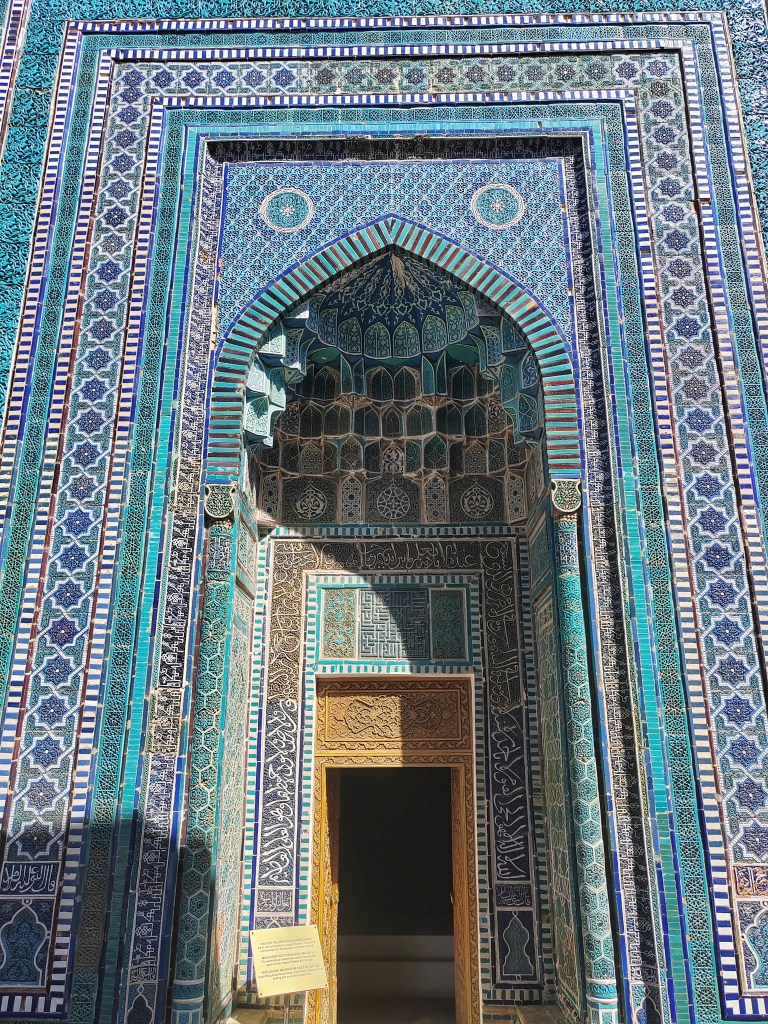
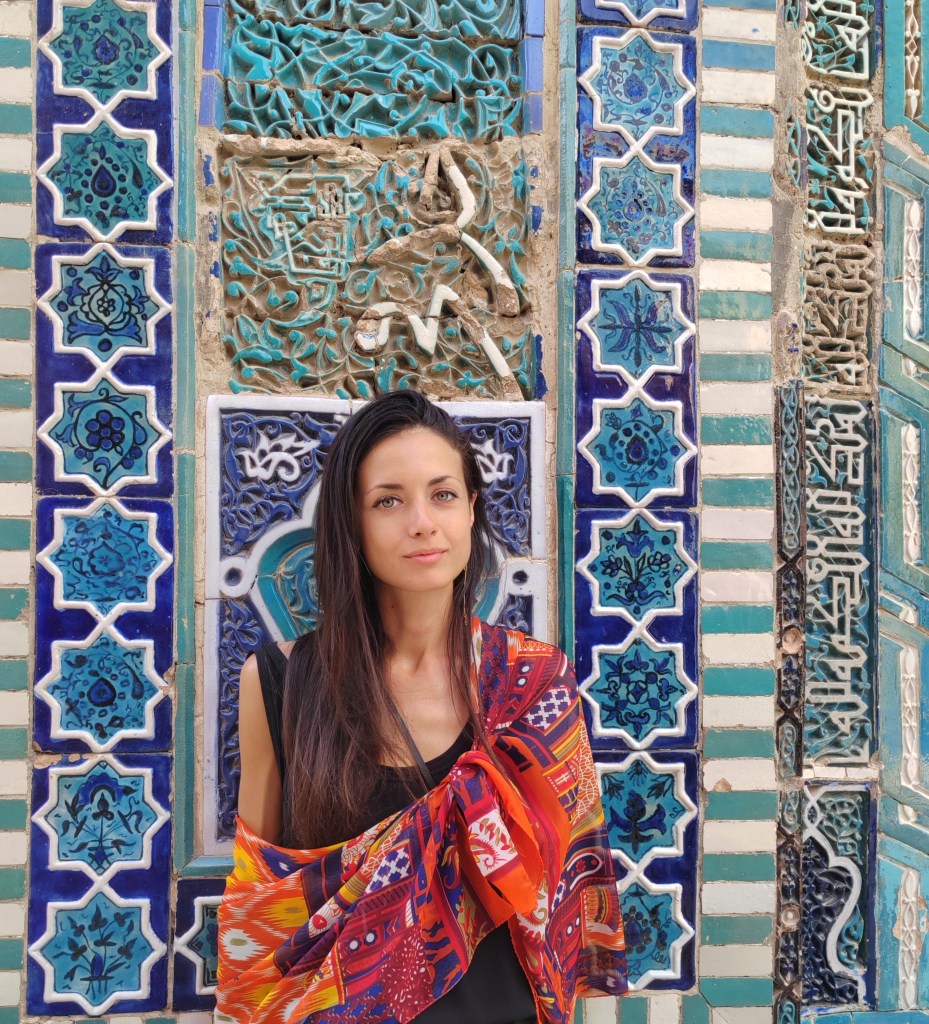
The Registan is probably the most famous Uzbek landmark, and with a good reason. It is immense and massive, with that magnificence that makes you feel very small. From the outside it is an opulent golden and light blue masterpiece that gives its best at sunsets and during the night, right from the stairway facing it. Honestly, I found it way better from far than from inside. As the many complex visited, the souvenir stalls fill every corner of the old buildings and the restauration process in some bits it is a bit too invasive, but admiring it in its whole is one of those moments and feelings you will bring with you for a very long while. Among the many monuments, what absolutely left me speechless in Samarkand is the necropolis Sha-i-Zinda, the finest tilework I have ever encountered.
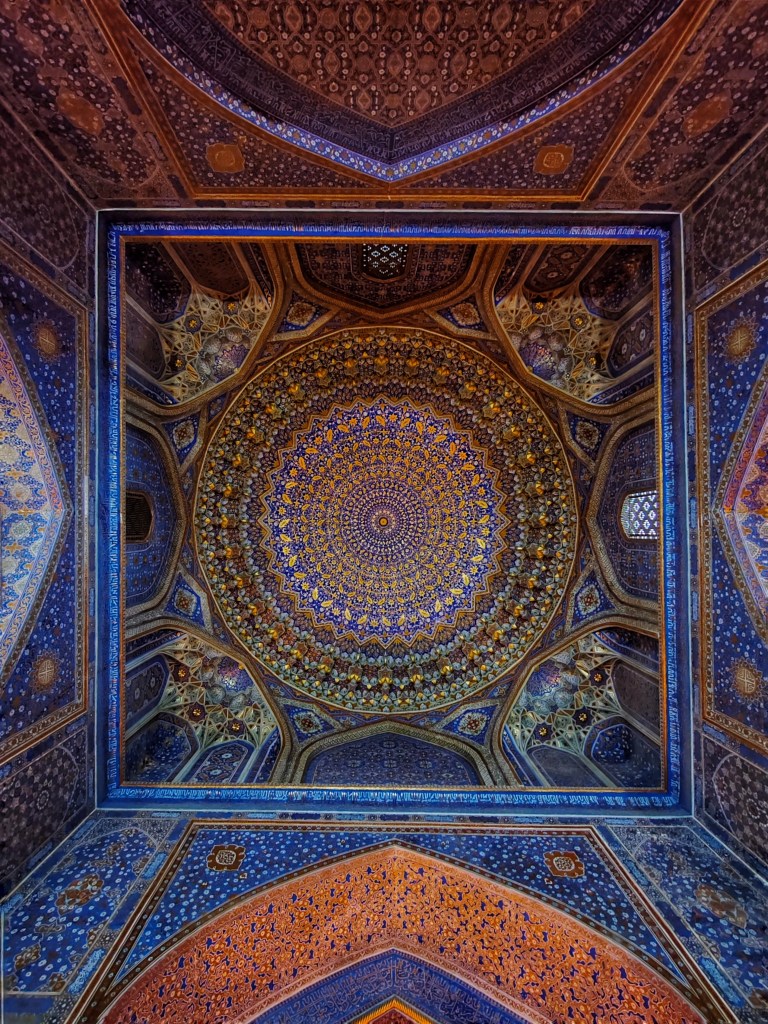
The stunning Registan in Samarkand in the evening A detail of the Sha-i-Zhinda necropolis The roof of one of the many ancient Mosques of SamarkandThe Sha-i-Zhinda complex in Samarkand Ruins of the old Shakhrisabz palace, one of the few examples of non-restored building
Beyond the monuments, a visit to the Siyab bazar is highly suggested. Here you can find spices, dried fruits (try the famous salty apricot pits and the dried melon), pickles and the world-famous Samarkand bread. There are also some food spots to taste one of the many traditional dishes, such as the plov (rice topped with meat).
A Sovied ice-cream digression
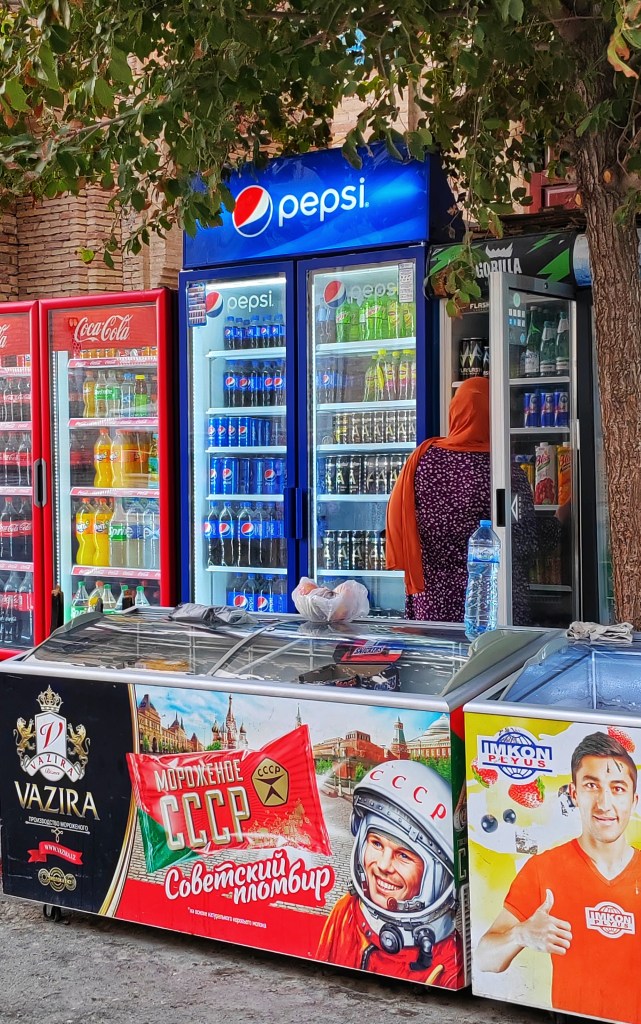
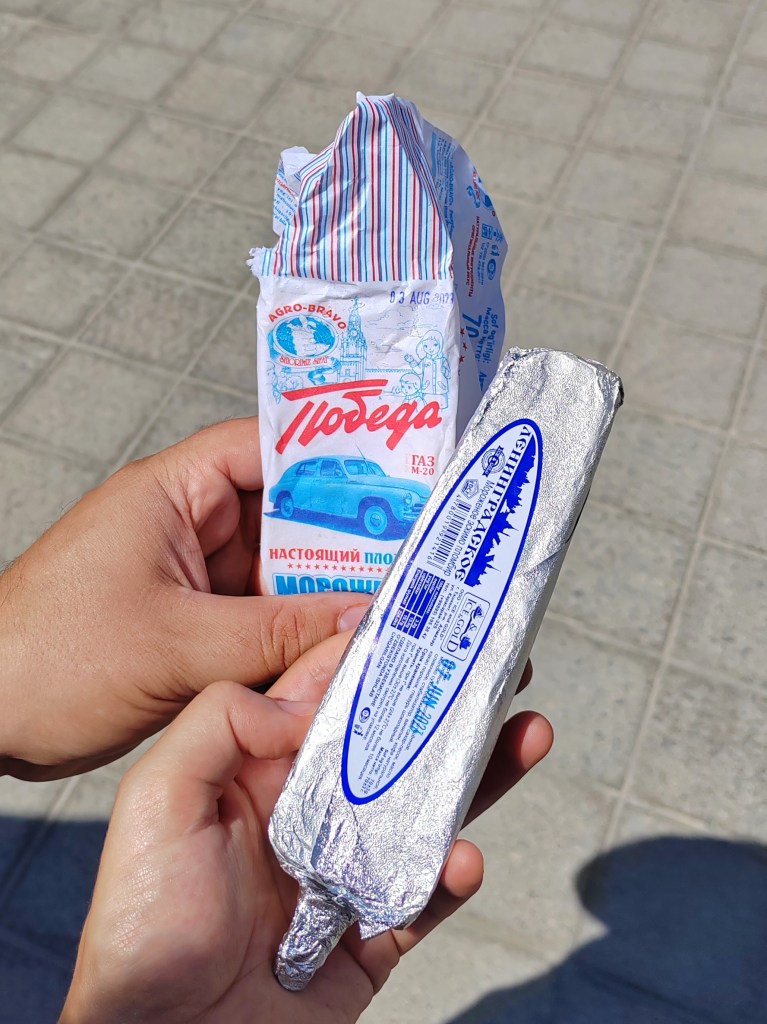
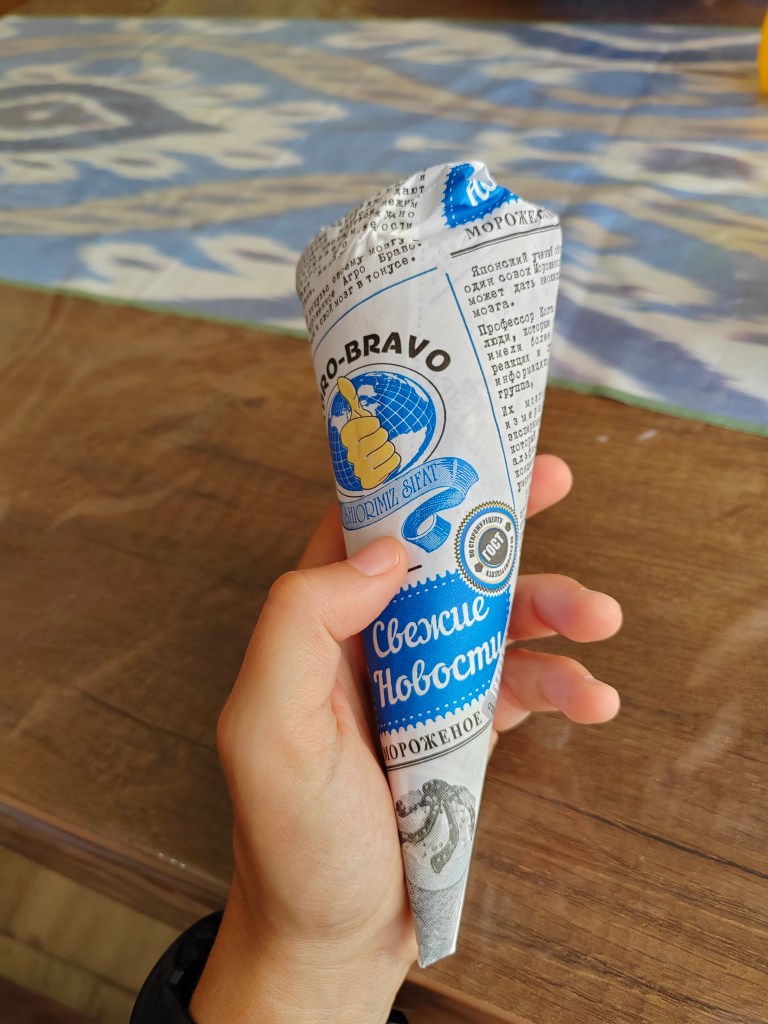
CCCP Ice-creams are very popular in Uzbekistan Winking to the Soviet past with vintage ice-cream wrapsSoviet style wrapping: ice-cream cone in vintage paperPlombir was considered to be finest ice-cream in Soviet Union, it is indeed delicious
Speaking of food, for me the biggest discovery of the holiday was the omnipresent Soviet style ice-cream. In the Soviet Union Ice-cream was renowned to be extremely good and it was so popular and beloved that even after the fall of the Union, its popularity never decreased. On the contrary, it grew even bigger in recent times and that’s why many brands commercialize soviet-style ice-creams with packaging and advertising that wink to the past. From the gelato lover I am, I can confirm that the soviet style ice-creams wrapped up in nostalgic thin papers are delicious, especially the Plombir. Here explained why almost every brand of ice-creams has CCCP logo, Gagarin face, vintage wraps. And it’s kind of curious that in a Country that, opposite to the near Kyrgyzstan, decided to hide well its recent history, Soviet ice-creams are so well advertised everywhere: modern World dissonances or proof that gelato is upon everything?
Samarkand deserves a long stop, indeed the city is full of discoveries and things to do, including wine tasting (I have tested better wines and whiskys, but it was fun to try something slightly different), a visit to the old and relaxing paper mill in Konigil (I was sceptic, but it was worth it) and a visit to the Ulugbek Observatory, that in the Middle Ages missed just slightly the length of the star year.
The modern roads are wide and surronded by well-kept gardens, a walk through this part of the city and its shops and bars is very pleasant, for dinner you can opt for a restaurant in this area, such as the Restaurant Platan.
Last stop:Tashkent
The quickest way to travel from Samarkand to Tashkent is with the high-speed train. In three hours you will be transported from the gold opulence of the old Khan Palaces to the Soviet brutalism. Many say in Tashkent there isn’t much to see, it is not true. Tashkent is a big and diverse city, even contradictory in some bits, for me a must-see to live the Uzbek life and understand this land better. Tashkent is a melting pot of the different historical eras Uzbekistan experienced: from the Central-Asian and Islamic tilework Mosques, to the vibrant bazaar, the huge Soviet buildings and the contemporary luxury shopping avenues. It is a city with different souls and nuances where all Uzbekistan souls meet.
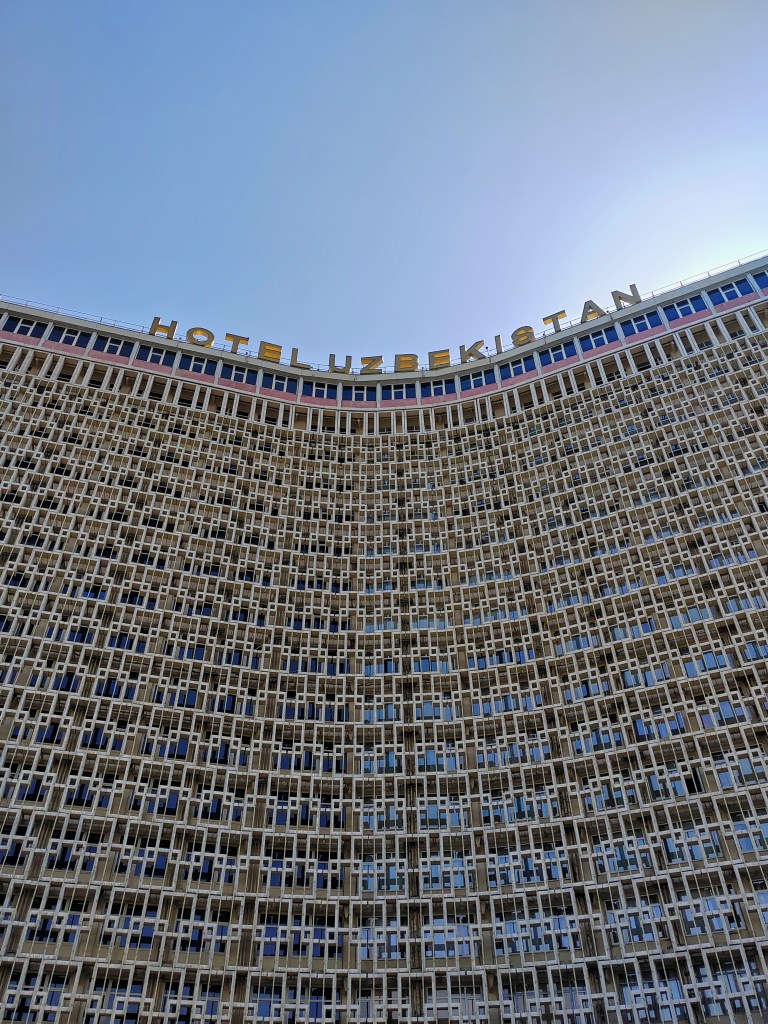
After the ancient ruins binge of the trip, I was looking forward to discovering different architectures and I immediatly pointed towards the brutalist buildings of the Capital, such as the giant Hotel Uzbekistan, the Chorsu Bazar and the building now hosting the Museum of History of Uzbekistan. Also some Underground stations are worth a visit, especially the Kosmonavtlar.
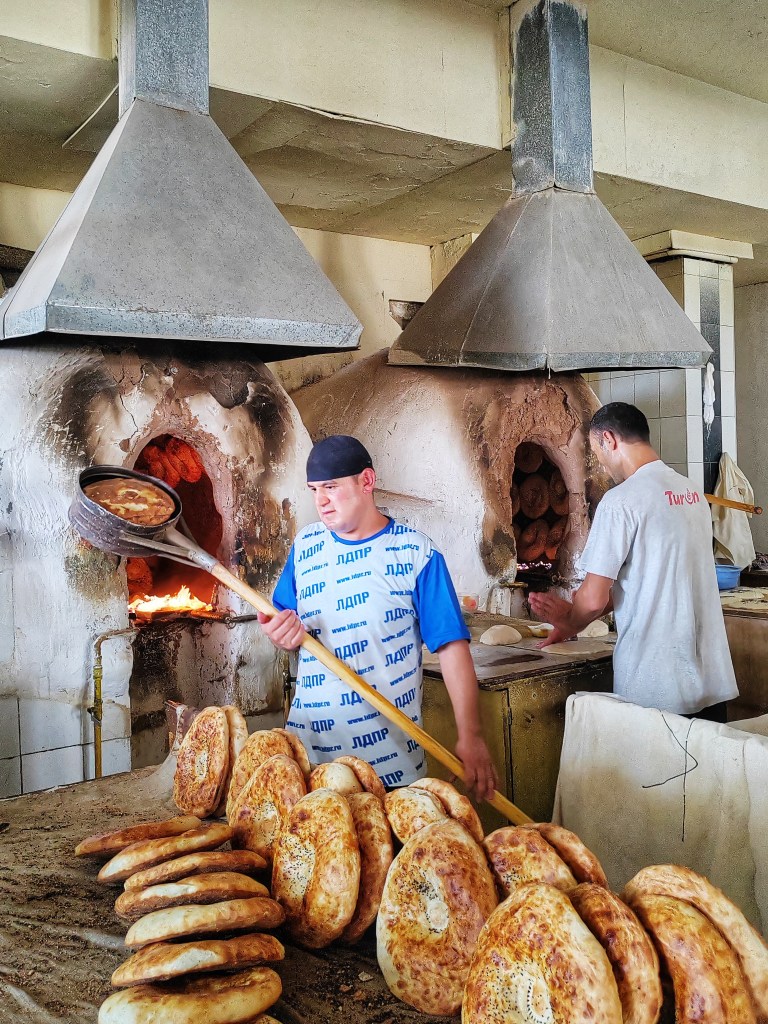
The majestic Hotel Uzbekistan: fine example of Brutalism Architectures in TashkentThe Chorsu bazaar: brutalist architecture and buzzling market Traditional Uzbek bread in the making, here at Chorsu Bazaar in Tashkent
Make sure to take your time to enjoy a walk in one of the beautiful parks of the city and to explore the Chorsu Bazar, in particular its bakery section, where you can see how Uzbek traditional breads are made (beyond tasting it, of course). The bazaar is huge and it also hosts a whole building dedicated to gold shops, as well as food sections.
During nights the city is very animated with night life lighting up different areas, to each their own.
And well, it’s a wrap. After Tashkent you can either take a flight back home or… wait for part 2 of my trip and fly to Kyrgyzstan!
Useful informationabout Uzbekistans and answers to FAQs
Clothing – Uzbekistan it is a laic Country and there is no problem in wearing short clothes around, but in some monuments it is required to cover arms and legs.
Shopping and souvenirs – the traditional products to bring home vary from spices and dried fruits, to silk and embroidered items to carpets, copper and wood home decorations.
Safety – I often got asked “Is Uzbekistan safe?”. I am not sure why many people think it is somehow an unsafe destination, gut I can guarantee it is very safe and quiet
Food – Uzbek food it is based on one element only: meat. A lot of meat (mostly beef, but also lamb or goat), usually grilled on the skewers. If you don’t eat meat sometimes it can be difficult, but Uzbekistan has plenty of vegetables and juicy fruits, above all watermelons and melons and you can usually find some vegetarian options in more popular restaurants. Traditional dishes include plov (rice with meat), manti (dumplings filled with meat, in rare case vegetarian filled with pumpkin), salads (mostly tomatoes, cucumbers, carrots and cabbage salads), langman (noodles with meat) and the delicious Soviet-style ice-cream.
Drink – You can pair your meals with local beers and vodka or the widespread virgin mojito, but also with Georgian wines, that are very popular in the Country.
Payments – Credit cards (Visa and Mastercard) are rarely accepted, American Express is never accepted, remember to change some money or withdraw cash in the bigger cities
Mobile data – in the bigger cities you can easily purchase local SIM with unlimited data for around 15€









Loved your travelogue from a country that until now was a bit of a mystery to me.
LikeLike