The debate over disc brakes on road bikes has been going on for a long time (too long, if you ask me).
As every year during Grand Tours and after nasty crashes in the rain, the discussion resurfaces: are disc brakes truly better than rim brakes? Are they dangerous? Should we go back to traditional braking?
Disc brakes are an ordinary technological development, and as every new technology they collect enthusiasm as well as fierce criticism. But honestly speaking, disc brakes in road cycling are not even that new anymore, yet they still haven’t been accepted as a new standard. Why? For many reasons, but primarily because we don’t truly know them and their defense or criticism often revolves around a couple of standard topics.
So, what are disc brakes?
First of all, there are two types of disc brakes: mechanical and hydraulic. Hydraulic Disc Brakes are the ones we are talking about.
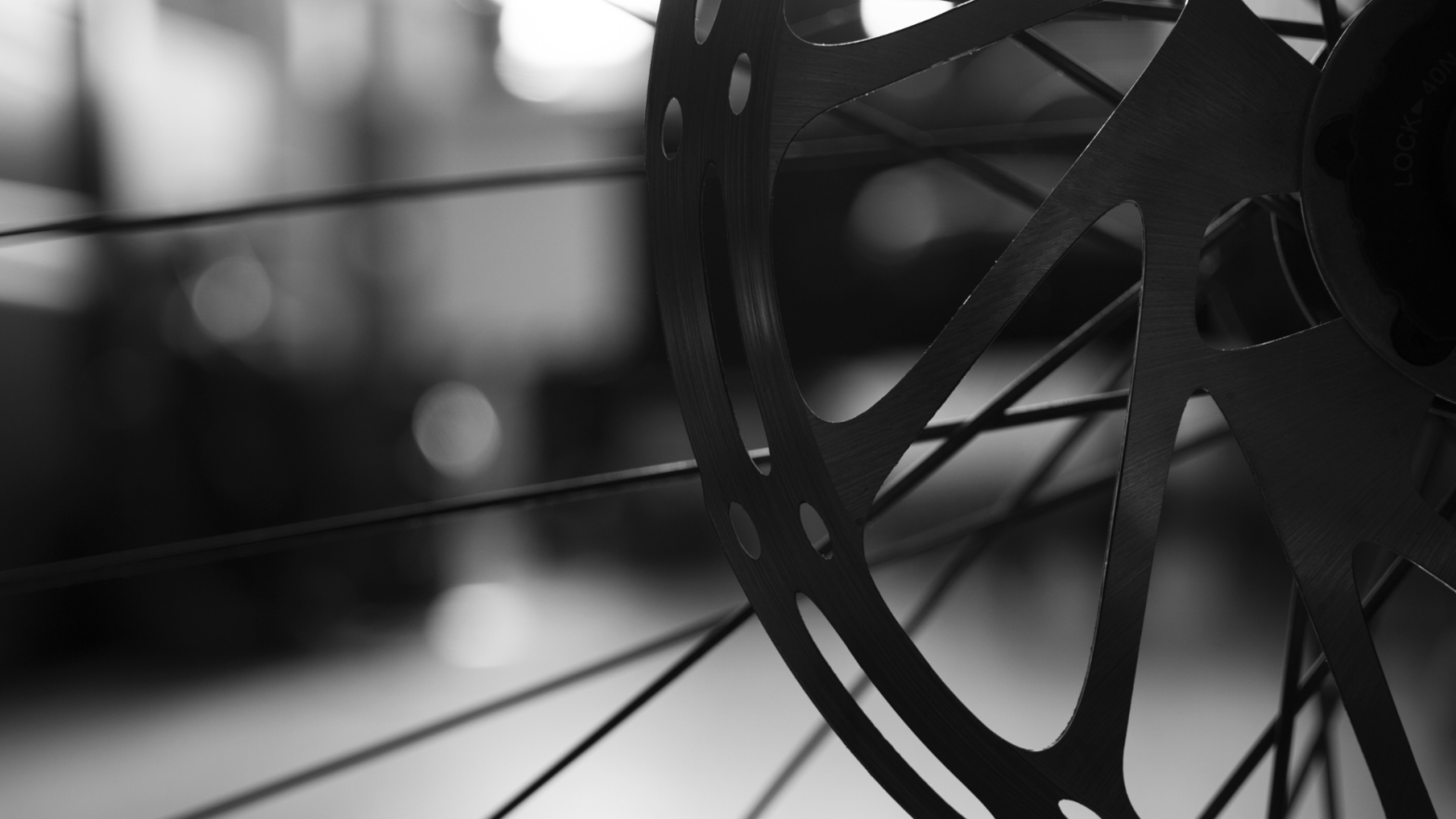
On our bikes we have two brake levers with pistons and hoses containing mineral oil or DOT fluid that go down towards the front and rear calipers. The calipers have 2 (or more) pistons each, attached to the pistons we have brake pads and finally the rotors.
To put it very simply, when we brake this is what happens: we press the levers and the pistons in the levers “push” the fluid in the hoses. Once at the calipers, the fluid pushes the pistons, that push the brake pads, that clamp the rotor and just like that we come to a stop or a deceleration.
There are many factors influencing braking, starting with some features of the braking system itself (such as rotor size, brake pads material and general quality of the components), but also with conditions (road surface, road gradient), the riders and their weight, the distribution of the weight, the speed, and so on. Braking is a very complex topic and it is easy to understand why cyclists give so much importance to their braking system.
Due to their configuration, disc brakes are more powerful than rim brakes. This means that if you want to stop in the same point with rim and disc brakes, with the latter you need to press the lever less. And if there is a car abruptly stopping in front of you, with disc brakes you have an higher chance to avoid a collision because braking distance is reduced. The reason is the better brake modulation they offer: thanks to disc brakes you can brake more precisely, in a more progressive manner and finally more efficiently, especially on low grip terrains such as off-road, gravel, mud and wet tarmac.
What does more power mean?
Crashes during the braking phase are very common and most of the time they happen due to the front wheel lock-up.
When you brake too hard and apply too much braking power, the brakes do their job and completely stop the wheels from spinning, locking them up. Lock-up of the front wheel is the most dangerous braking-related scenario. Indeed, it often leads to crashes. When the wheel locks up the braking power goes to zero. When it happens the body continues moving at the same speed, but when braking too hard, all the weight is transferred to the front wheel and here it is when you fly over the handlebar. Goodbye collarbone.
Theoretically with disc brakes lock-ups should be less frequent, because you have a better modulation and can better stop before the locking. But being more powerful and especially in dangerous or unexpected situations when you have to brake abruptly, it is easier to apply too much power and lock-up. Moreover, bikes are very light and the riders are much more heavier than the bike, the center of mass is higher and it is easier to fly over the handlebar.
It took a while, but we arrived to the core of the discussion. Does all this mean disc brakes are more dangerous? Do they cause more crashes?
No, disc brakes in itself are not more dangerous and they do not cause more crashes. If for 20 years you rode with rim brakes, probably at the beginning disc brakes will be more dangerous for you, but because you are not used to them and need to recalibrate your braking power, not because of the system itself.
From a technical point of view disc brakes are superior and more efficient. This doesn’t mean everyone must prefer disc brakes, but it is a matter of fact.
And now, what’s next?
I don’t know what technical developments wait for us. From a product point of view, I can see ABS becoming always more present on e-bikes and perhaps in mountain bike and with a more performance-oriented approach, but on road bikes I think braking systems will evolve in a different way and for the next few years the focus will remain on weight and design of the system.
Broadening the vision I can see some related trends coming up. Indeed, in a professional sport like road cycling where every detail matters (including every single gram of carb and the sock height), to me it is unbelivable how braking and in general riding technique, especially downhill, have never been taken into consideration with a more scientific approach. You won’t win Grand Tours thanks to an improved braking technique, but you could for sure have direct advantages and side ones, reducing the risk of crashes. Braking is still a grey area that I think will be addressed soon. In the last few years a couple of teams started dedicating a bit of attention to the topic with workshops during training camps, yet from what I know, no one has gone beyond that.
To me there is a lot of room for improvement and probably at the moment there isn’t much knowledge and expertise, but I can see some forward-looking teams starting to work on it, collecting and analysing data and working deeply and scientifically with cyclists, especially in ITTs and downhills. And if you think that might be too much, remember they are wearing head-socks under-helmets in 30 degrees.
Also thinking about the amateur scenario, I can see the trend of starting improving the riding technique in general. I find really surprising how many cyclists waste so many energies for a 0,5 w/kg improvement in a FTP test and they do not care about taking corners with flat feet. So yes, I can see training apps, coaching plans and similar starting to focus more on this side and hopefully with a scientific and data-driven approach.
And according to you, which trends are we going to see?


As an amateur, I care about durability as much (or even more) than performance. From this point of view, disc brakes seem to me a more natural choice for carbon wheels, since braking causes wear, and in the case of rim brakes, it is the wheel rim that is subject to wear. In terms of trends, I think (and hope) that a data-driven approach will form a fair recommendation system based on rider experience, goals and budget.
LikeLike