Planning a stay on Lecco Lake? Prepare your road bike and take notes, here five climbs you can’t miss (and some must-have recovery food!)
Lecco and Como are among the most famous tourist destinations in Northern Italy and I am lucky enough to live a ride away from them. Year over year I had the chance to ride some of the most renowned climb, that saw me at my best and more often at my worst. This is my personal classification of the rides you can’t miss.
#1 Madonna del Ghisallo
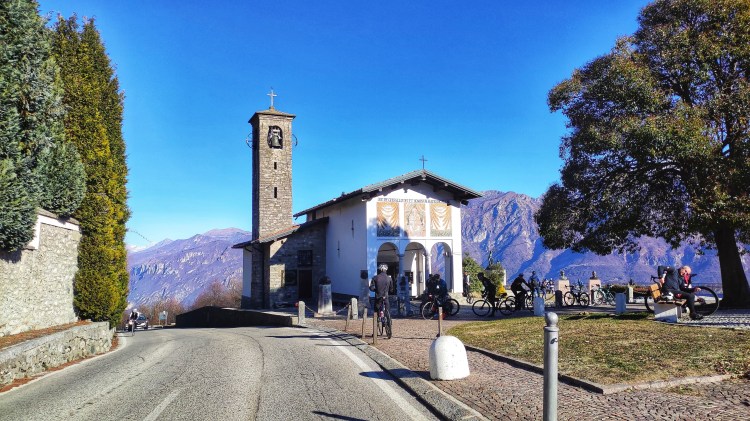
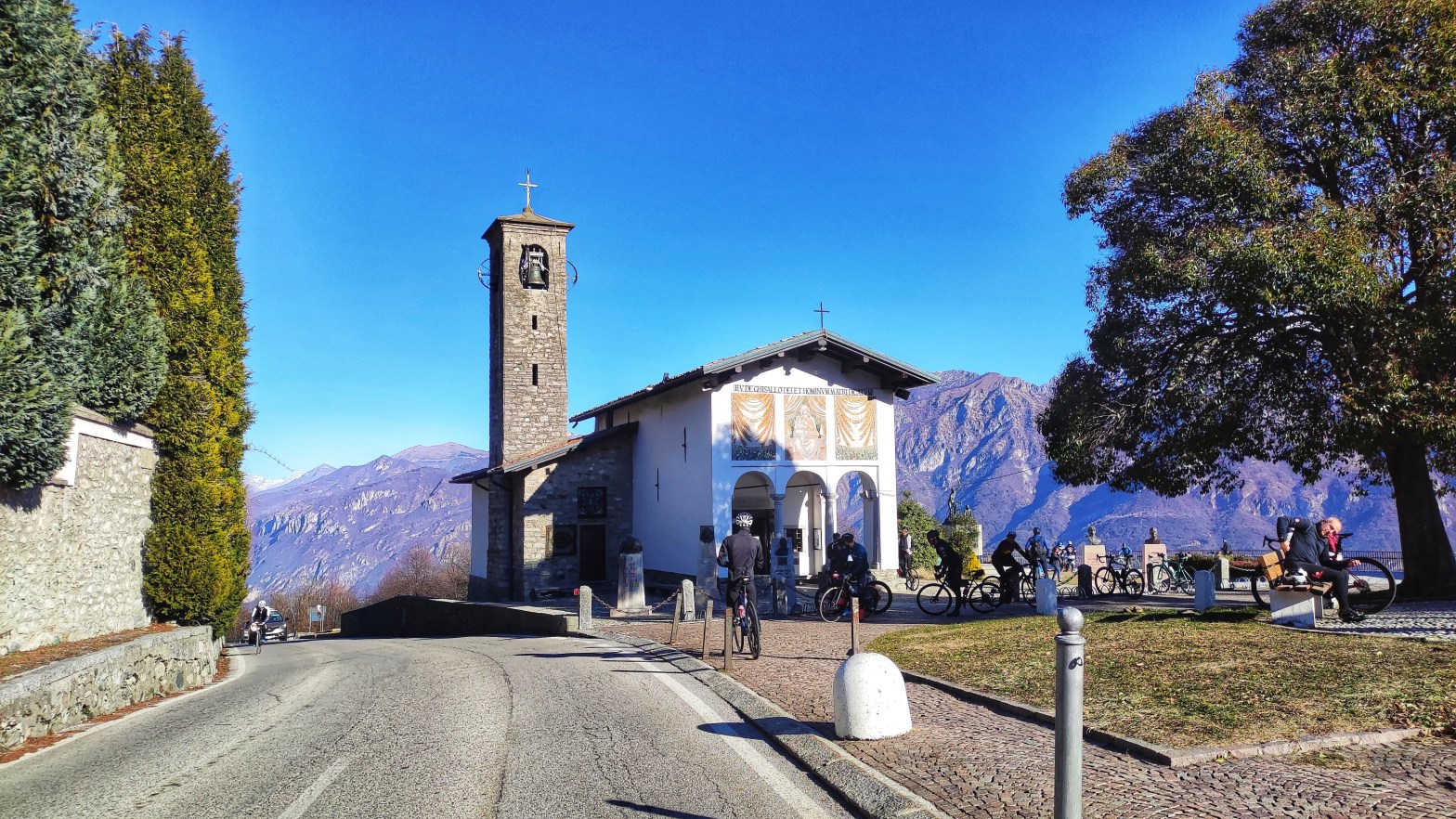
Madonna del Ghisallo doesn’t need any introduction, every cyclist around the World knows this iconic climb with its Cyclist’s Sanctuary.
The climb itself isn’t epic, it starts in Bellagio (you can also climb it from the opposite side, but we use to call it “Ghisallino” as it is way longer and easier and well, a bit boring, the Bellagio side is the “correct” one). The first 4 kilometres can be demanding if not in shape, with gradients peaking at 14-15%, but you will be able to recover in the central section with 3 kms with very few ascending, the road will go up again in the last 1,5 kms. At the top you can experience a majestic view of the Lake and you will have the privilege to visit the tiny Church and the Cycling Museum. The church isn’t a normal church, it’s the Cyclist’s Sanctuary, inside stand countless cycling memorabilia, including bikes once ridden by Fausto Coppi, Gianni Motta and Francesco Moser, many jerseys including some from Bugno, Evans or Bettini and a lot of medals. If you are into road cycling and its history, it can be quite moving. Personally, I visit it once a year and have a talk with Fausto bike, it started as a joke and ended up as a ritual, the first long ride of the season or the first ride with a new bike is usually up here, it’s a private thing among me and Fausto bike, never mind.

Not only the tiny Sanctuary, the Museo del Ghisallo is a ultra-modern cycling museum, really well organized and super interesting for every cycling soul.
Extra tip: once you make it to the top of the climb, don’t start descending yet, take the turn on the right towards Piano Rancio / Monte San Primo, you ride an additional 5 kilometres (average around 7 – 7,5%), then the asphalt road comes to an end and you are faced with different choices: doing a trekking and experience the best Lake views, find a Mountain bike and explore the area or, the correct one, make a stop to eat a dish of Polenta Concia.
Polenta is one of Italy most traditional dishes and I always find it very difficult to translate it, let’s say it is a corn porridge/mush usually served with cheese, meat, mushrooms, whatever you like and in the form you prefer (for example it can be solified and grilled or fried). Polenta Concia is typical from this specific area, it consists in a generous amount of polenta covered in cheese and butter, or better: covered in tons and tons and other tons of cheese and butter.
Madonna del Ghisallo data:
- Lenght: 8,60 km
- Elevation gain: 536m
- Average gradient: 5,4% (max 14,5%)
- Strava link
Ghisallo final notes: a must-do climb, not for the climb itself but for it means to cycling and cyclists. Remember to visit both the Museum and the Sanctuary, take a picture in front of the giant statue and breath in the fresh air looking at the landscape.
(And polenta, don’t forget the polenta concia!)
#2 Colma di Sormano + Muro di Sormano
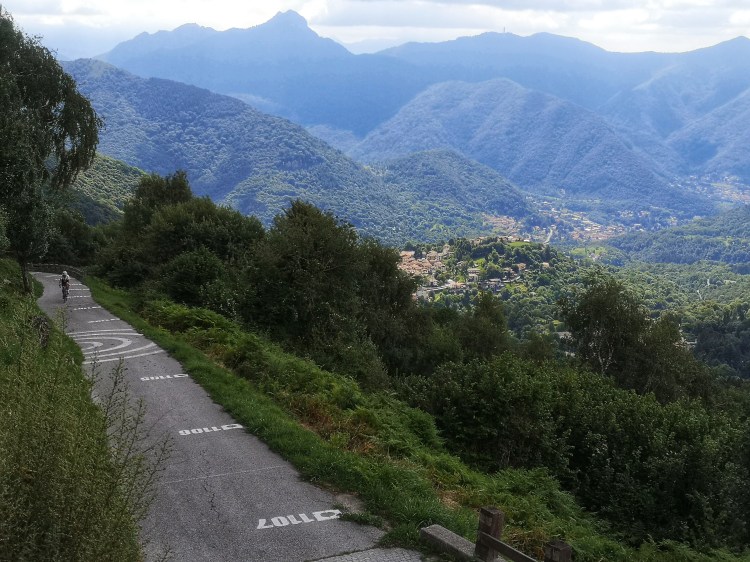
Colma di Sormano is a really basic climb without any special remark, one you can easily forget, at least until you see a small red arrow pointing left. It says “Muro di Sormano”, below a childish draw of a bicycle. A danger sign would be more appropriate, but it is what it is.
Back in the days Muro di Sormano was the only road allowing to go from the town of Sormano to the top of the mountain, the Colma. It had been briefly part of the Giro di Lombardia in the Sixties, but it was soon forgot. A new, longer and larger road was built and the Muro stood there, abandoned and lonely with its trees, until some masochist cyclists decided it was a good idea to bring it back in the cycling scenario and it was later re-introduced in the Italian Classic in 2012.
If you ask me, going for a ride to Muro di Sormano is never a good idea (lie alert!) and I always wonder who could think riding a bicycle up there was an idea at all. Truth is I damn like it. I like going so slow that my Garmin thinks I am walking and not knowing if I will make it till the next corner, having such a low cadence on such a low gear that ehi something must be broken, with the heart pulsating and the sound of silence interrupted by that voice screaming “Ma chi me l’ha fatto fare?”. Truth is Muro di Sormano has the charm every demanding segment out there has: the pure pleasure of saying “I did it!” and ticking off another one of the “Climbs to do at least once in a lifetime”. It is there, with its steep painted road and you ride it just because that’s what you like: pushing your limitis, enjoying it.
If you consider the whole climb, the road from Erba is 17 kilometres long, averaging 4,7%, the Muro is only 1,7 kilometers but it has an average gradient setting at 15,5%.
Colma di Sormano via Muro di Sormano data:
- Lenght (from Erba): 17,80 km | Muro: 1,7 km
- Elevation gain: 911m | Muro: 266
- Average gradient: 4,7% | Muro: 15,5% (max 27%)
- Strava link of the climb | Strava link of the Muro
Sormano final notes: a must-do for its epicness, avoid if not trained enough (or take the normal road avoiding the Muro). From the top you can enjoy the beautiful descent towards Nesso and if you still have legs climb the Ghisallo.
#3 Morterone
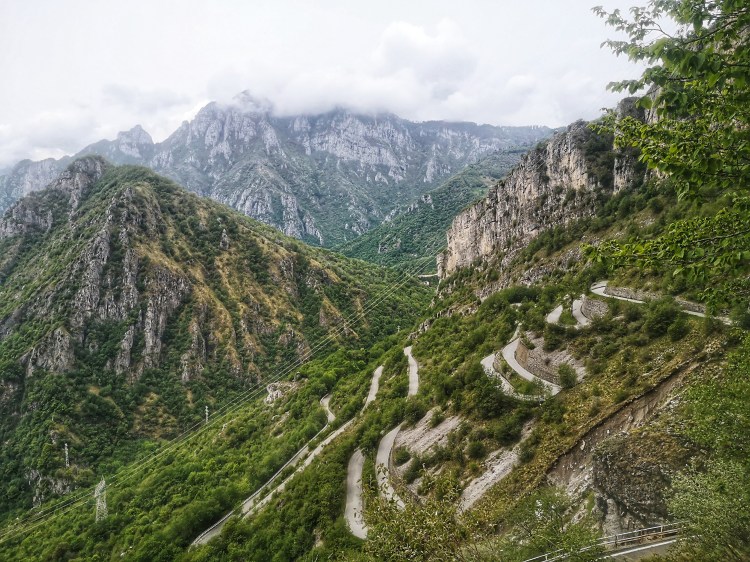
Morterone is possibly my favourite climb here, simply my exact type of climb: mild gradients, crazy beautiful hairpins, surely the most camera-friendly road among the ones listed.
The climb for Lecco is pretty long (around 14 kilometers), but never demanding. The ascent from Lecco is nice, but the real beauty starts after approximately 5 kilometres once you are in Ballabio. From there the road starts going through the lush vegetation and makes it to the famous hairpins that stole my heart so many years ago.
Once the climb is over I absolutely recommend not stopping and reaching the town of Morterone, that it is said to be Italy’s smallest town, with its three inhabitants and one tavern, where you can stop to have a slice of homemade cake. Pay attention because the views and the vegetation are lovely, but the tarmac isn’t. No Giro di Lombardia or Giro d’Italia makes it to the cute little town, so the asphalt is long forgotten.
Morterone data (from Lecco)
- Lenght: 13,89 km
- Elevation gain: 850 m
- Average gradient: 6,1%
- Strava link

Morterone final notes – Ghisallo and Sormano might have the reputation, but Morterone has what counts: views, peacefulness, hairpins and more views. Climb the others to thick them off your must-do list, but climb this one for the pure pleasure of riding. You don’t need to be particularly trained (no crazy gradients), but being a quite long ascent you of course need some preparation.
#4 Monte Cornizzolo
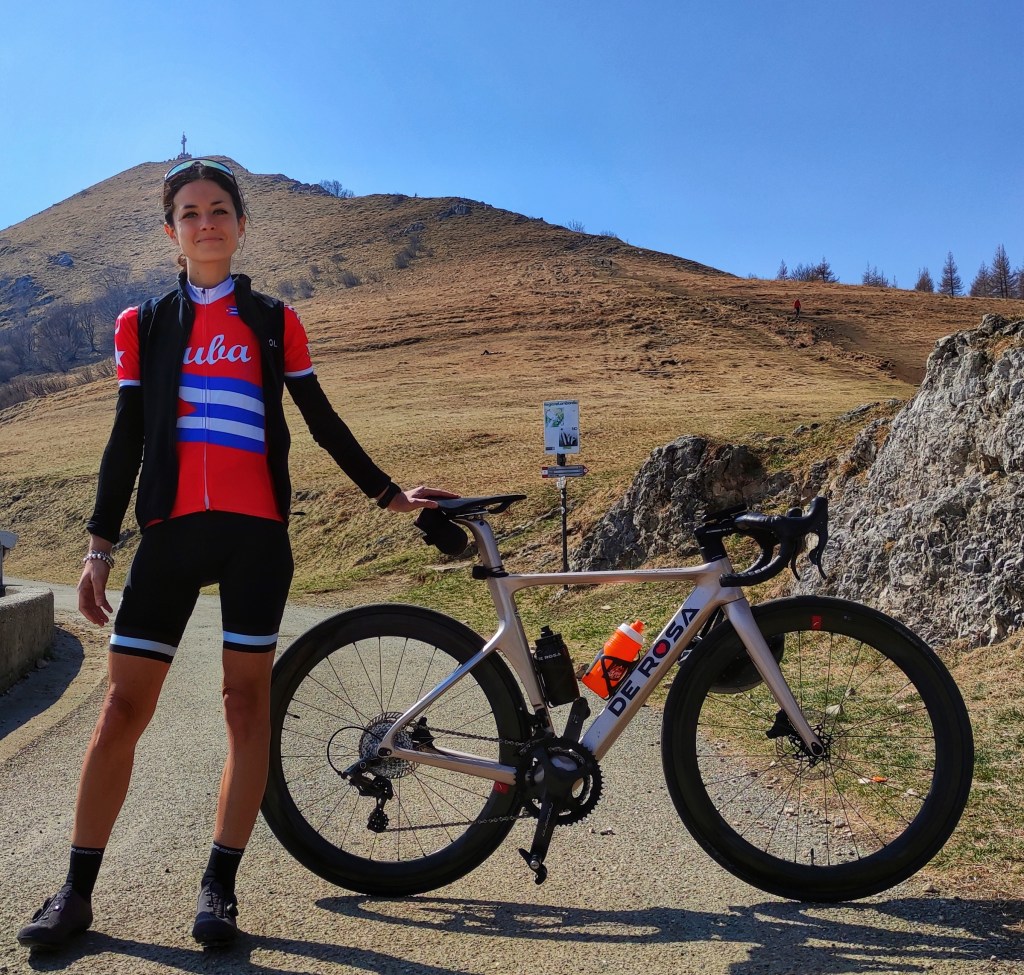
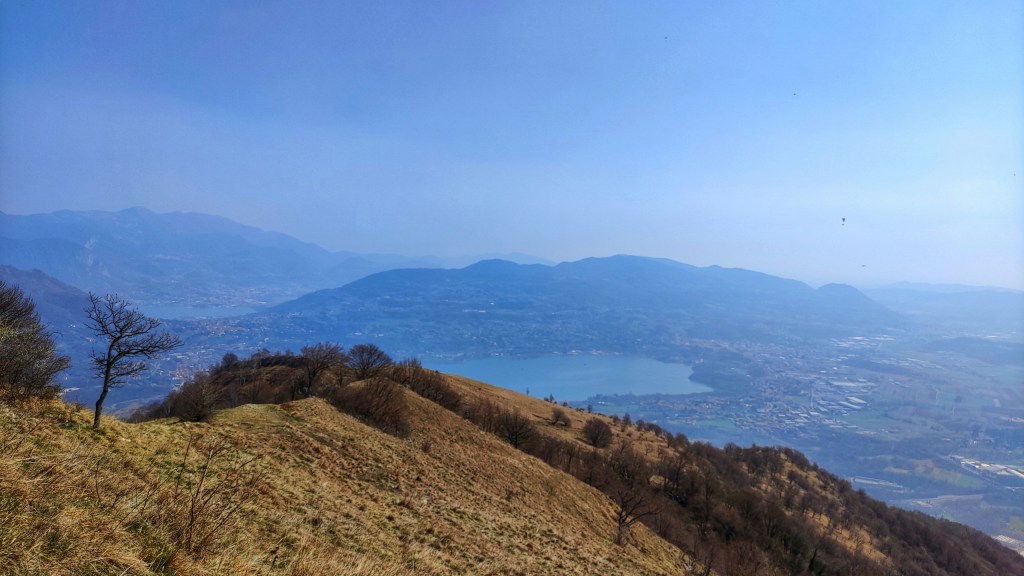
Cornizzolo is what I consider a hard climb, I might have ridden harden roads, but for a combination of factors this one always hits me hard, especially for its incostant gradiends (hard life of a puncheur trapped in the body of a climber).
The climb towards the top of Monte Cornizzolo starts from Pusiano Lake and it goes through the small towns of Pusiano, Eupilio and Campora, here just before and after this last urbanized area there are two pretty demanding segments. After Campora it is only trees, the road is small and the asphalt crooked, making it more even more difficult to climb those double digit gradients. The rough sectors are many and they often reach >20%, the chances to take a breath just a few, you must be decently prepared.
The scenery is amazing and the view at the top is great, moreover there are many trekking paths and you can also experience paragliding as there is a launch camp.
Pay attention: from outside the urbanization no cars are allowed, therefore there are two bars closing the road to motorized vehicles, you can of course pass with the bike but you might need to jump off to overcome them. Alert number two, there is only one restaurant at the top and it is usually closed, so make sure to pack an extra bar.
Monte Cornizzolo Data (from Pusiano)
- Lenght: 10,36 km
- Elevation gain: 877 m
- Average gradient: 8,4%
- Strava link
Cornizzolo final notes: Its roughness might make it hard to climb, but the nature surrounding it and the views at the top make it a must-do, if decently prepared. Please consider it also for a no-bike day, as it is a great area for hiking.
#5 Valcava (from Torre de’ Busi)
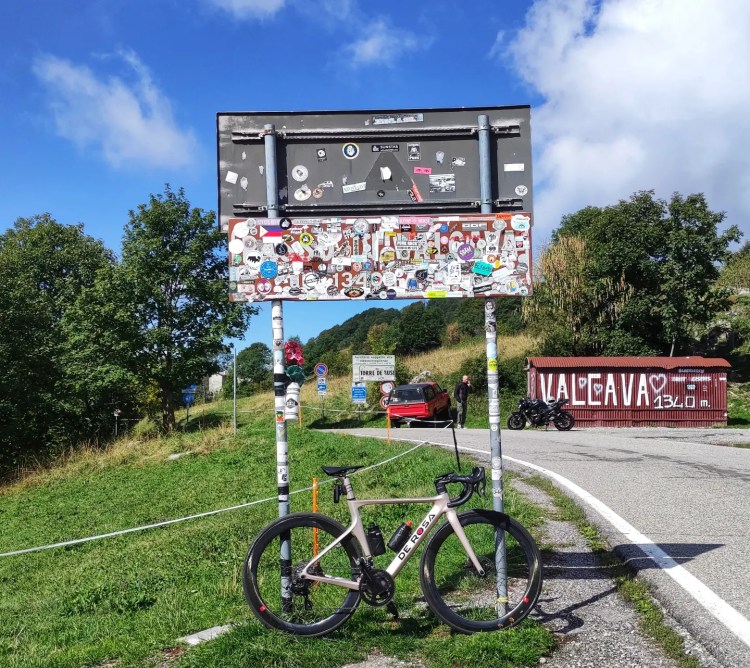
Among this crazy climbs Valcava is for sure the Ugly Duckling, just that it doesn’t turn beautiful. It isn’t a scenic climb, the asphalt is poor in many bits and at the top you won’t find any Sanctuary and neither Glory, just a small van selling overpriced sodas, sometimes two vans selling (really good) cheeses and salame.
So why putting it here in the must-do climbs of the area?
Truth is that for some reason I love Valcava, because it is one of my home climbs, because is always cloudy even when the sun is shining everywhere else and because it is one of the more demanding of the area.
Here we are all obsessed with Valcava and just like every road brings to Rome, it looks like every road in between Bergamo and Lecco brings you to Valcava. You can climb it from different sides: Roncola, Bedulita, Valsecca, but the right side is of course the fearful one from Torre de’ Busi.
The climb is 11 kilometres with an average gradient you might take seriously (8%), especially for the couple of segments reaching >20% gradients and the second half being the harder one. If you are not in the mood of facing the harder part, you can decide to climb Colle Sogno instead. It is an unpopular climb, probably because no round trip is possible as the asphalt road finishes at the top, you will hardly find anyone climbing it (but sometimes you can find me!). At the top hidden in between the many trees the small town, even more hidden among its tiny cobbled roads you can spot the only tavern, offering great homemade apple pie and crostata.
But if you are in the mood for some serious gradients, then pick Valcava instead and at the top experience its most scenic bit: two giant cell towers. I am being a bit unfair, because the views going up (and then down on the other side) are pretty and above all are my views, making them extra special for me. Please, mind that the asphalt especially from the opposite side towards Sant’Omobono is really poor, so hands on brakes.
I tested for you most of the Valcava restaurants and they aren’t remarkable, but if you go down from the opposite side you end up really close to a restaurant I like very much and it might not be ideal for a stop in your cycling wear, but it is for a fancy dinner, so mark it: Locanda dell’Annunciata, great dishes that originate from traditional local recipes to evolve in creative yet highly enjoyable ones (Please don’t skip one of the best bits, the desserts!). I have many recommendations in Bergamo area, so I definitely need to write down a guide on climbs you can’t miss there and food stops, but that will take a while because to me no climb in BG can be missed. For now, let’s stop here!
- Lenght: 11,39 km
- Elevation gain: 922 m
- Average gradient: 8%
- Strava link
Valcava Final Notes: if you want to experience these roads like a local then you need to pay a visit to Valcava and its rough terrain, moreover it is an awesome introduction to your next trip in Bergamo area!
 Ginevra Rides & Travels
Cheers!
LikeLike
Wow!! I live in the state of Rhode Island in the USA. The highest hill is not so big….https://en.wikipedia.org/wiki/Jerimoth_Hill
LikeLike
Thank you for sharing. Have been to Ghisallo and Muro many times. Morterone next.
LikeLike