How to survive a long ride with +4k meters of climbing? Is Étape du Tour worth to join? What can we expect on Saturday stage at Tour de France?
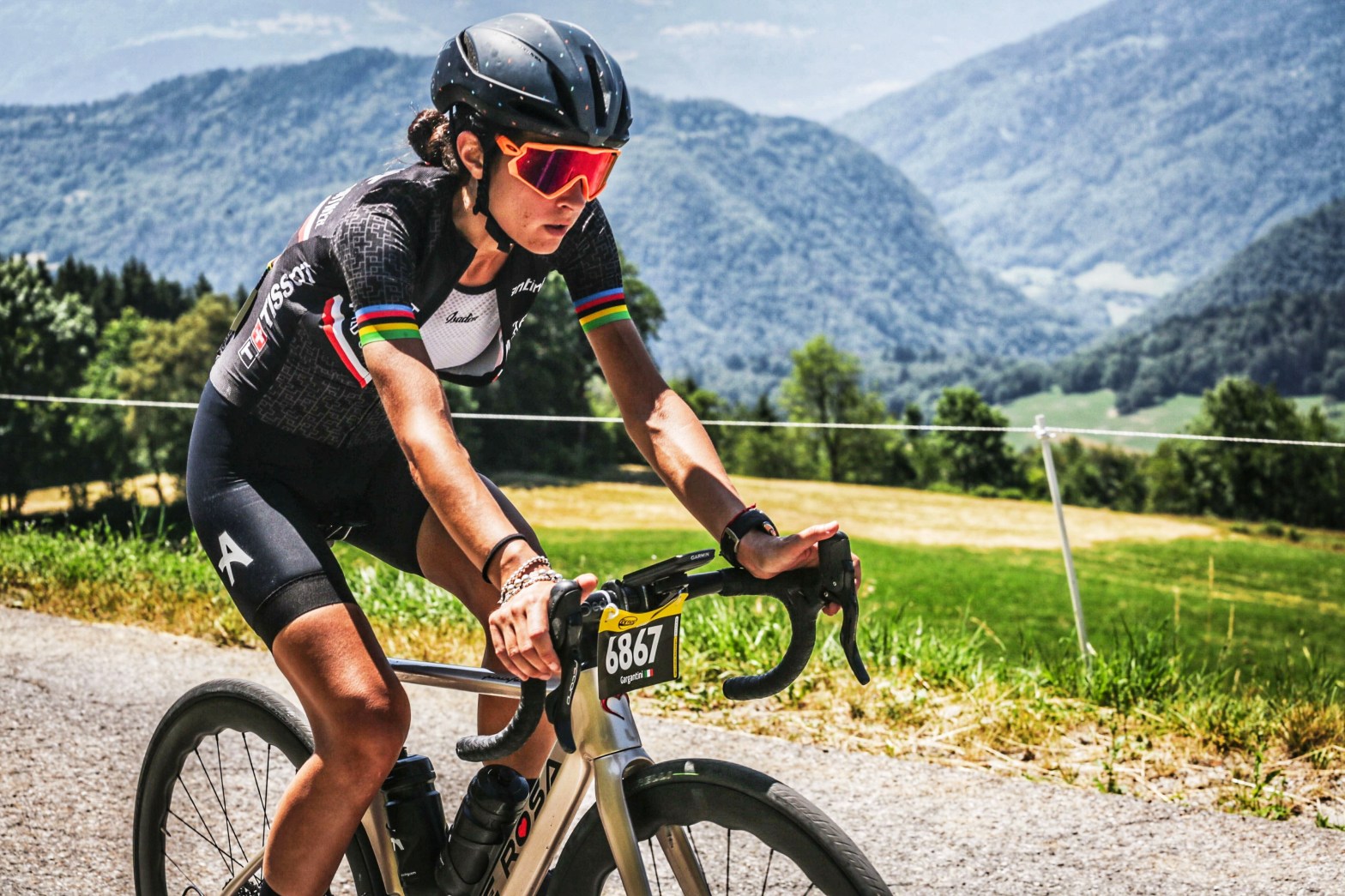
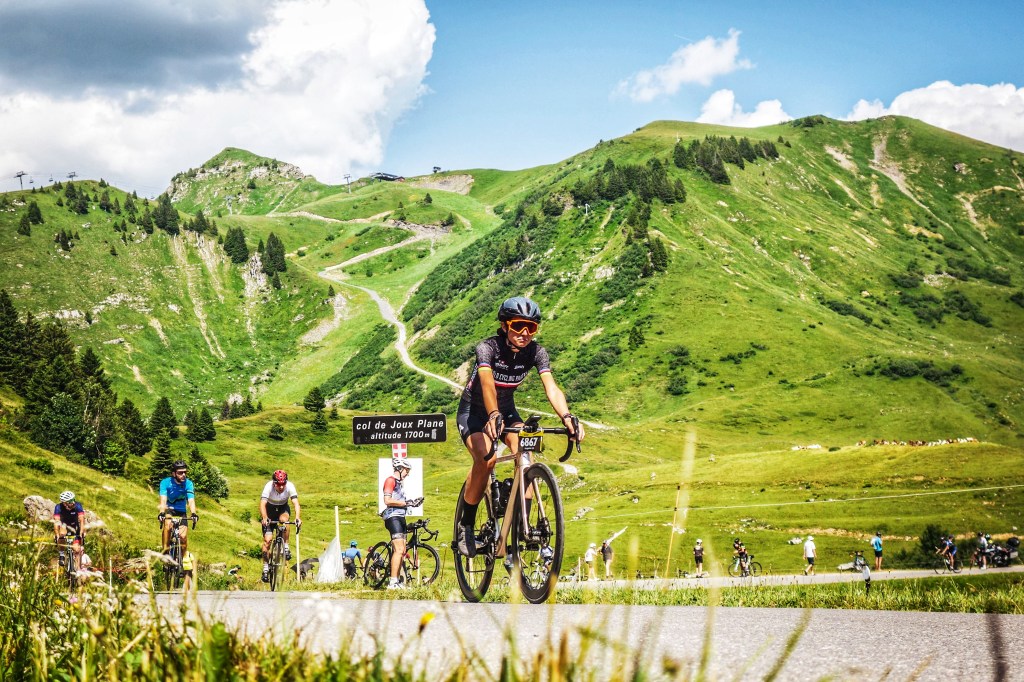
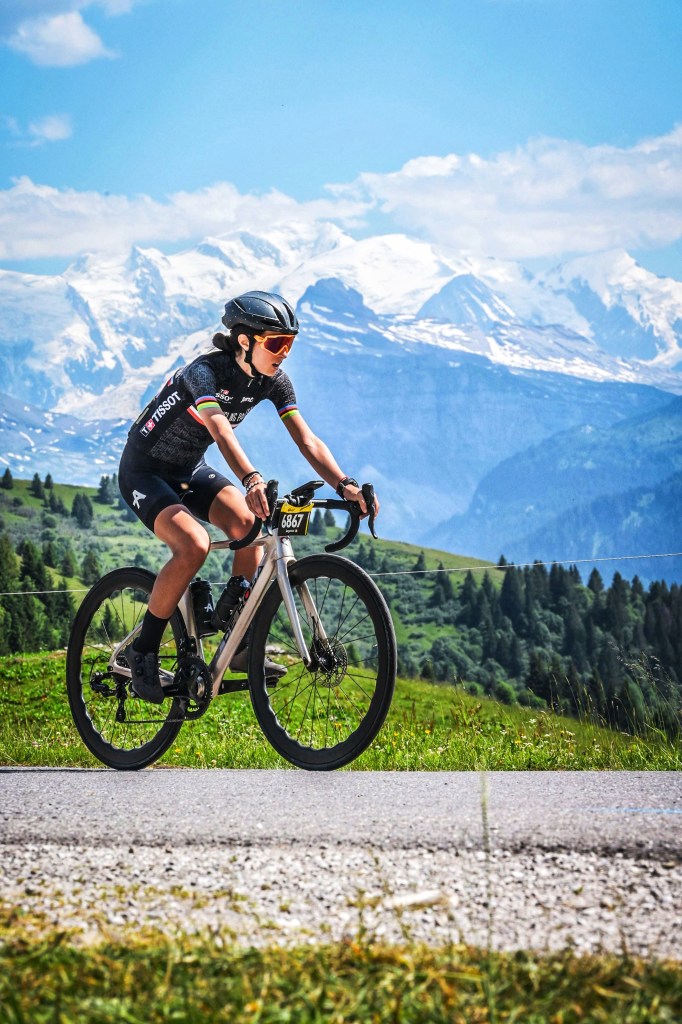
Last Sunday thanks to Tissot I had the chance to take part in the fearsome Étape du Tour, 152 kilometers and more than 4000 meters of climbing from Annemasse to Morzine, on the route of Tour de France Saturday stage. I have so much to tell that I am not sure where to start from. Deep breath, let’s start from the beginning.
Annemasse – Morzine: the route and how to survive long rides in the heat
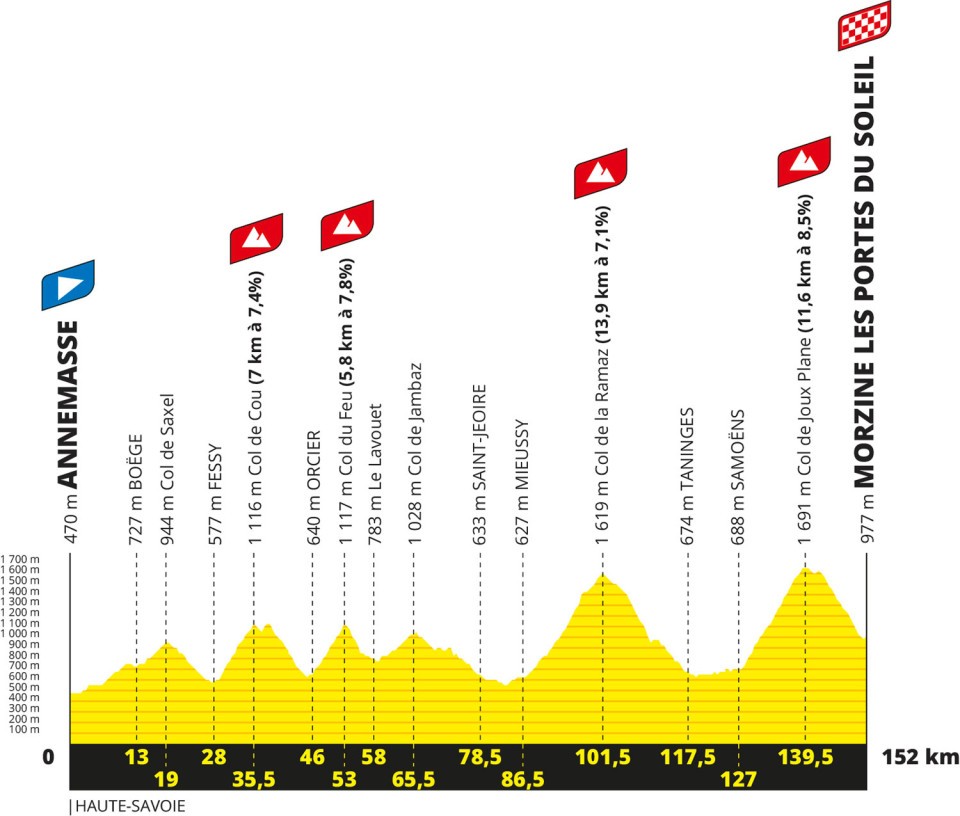
The rollercoaster of the ride, from Annemasse to Morzine. 152 kilometers and 4100 meters of climbing.
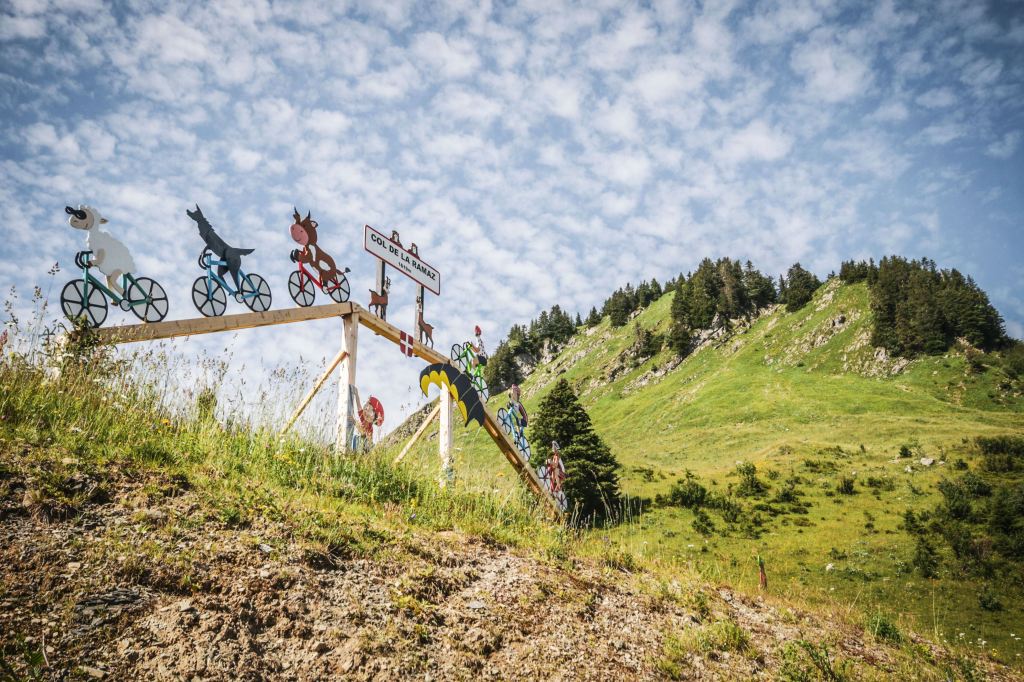
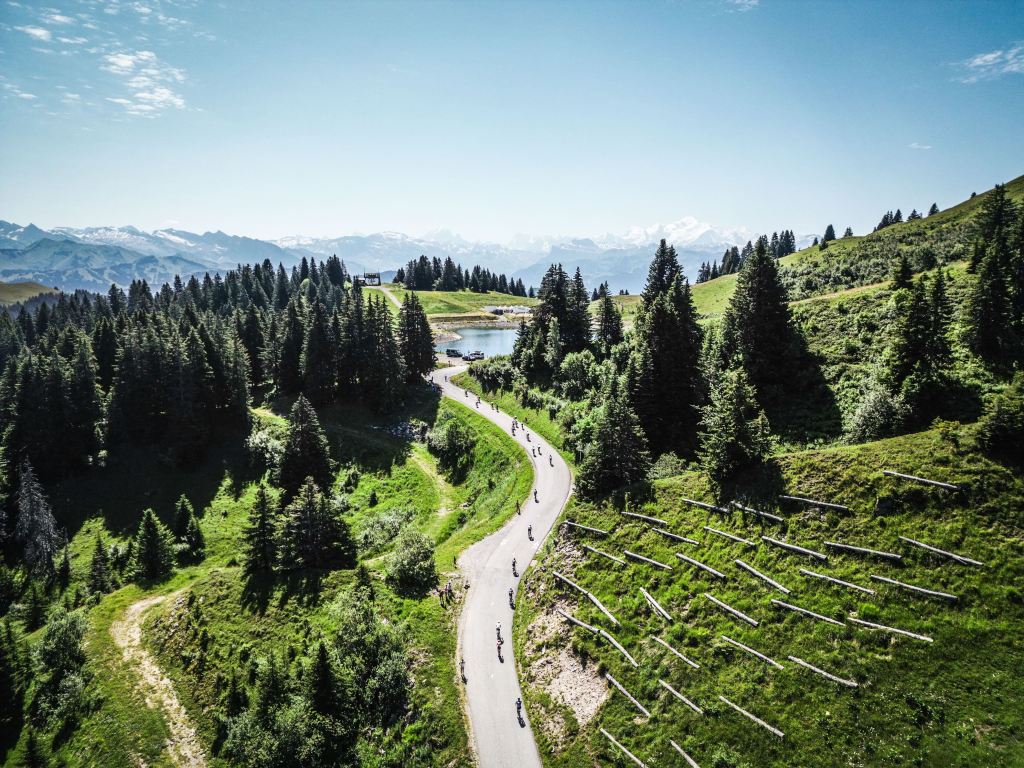
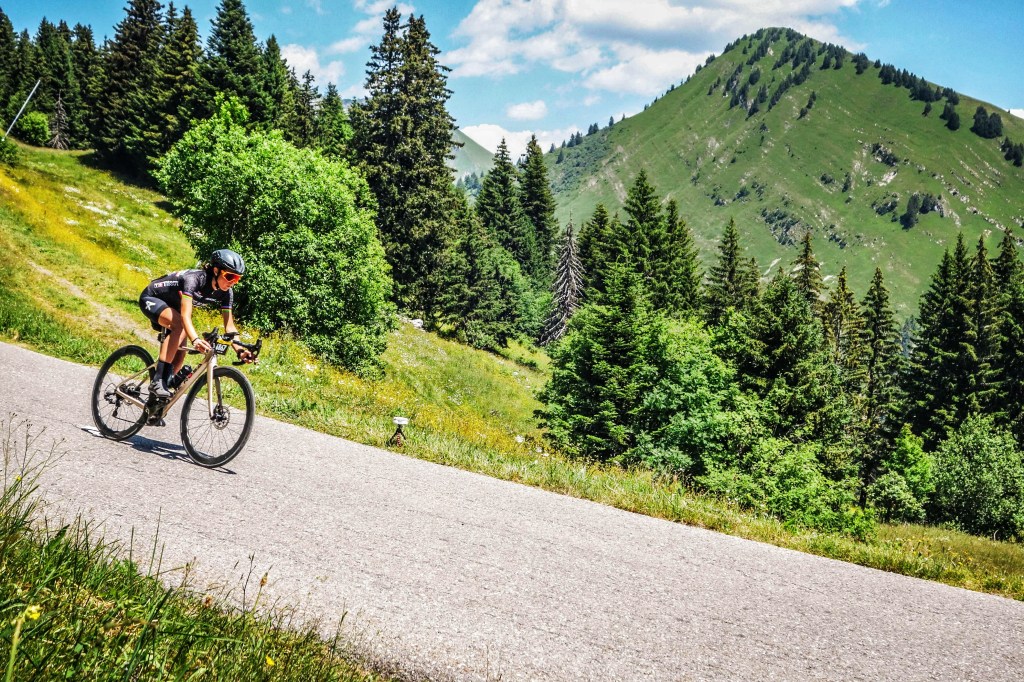
The route of the 2023 Étape du Tour was a challenging one with its 6 climbs and the temperatures peaking at 40°C in the valley and decreasing to only 30°C on top of the climbs. The route is a rollercoaster, you are either going up or down, with only about ten kilometres of horizontal riding splitting up the first and second half of the stage. The first half of the route is the easier one and not only because of the fresh legs, but also because gradients are sweet and never demanding and climbs short. The second part, there is where hell begins. Col de la Ramaz is 14 kilometres long, with an average gradient around 7% and a rough segment where gradients go double digit, but the real killer is the last climb, Col de Joux Plane. Col de Joux Plane is only 11 kilometres, sadly the road is constantly around 9-10%, always. Taken alone, I wouldn’t consider it so hard: I have done way more demanding climbs, but with 3000 meters of ascending in the legs and way too many hours in the heat, it felt like the most challenging climb ever. There are no attention segments, the whole climb is very regular with its treachery. One of the worst parts was the lack of shadow, roads shine in the sun without any possibility to cool down a bit with only the nice landscapes (especially in the last part of Col de la Ramaz) making up for their brutality.
Thinking about the Tour de France, this stage will be perfect terrain for attacks and ambushes, if they manage isolate you in the first half, they can hurt you really bad in the second. For the pros it will be a short stage and also for this I expect it to be explosive since the beginning, or I hope so.
But as we are no pros, for us the ride wasn’t a short one, but a long infinite procession towards Morzine, so: how to survive longs rides and intense efforts in the heat?
I have a few rules I impose myself in these situations that are common to most of the cyclist, and some random ones I came up with over the years. Here a list of things to keep in mind to survive the long rides and heat:
Drink, drink, drink more! Hydration is essential, I always have one bottle filled with water and one with maltodextrin and sip frequently, even if not thirsty. You must stop at every feeding station, even if you feel like you are “losing time”, you are not. You must drink a lot. For the nutrition I always rely on isotonic gels, as they are way easier to eat. I use to take them before every climb and even in the middle, if it is a long one. Having something solid in the stomach is as essential as eating enough gels. On long days like these I always eat a protein bar mid ride and snacks at the feeding stations. Unfortunatly, l’Etape stations weren’t great in terms of food choice, if you have delicate stomach like me, pack extra stuff in your pockets and don’t rely on something you don’t know how will impact you (self reminder to myself too).
Use descents to recover and stretch – descending fast and careless when traffic is closed is one of my favourite things, but having wooden legs at the beggining of the climbs is one of the things I hate most, therefore I always use descents to recover and stretch. I stretch legs (especially hamstrings), but also back and neck/shoulders, trying to relax all the muscles. Plus, I always move toes (and not only downhill), as feet are the sensitive part of my body when it comes to cramps.
Pace yourself, take it easy! – I know: you have fresh legs, you feel good, roads are incredibly nice and you want to give it all. Don’t, just don’t. Take it easy, even if doing so might feel harder than pushing every watt you have. In long rides you can’t go full gas from beginning to end, pace yourself and stay in your comfort zone and save energies. In almost 7 hours and 50 minutes I only spent 6 minutes in Z4, riding uphill only in my Z2 – Z3.
Bonus track – the obvious: but make sure to have decent training hours in the legs some decent fondo rides (and try not to pull a back muscles just a few weeks before like I stupidly did)
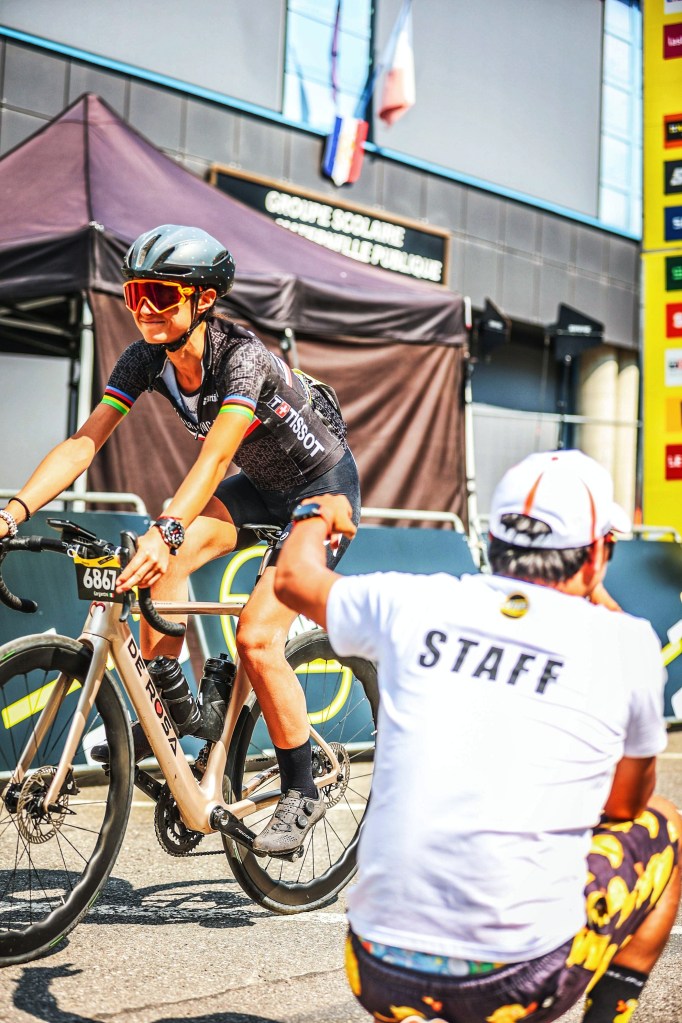
With these simple rules, you are half way to the finishing line, where after 10 kilometers of descent towards Morzine I showed my only half-smile of the day.
Étape du Tour – is it worth it?
Yes, the Étape du Tour is absolutely worth it. I feel stupid for not considering it earlier: the organization is outstanding, the roads closed to traffic for the whole day, starting grids well distributed in time to avoid accidents, hundreds of volounteers, every potentially dangerous corner well signed, the right amount of feeding stations and above all an incredible atmosphere. The roads and towns were packed with locals cheering for all the participants, giving us water, ready with water barrels in the hands asking permission to shower us. It was an increadible feast, that made you savor the Tour atmosphere. I was so incredibly surprised and delighted, it was awesome and makes it straight to the top spots of my personal list of sportives to do at least once.
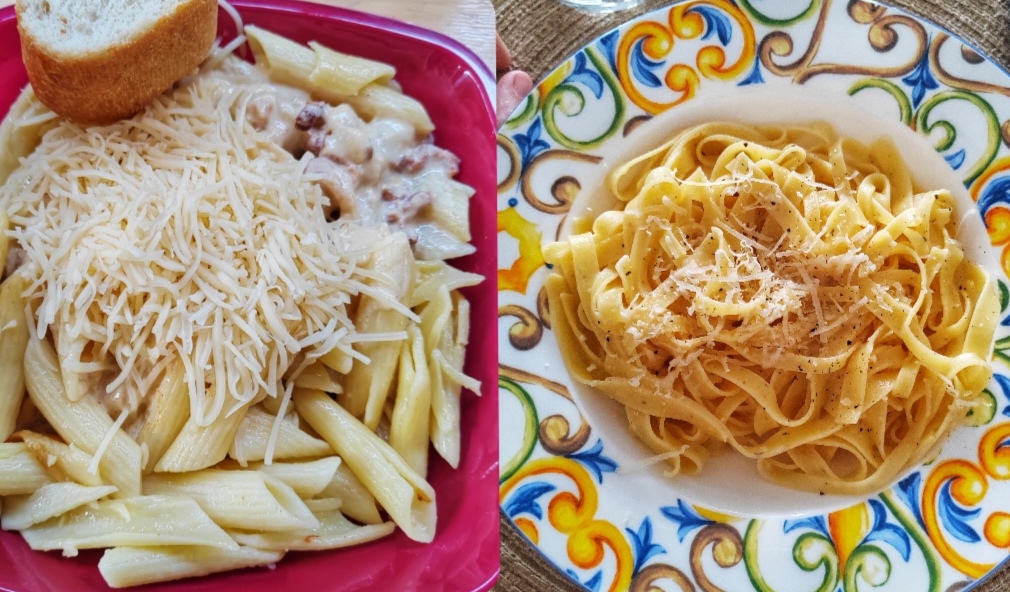
Only little disappointment was the food: dear organizers, next time make sure to pack feeding zones with Coke and ask me to cook pasta 🙂
The overcooked pasta party dish vs my recovery pasta dish I had once home, just because I wanted to showcase my cooking skills
What’s next?
Experiences like these drain me, but always make me crave for more and even if in the short term I will only focus on work and holidays, I can’t stop thinking what challenge I should target next, any idea?
The debate over disc brakes on road bikes has been going on for a long time (too long, if you ask me). As every year during Grand Tours and after nasty crashes in the rain, the discussion resurfaces: are disc brakes truly better than rim brakes? Are they dangerous? Should we go back to traditional braking?
Disc brakes are an ordinary technological development, and as every new technology they collect enthusiasm as well as fierce criticism. But honestly speaking, disc brakes in road cycling are not even that new anymore, yet they still haven’t been accepted as a new standard. Why? For many reasons, but primarily because we don’t truly know them and their defense or criticism often revolves around a couple of standard topics.
So, what are disc brakes?
First of all, there are two types of disc brakes: mechanical and hydraulic. Hydraulic Disc Brakes are the ones we are talking about.
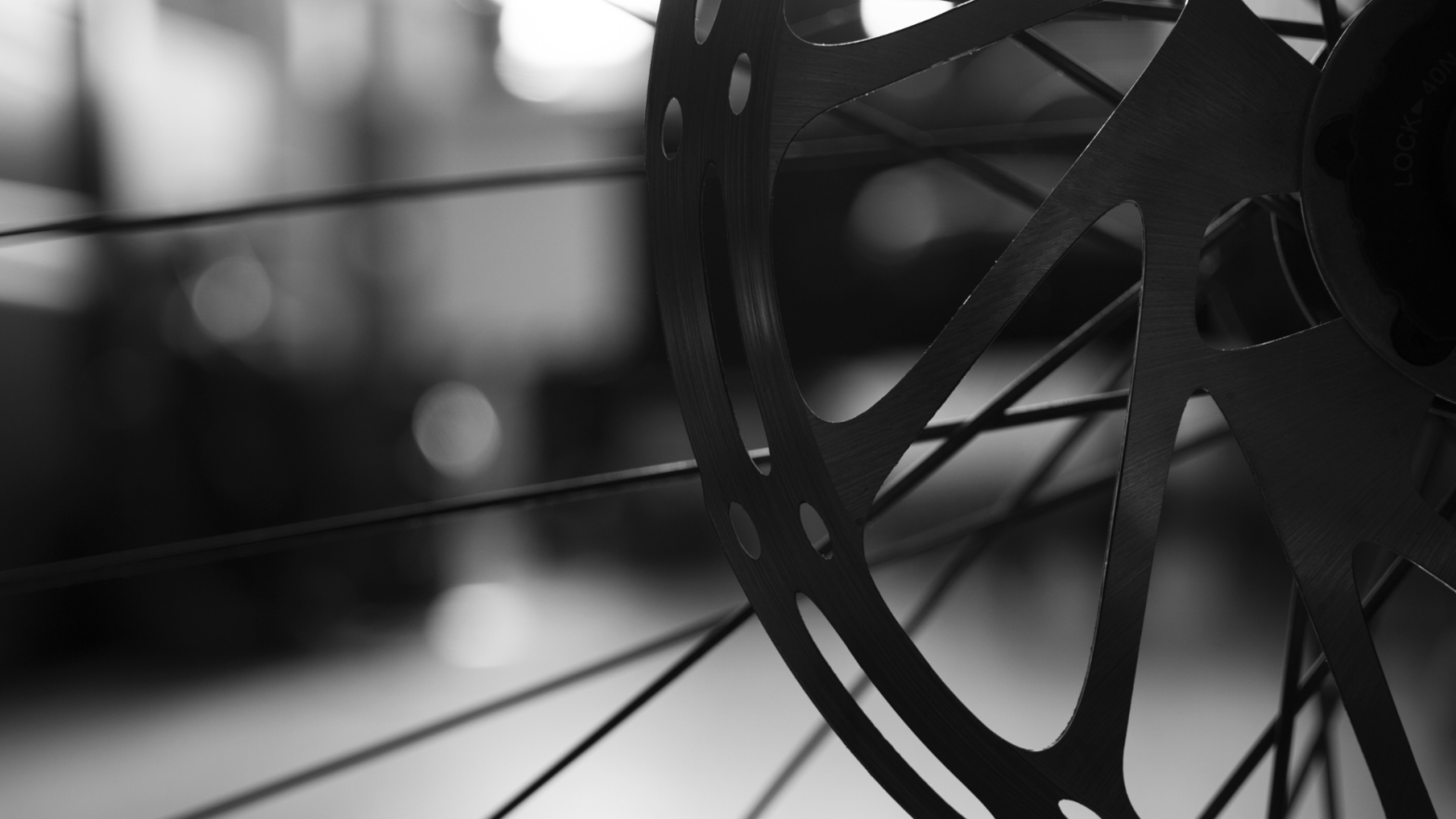
On our bikes we have two brake levers with pistons and hoses containing mineral oil or DOT fluid that go down towards the front and rear calipers. The calipers have 2 (or more) pistons each, attached to the pistons we have brake pads and finally the rotors.
To put it very simply, when we brake this is what happens: we press the levers and the pistons in the levers “push” the fluid in the hoses. Once at the calipers, the fluid pushes the pistons, that push the brake pads, that clamp the rotor and just like that we come to a stop or a deceleration.
There are many factors influencing braking, starting with some features of the braking system itself (such as rotor size, brake pads material and general quality of the components), but also with conditions (road surface, road gradient), the riders and their weight, the distribution of the weight, the speed, and so on. Braking is a very complex topic and it is easy to understand why cyclists give so much importance to their braking system.
Due to their configuration, disc brakes are more powerful than rim brakes. This means that if you want to stop in the same point with rim and disc brakes, with the latter you need to press the lever less. And if there is a car abruptly stopping in front of you, with disc brakes you have an higher chance to avoid a collision because braking distance is reduced. The reason is the better brake modulation they offer: thanks to disc brakes you can brake more precisely, in a more progressive manner and finally more efficiently, especially on low grip terrains such as off-road, gravel, mud and wet tarmac.
What does more power mean?
Crashes during the braking phase are very common and most of the time they happen due to the front wheel lock-up.
When you brake too hard and apply too much braking power, the brakes do their job and completely stop the wheels from spinning, locking them up. Lock-up of the front wheel is the most dangerous braking-related scenario. Indeed, it often leads to crashes. When the wheel locks up the braking power goes to zero. When it happens the body continues moving at the same speed, but when braking too hard, all the weight is transferred to the front wheel and here it is when you fly over the handlebar. Goodbye collarbone.
Theoretically with disc brakes lock-ups should be less frequent, because you have a better modulation and can better stop before the locking. But being more powerful and especially in dangerous or unexpected situations when you have to brake abruptly, it is easier to apply too much power and lock-up. Moreover, bikes are very light and the riders are much more heavier than the bike, the center of mass is higher and it is easier to fly over the handlebar.
It took a while, but we arrived to the core of the discussion. Does all this mean disc brakes are more dangerous? Do they cause more crashes?
No, disc brakes in itself are not more dangerous and they do not cause more crashes. If for 20 years you rode with rim brakes, probably at the beginning disc brakes will be more dangerous for you, but because you are not used to them and need to recalibrate your braking power, not because of the system itself.
From a technical point of view disc brakes are superior and more efficient. This doesn’t mean everyone must prefer disc brakes, but it is a matter of fact.
And now, what’s next?
I don’t know what technical developments wait for us. From a product point of view, I can see ABS becoming always more present on e-bikes and perhaps in mountain bike and with a more performance-oriented approach, but on road bikes I think braking systems will evolve in a different way and for the next few years the focus will remain on weight and design of the system.
Broadening the vision I can see some related trends coming up. Indeed, in a professional sport like road cycling where every detail matters (including every single gram of carb and the sock height), to me it is unbelivable how braking and in general riding technique, especially downhill, have never been taken into consideration with a more scientific approach. You won’t win Grand Tours thanks to an improved braking technique, but you could for sure have direct advantages and side ones, reducing the risk of crashes. Braking is still a grey area that I think will be addressed soon. In the last few years a couple of teams started dedicating a bit of attention to the topic with workshops during training camps, yet from what I know, no one has gone beyond that.
To me there is a lot of room for improvement and probably at the moment there isn’t much knowledge and expertise, but I can see some forward-looking teams starting to work on it, collecting and analysing data and working deeply and scientifically with cyclists, especially in ITTs and downhills. And if you think that might be too much, remember they are wearing head-socks under-helmets in 30 degrees.
Also thinking about the amateur scenario, I can see the trend of starting improving the riding technique in general. I find really surprising how many cyclists waste so many energies for a 0,5 w/kg improvement in a FTP test and they do not care about taking corners with flat feet. So yes, I can see training apps, coaching plans and similar starting to focus more on this side and hopefully with a scientific and data-driven approach.
And according to you, which trends are we going to see?
Giro d’Italia has always been my favorite race, going up and down my roads, in the crazy mess Italy is. Every year, for at least one day, I ride up an epic climb waiting for the peloton in the cold of the cloudy mountain days or in the burning sun of the clear sky days. I have always been there with the noise of the elicopters, the excitement of the crowds and the smell of salamellealla griglia.
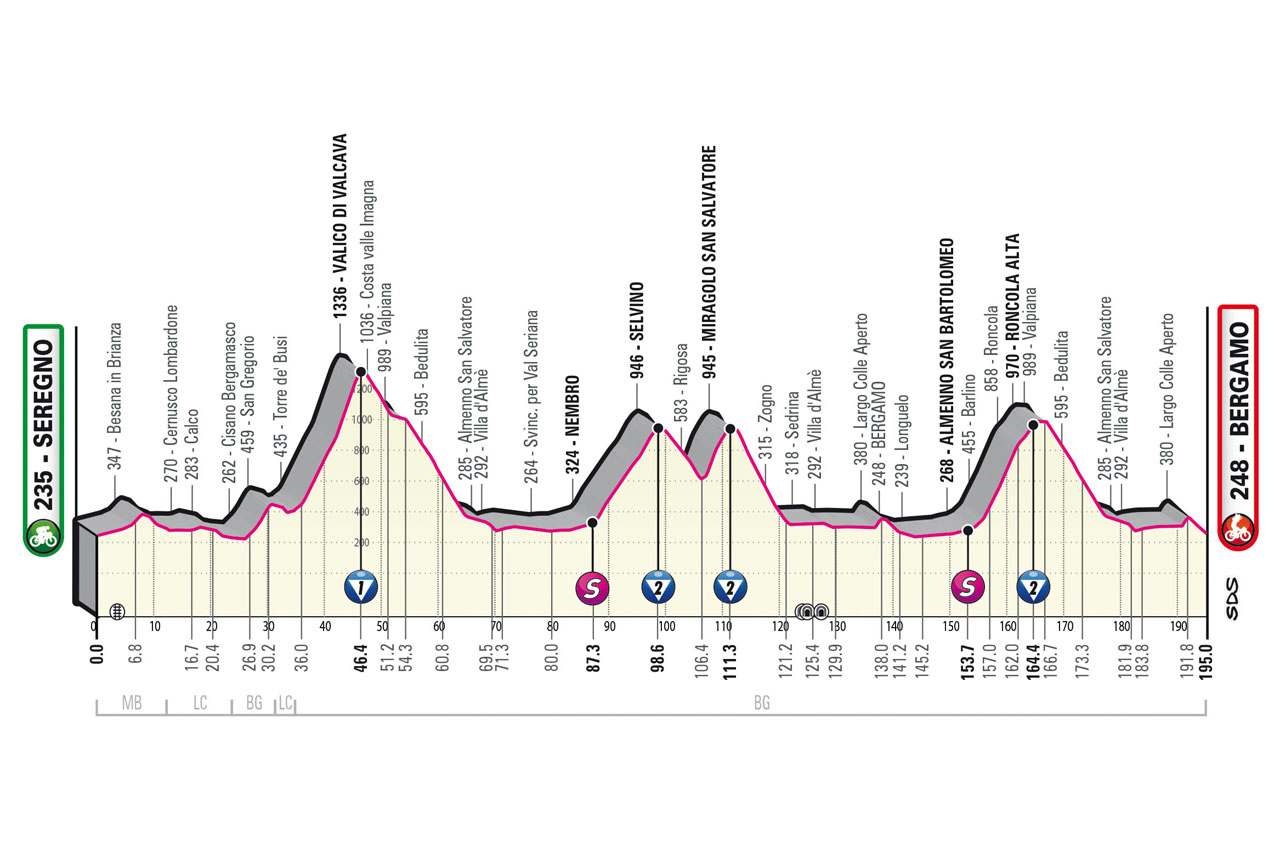
I have always been a fan of the Dolomites stages, but this year there will be a stage particularly close to my cycling hearth: the Stage 15 from Seregno to Bergamo, that is going to take place on Sunday 21. I know, the roads of the stage might not be the most scenic and epic ones Italy can offer, but they are my cycling roads and I love them to the moon and back. This is my virtual tour of that stage and you better take notes (about the random stops along the way, of course).
Seregno – Bergamo: a virtual Tour of the stage and its landmarks
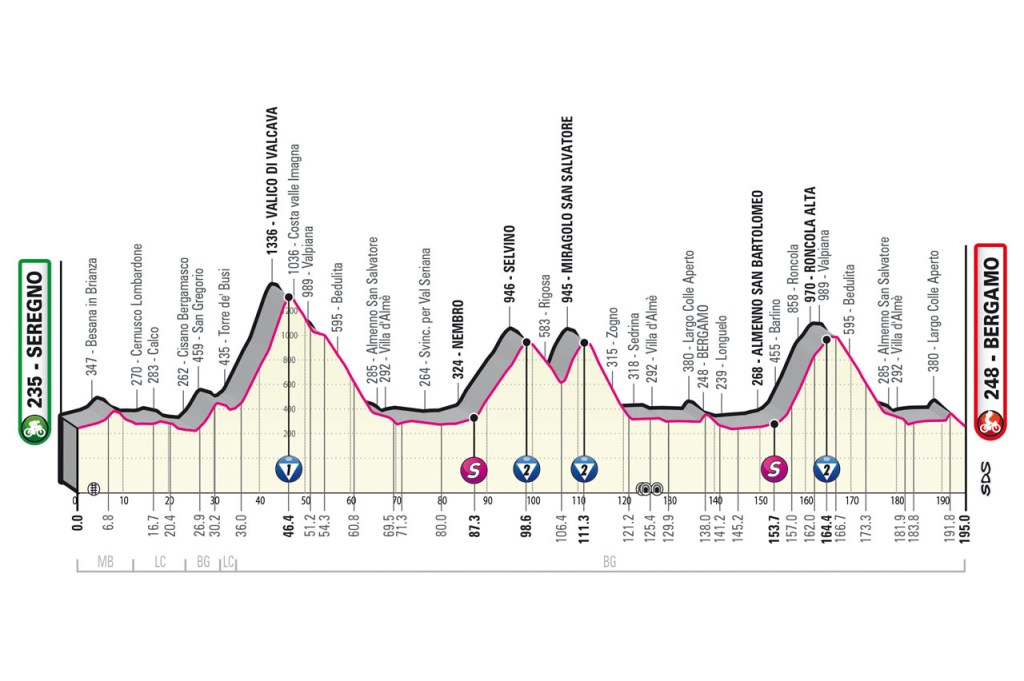
The profile of the Stage 15 of the 106th edition of Giro d’Italia: from Seregno to Bergamo
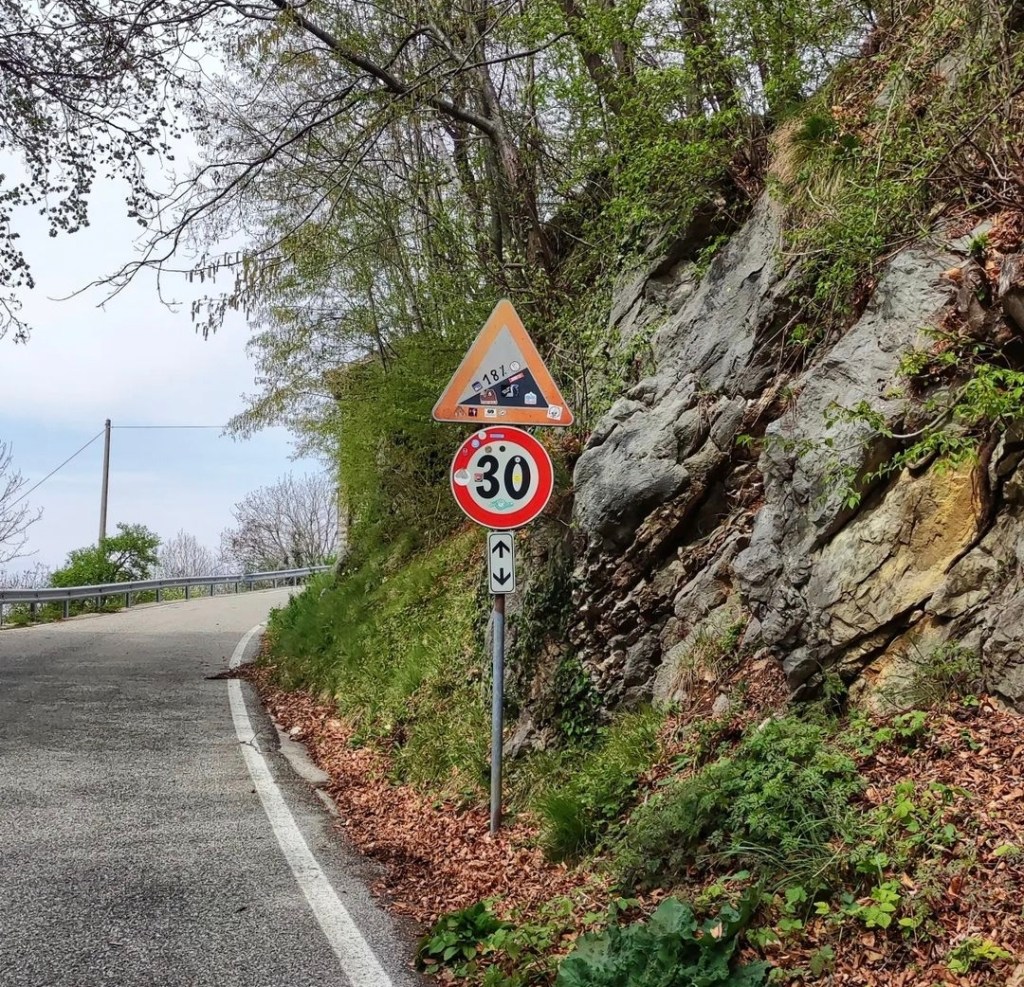
On Sunday there won’t be much time for chit-chatting: just the time to warm up the legs a bit and the road starts almost immediately climbing up. The first climb is one of the most challenging ones of the area: Valcava from Torre de’ Busi. Valcava is a local Institution and if you have been following my rides for long enough, you already know this climb. Valcava won’t hurt the pros, especially because it is at the beginning of the stage, but with its long >18% segments, it won’t pass unnoticed either. It is a rough way to start the day and a nice challenge for us amateurs.
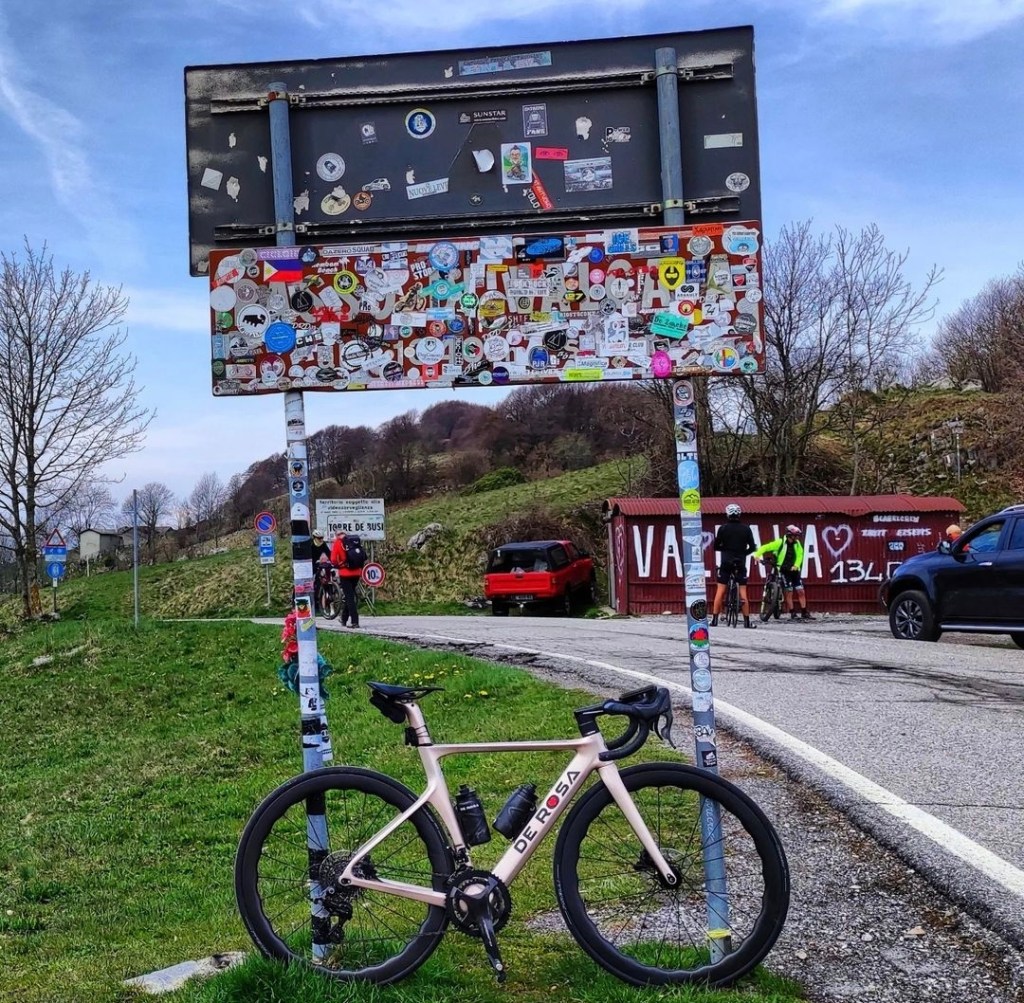
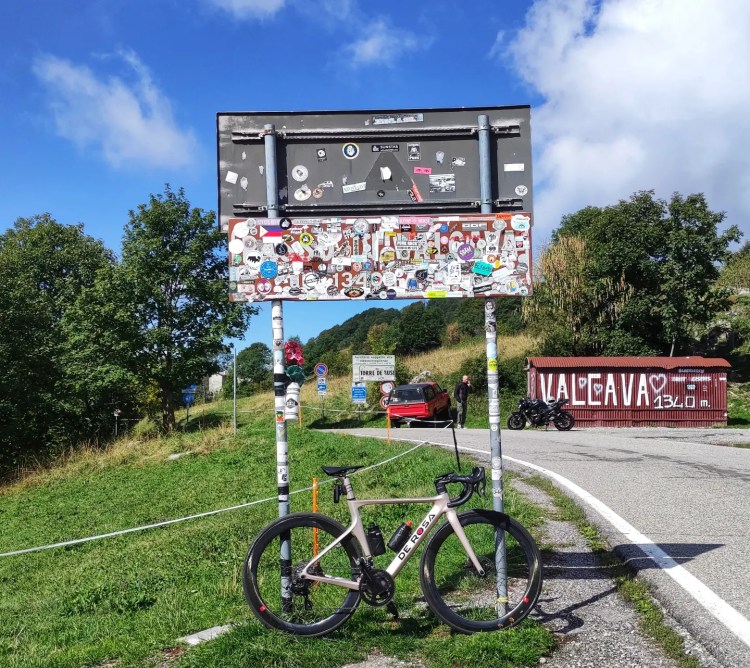
One of the best things of climbing mountains is to breath in the magic at the top. At the top of Valcava there are only some radio antenna and a brown tin storage with an handwritten shaky tag saying “Valcava”. For us, it feels like home.
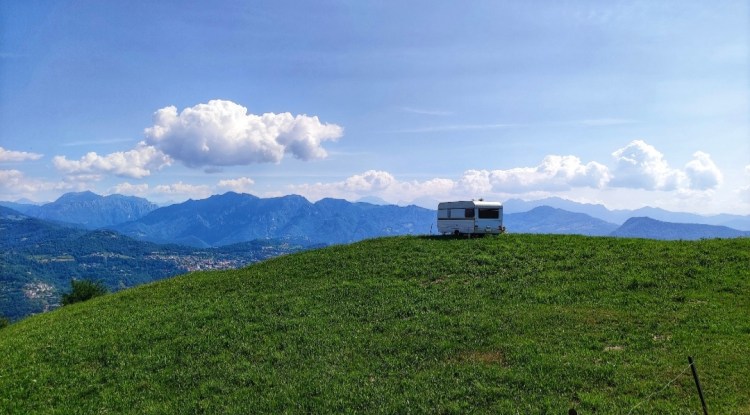
It is still too early for the weather forecast, but one thing is sure: it will be cloudy at the top, indeed no one ever saw sun up there. To make it up for its moody weather, during weekends there is always a van selling local cheeses and salame and a kiosk with pies and panini (with salamella, of course, that is Italian grilled sausage, by the way).
At the top of ValcavaValcava most challenging part, this climb never gets easier
The descent isn’t tricky, but for the first 4/5 kilometres it is in an extremely poor condition, good news: they are asphalting it right now. The stage goes then down towards Bedulita, reaching Almenno San Salvatore and Villa d’Almè.
Here we are in the Valcalepio wine area, the pros won’t have time, but you can make a small stop at Ca’ Verde in Almenno, a small and nice Cantina producing biological wines. In Villa d’Almé plan a stop at Tenuta Casa Virginia, that offers fine dining with a view and produces nice wines with intriguing naming and crazy fantasy stories revolving around every bottle.
While you are either buying or tasting some red wine, the peloton will go ahead towards Selvino, the perfect destination for hiking lovers (I would reccomend enjoying the Monte Poieto route).
The climb and descent of Selvino are already well known by the cycling community, as they have been featured in the Giro since the late 60s. The climb has nice hairpins dedicated to local cycling legends such as Gimondi, Baronchelli, Gotti and Savoldelli and it is never too demanding. The descent might be considered a bit technical, but it lasts only 7 kms as the route takes the turn towards the last 5 kilometres of Miragolo San Salvatore, another well known climb already featured in Lombardia and Giro.
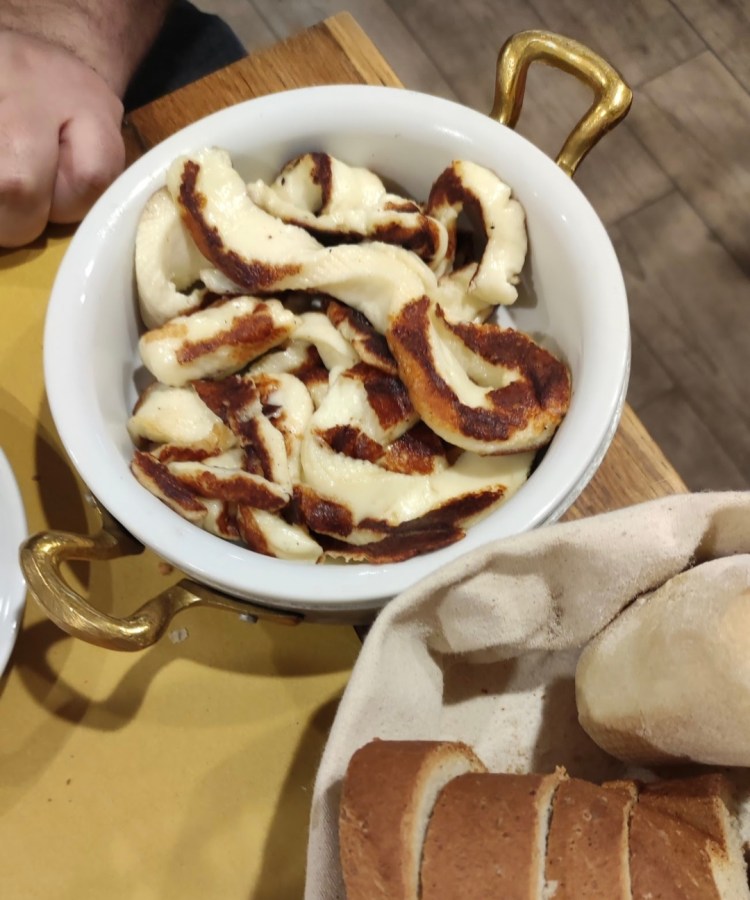
After the two close-range climbs up Selvino and Miragolo, it is time to go down towards Zogno, where you can buy the finest local cheeses at Latteria Branzi while enjoying a heart-warming meal, such as Polenta Taragna (polenta with butter and cheese) or Bésse de Brans, a tipical product pretty hard to find elsewhere (it consist in grilled strips of Branzi curd, must write it down!).
Bésse de Brans, a traditional local dish you hardly find in the menù, you can have a portion (either to eat in or take away) at Latteria Branzi in Zogno.
After the wine & cheese stops and while riding back along with the pros towords Almenno San Bortolomeo, I would suggest to slow down the pace and enjoy some villages, such as Ubiale Clanezzo. It you are planning to stay in the area for a bit, not too far away you can visit San Giovanni Bianco, San Pellegrino Terme and the lovely Cornello dei Tasso and experience loads of beautriful climbs, but that’s another stage and post material!
Back to the Giro stage, we are now in Almenno San Bartolomeo, here it will be time to face the last climb of the day: Roncola. Roncola is the closer real climb from where I live and over the years I have ridden it so many times I could literally do it with closed eyes. Roncola is not too long as it measures only 7.5 kilometres with an average gradient around 8.5%, it is this an irregular climb where sometimes it takes time to find the right pace. The more demanding segment is at the start and it is around 16-17%, but for a very short part. The real climb ends in Roncola, at the Church you find on your right, but Giro will go up until Roncola Alta doing an additional three kilometres. The last 3 kilometres are really easy but scenic, after that it will be full speed down towards Bergamo, where they will face the well-known one kilometre strappo before the final.
The very scenic three kilometres from Roncola to Roncola Alta, before going down full speed towards Bergamo via bedulita.
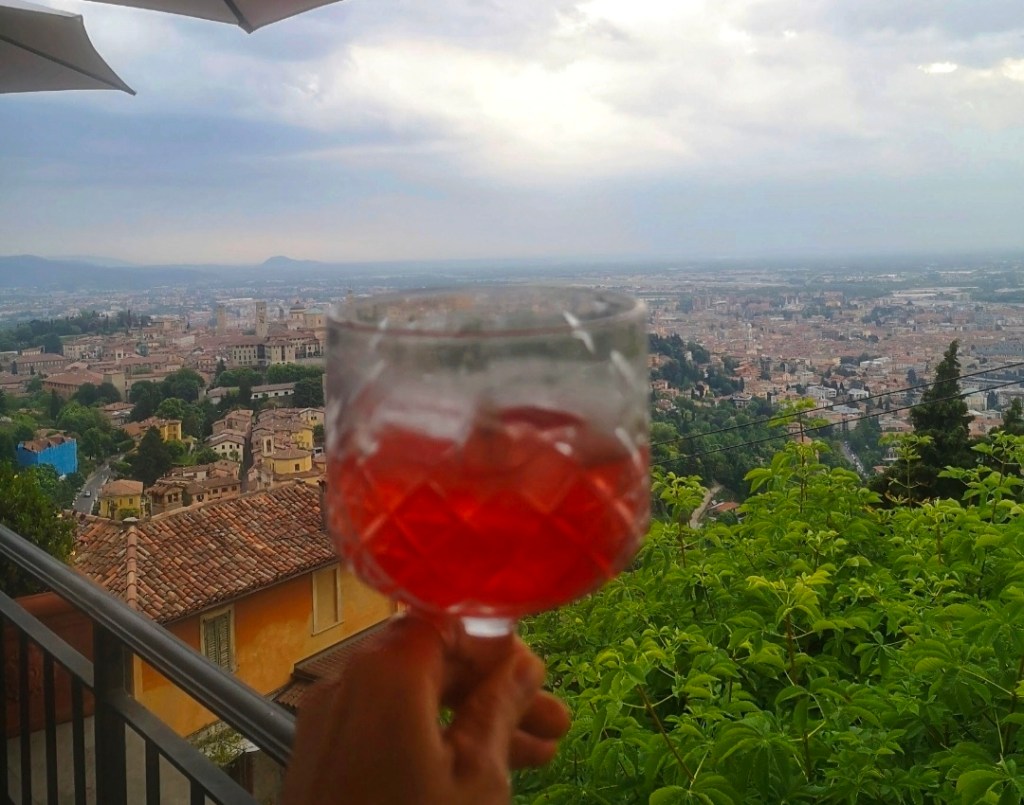
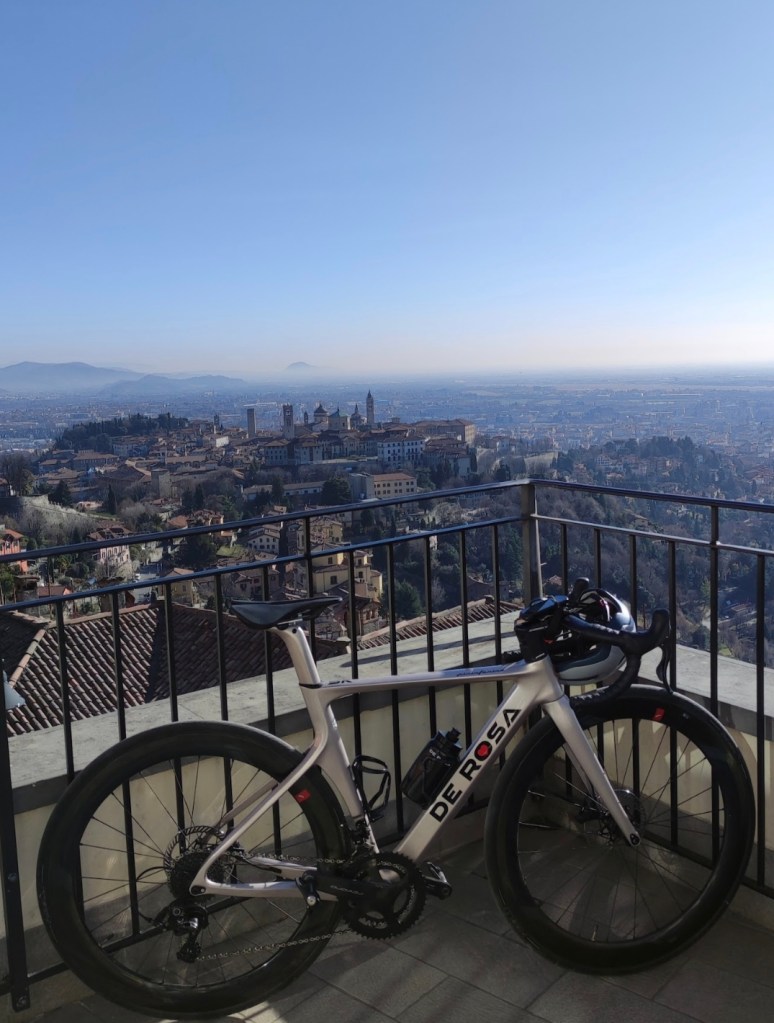
In Bergamo I always suggest a walk in the streets of Bergamo Alta and walk up to San Vigilio, where you can have a Spritz with a view at Baretto di San Vigilio or enjoy a plate of Casoncelli (tipical filled pasta) or the less-known cheese alternative called Scarpinòcc de Par. Bergamo has a lot to offer and the old part, Bergamo Alta, is a true gem.
The view from the cable car station of San Vigilio is priceless, here you can also enjoy a Spritz or a dish of Casoncelli at Baretto di San Vigilio.
The stage profile is an interesting one, to me it looks like perfect breakaway material as you hardly find a long completely flat section. There are many climbs but except Valcava at the beginning, they are not too long or difficult. For the brave ones, it could also be the chance to set a trap to the GC contenders, but I doubt we will assist to such actions. If in doubt, drink it out with a nice glass of wine and some fine local cheese!
A brief report of my Ronde Van Vlaanderen experience and some tips for you!
For many people newer to cycling, the Ronde van Vlaanderen might just be a race, but for someone growing up in the cycling culture, the Tour of Flanders is Christmas. Some people count sheep to fall asleep, cycling addicts name the Muurs, and they know each one of them. The Ronde is cycling culture at its finest, in the two wheels motherland. With its narrow country lanes full of crowds and cheering kids, Belgium is undoubtedly cycling spiritual capital.
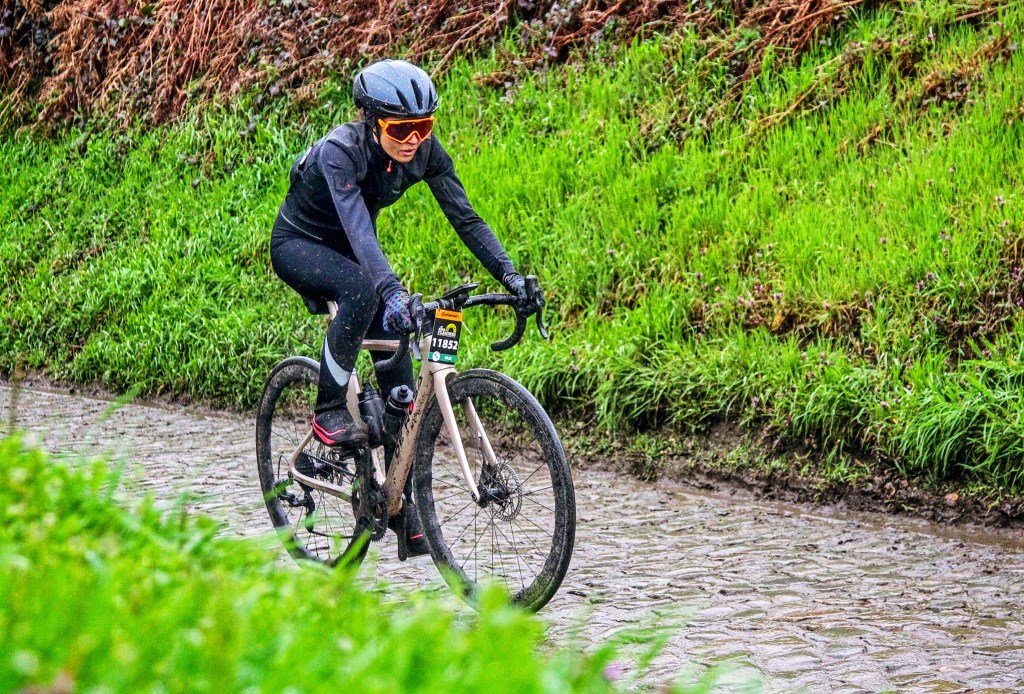
Rain, cold a mud, my beloved bike deserved a week at a luxury spa after this day.
Riding on the roads of the Tour of Flanders hasn’t always been a dream of mine, because dreams are aspirations and for me riding on those roads has never been an aspiration, but a natural need.
It was there, among the cycling things to do at least once in a lifetime, and it was time to tick it off, so I googled the We Ride Flanders website and subscribed, without thinking much about it but feeling the anticipation growing.
The Route and the road that bought me there I decided to ride the 144 km distance, that features only 2200 meters of climbing, way too many Muurs and cobble sectors you don’t want to underestimate.
The Tour of Flanders route is pure evil: you are in one of Europe’s flattest areas, where the highest point is something like 450 high, yet you keep climbing and you wonder how is that possible? Yet the route, for how weird it might sound, is also sweet, and it reminds me of home, of where it all began.
I grew up in a very flat area and yes, mountains are not too far but neither too close. In my area you must use your inventive to have some fun and you start looking for old, narrow roads that go up to nowhere, or more often to churches. In the Martesana, somewhere in between Milano smog and Bergamo mountains, it is just like in the Flanders and I grew up acting like I was on the Kwaremont on every random road. Some years ago, someone even renamed all those old and narrow roads after Flanders Muurs. While riding the We Ride Flanders my mind goes constantly there, where it all began, ages ago and with rim brakes and no fast carbon wheels. And while on the real Flemish roads I am grateful for many things, but especially for my light and fast bike and disc brakes, glad so many years went by!
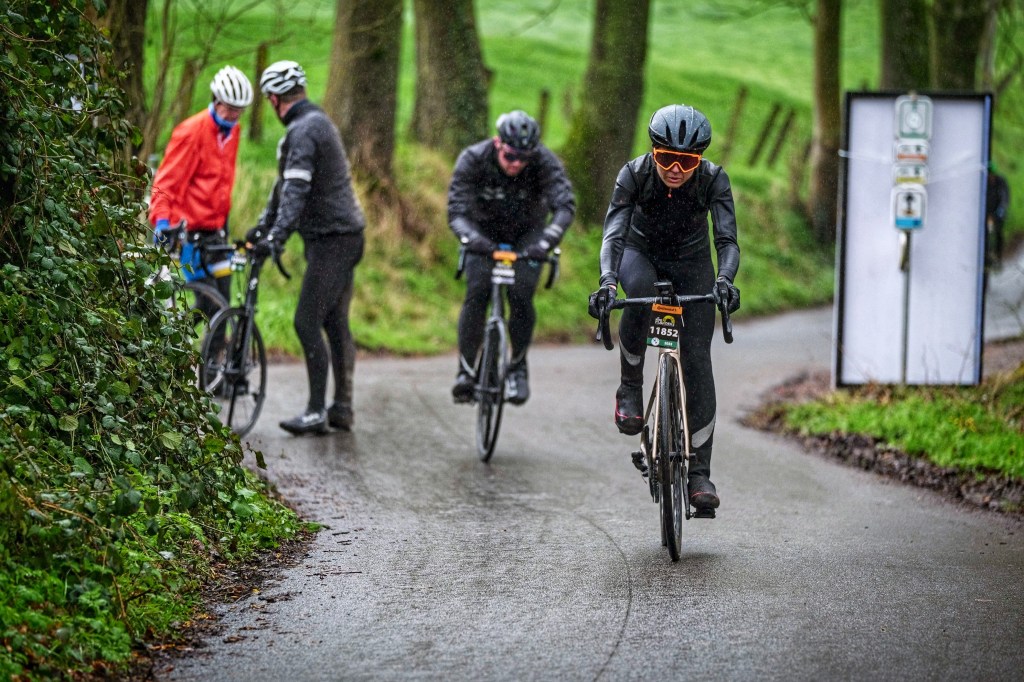
The Flanders route is challenging and for me, more used to climbing than to pavè, cobbles were the worst part. Weather played an important part in making the experience a true challenge. Indeed, I was hoping to live a full Flemish experience and that’s exactly what I got, including the awful weather. I tend to suffer cold a lot, to the point fingers lose thier sensitivity until I just freeze like a snowman. That day it was no-stop rain and an average temperature of 6 degrees so yes, cold was definitely the worst part of the experience, even if weeks after I can say I am almost glad it was like that, to add that extra touch of glam to the whole weekend.
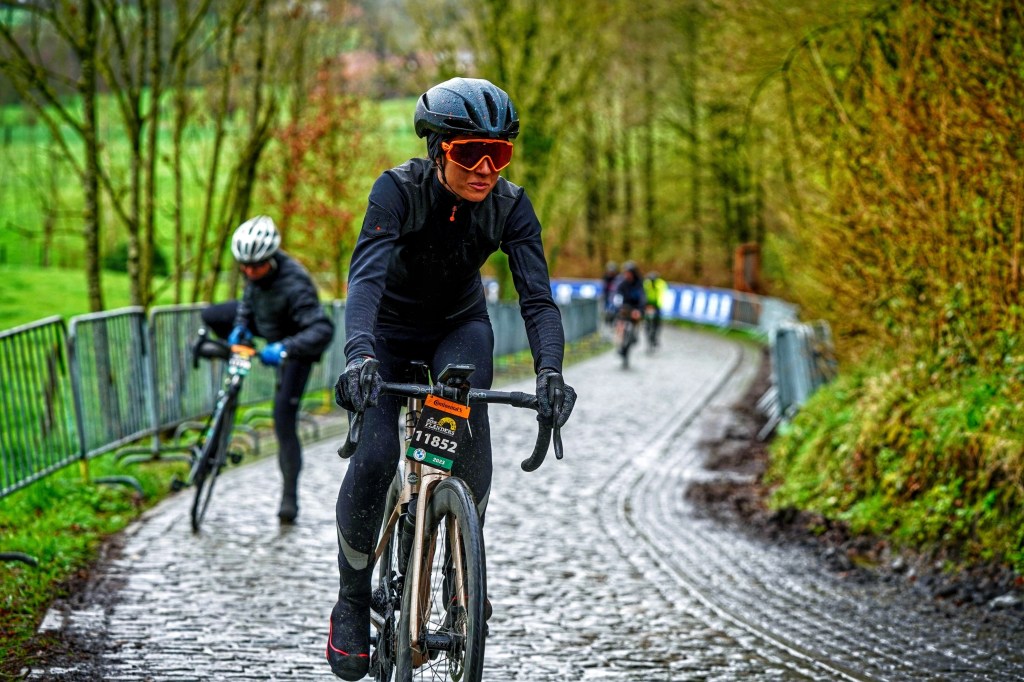
The second worst part of the day were the muddy and slippery cobbles. Years ago I rode the Paris-Roubaix and after arriving in the Roubaix Velodrome I firmly said “Never ever again” and I still didn’t change my mind.
Soaked somewhere along the route
The We Ride Flanders route requires some training to be completed, but in dry conditions I am pretty convinced it is not that hard. For sure living close to places like Sormano plays an important role in my evaluation of the route, as I grew up with crazy and long double digits segments. If I compare it to other similar sportives, such as the Granfondo Strade Bianche, I can also hazard it feels easier. The climbs are shorter and a little bit more gentle, the maximum gradients peak for very short distances, some hard pushes and they are done. To give you a better understanding of the scenario: I am not exactly a puncheur so when over 10% I am always on the 34-30. Well, the day of the We Ride Flanders my shifting was feeling depressed and repetetly tried to commit suicide, finally managing to kill itself. After 30 kilometers I lost the possibility to use the 30, soon after the 28 was gone, and then of course the 26 too. Despite this, I managed to ride all the Muurs, except the central part of the Koppenberg (but, ehi also Pogi walked up it during his recognition so I don’t see how Ginevra could have ridden!). I am telling this to reassure you: gradients are hard, but you can overcome them without particular issues. Flanders wasn’t a big physical challenge, but more a mental one, trying to maintain an high level of attention in order to avoid crashes of the overconfident riders. More than legs and especially if rainish, you will just need decent riding skills and confidence. Cobbles sectors aren’t awful like in Roubaix, where I truly reconsidered my life choices, but they aren’t gentle either, with Kobbenberg and Kwaremont being the hardest ones. I have no advise about how to survive cobbles, ride fast they say, so it will feel less bumpy, as it was easy riding fast on that thing! The Muur that concerned me more was the Paterberg, but I must say and without lying, that it is not that hard. It is very short and being ready for the worst, it didn’t feel bad. On the contrary, I enjoyed it, thinking about the many historic attacks that took place there. I was able to hear the screams of history, the excitement of all those April Sundays glued to the television, I could feel the passion that makes us spinning pedals. The Paterberg feels so nice also because it is the last effort, after that, as we all know, you are basically done. Also the shifting was done and I was stuck on the 34, but at that point I couldn’t care much about it, the only thing I cared about was the beer waiting for me in Oudenaarde.
Breathing history on the Paterberg, the Muur that scared me the most but that at the end wasn’t that bad
Oudenaarde and a random tip
The last kilometres of the We Ride Flanders go through Oudenaarde downtown, passing in front of the city’s landmarks: the cute main square and the Centrum Ronde Van Vlaanderen. I highly recommended a visit to the Centrum, that hosts the Tour of Flanders Museum, probably the best cycling museum out there, but avoid buying memorabilia in its shop, as everything is overpriced.
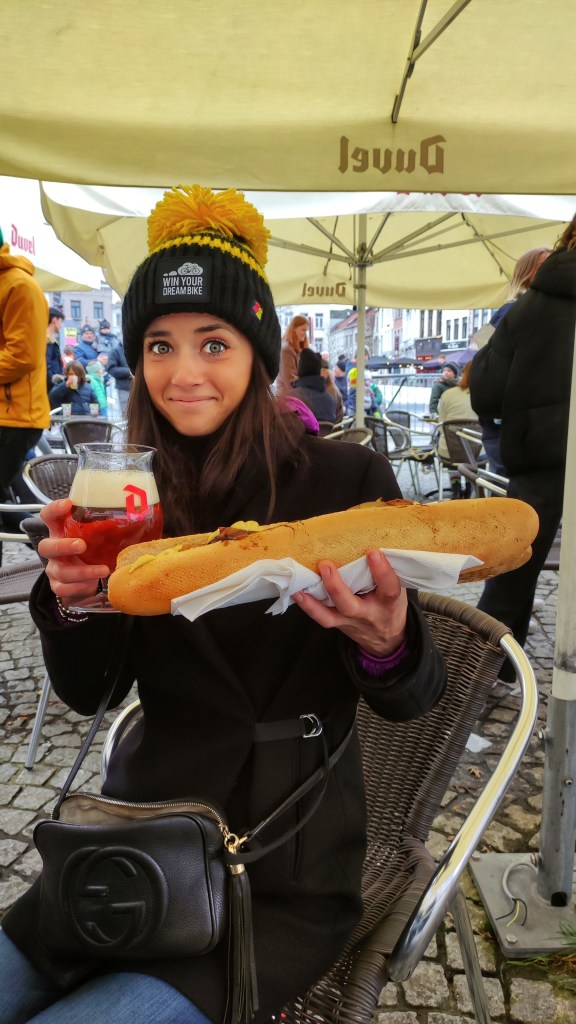
Chilling in the main square and having the recovery I deserved
To bring home some Flemish goodie, take note of this instead: next to The Qubus, where you will pick up your We Ride Flanders bib, there is the biggest beer shop you can wish for. It is calles PedeDrinks Oudenaarde, it is increadibly cheap and it has the hugest beer selection (plus some nice Ronde gadgets). Pay it a visit and get ready to swipe that credit card! If you don’t like beer and please don’t tell me that, in the city centre there are some nice chocolate shops worth it (and for sure cheaper than the airport shops)
The huge beer shop, trust me: visit it!
So, are you going to ride it? Did I menage to reassure you or did I scared you? Let me know!
Struggling with indoor training and Watopia? A few tips to survive when stuck on the home trainer
Winter means cold temperatures, only a few hours of light, rain and snow. It is often hard or even impossible to combine work, duties and outdoor riding and we might reluctantly find ourselves eyeing the indoor trainer and logging into Zwift, joining a virtual ride in Watopia.
I would have plenty of things to say about Watopia, starting with the fact that honestly I can’t understand how someone can think a cyclist might like riding inside a volcano or flying on water. Cyclists are strange people, but trust me: for how many crazy chit-chats I heard, I never ever heard someone wishing to ride in a place remotely resemblant to Watopia. Cobbles, alpine hairpins, sterrato, double-digit cotes and sometimes even endless flat and straight roads, but not in a volcano, an aquarium or in the pouring virtual rain. If I wanted to ride in a sad and grey place with rain, I would just open my door and ride outside. All right, I will stop complaining about it and I will try to write down my best advice for surviving indoor training sessions, starting with the most obvious, hope it helps!
1) The basics: towels, heating off, extra-light cycling kit, wi-fi, loads of water and possibly fresh air
Overheating is probably the biggest struggle on the indoor trainer (along with boredom), make sure to always have a few bottles of water and to drink frequently, keep a clean towel at hand for your sweat, wear the lightest kit in your cycling wardrobe and switch off the heating. If you have the chance, ride near a window, keeping it slightly open in order to help ventilation, otherwise consider to use a fan. Drink frequently, you are going to sweat a lot, you must drink a lot. Never underestimate these basics, setting the correct environment is the first step to make the best out of your session.
2) Keep it short and diversified
Indoor trainer is not suitable for long rides. Yes, you might see people doing extra long rides on Zwift and even attempting Everesting (yes, saw that before), just don’t.
Easy long rides are for outdoor fun, trainer is for short, fast and diversified rides. To me the correct training length is between 60 and a maximum of 90 minutes, your concentration will disappear after one and a half hour stuck on the indoor trainer and your body might catch fire.
I find the home trainer perfect for short high-intensity intervals, that are also funnier. You can also use your indoor sessions to get out of your comfort zone trying pedalling drills, high or low cadence intervals, and things you are ashamed of or don’t bother to try when outdoors.
I have always been used to ride with a really low cadence, as a child I wanted to look like my favourite cyclist so I used to eat a lot of pasta and ride with really low rpms. During the Corona lock-down in Italy we were forced on the indoor trainer for quite a long time, therefore I took that as a chance to improve my cadence and it worked, helping me in riding and climbing at higher rpms and without looking as bad as Froomey. My advice is to us the home trainer not only to improve or mantain your performance levels, but also to work on your riding style and pedal stroke. You might not achieve that perfectly round and full pedal stroke pro riders have, but it will help you a lot.
3) Set the correct power zones
Whatever application you use and rely on for your virtual trainings, remember to set your correct power zones before starting a new training programs and consider that on the indoor trainer your FTP might be lower than outside. Indeed, indoor you must keep a fixed position that depending on your riding style might be a limit to your ability to push more watts. Add to this the lack of motivation (I mean: pushing your limits in the Dolomites is for sure much easier) and often an improper or not so efficient indoor trainer. My suggestion is to either do a FTP test on one of the many indoor training apps or to simply set your FTP a bit lower.
4) Buy a front-wheel riser block
Unless you are using free rollers, a block for your front-wheel will be a game-changer for your indoor riding experience: putting the bike on the home trainer will change the bike setting, you need to re-align the wheels height. To do so and achieve the same position you have outside, you can simply put a block under your front wheel, the front-wheel risers are many and very cheap, but they can be very useful, here a random one (there are many and equally fine)
5) Feel inspired or let the music play!
Having the right playlist is one of the success factors when training indoor, it’s crazy how music helps you to complete the repetitive movements in a more efficient way. Choose songs that adapt to the session you are about to face: high cadence? High bpm! Avoid ballads and that song you used to listen to with your former partner!
Not only music, having something entertaining to watch can be a solution too. Personally I can’t concentrate well when training, so I prefer to watch easily understandable short videos or better cycling videos who inspire and entertain me and yes, I often watch reruns of cycling races I liked or Youtube compilations (yes, Peter Sagan best wins is always a must).
6) A decent indoor trainer
I am not an expert when it comes to home trainers, but I have had a few of them, so here some of the models I consider value for money.
First of all, I recommend buying a direct-drive trainer, they are reliable, silent, efficient and much more respectful to your bike then the wheel-on models. Personally I have this model by Elite This is another great option by Tacx in the same price range.
Wheel-on home trainers are cheaper, but also much more noisy, much less efficient and will worn out your rear wheel (yes, you can buy and use trainer-specific tires, but if you have only one bike then it means you must switch tires or wheels every single time). They are fine for beginners or if you are lucky enough to live in a really warm place and need to train indoor rarely. Just make sure they are smart, so you can connect them to the training apps, this is a good and cheaper option.
7) Stay away from the toxic riders and be smart
If you are planning to use your indoor sessions to train and boost your performance, then consider relying on the advice of an expert: stay away from internet wannabees and toxic people. This applies always, but even more to home-training. Over the years I have seen plenty of **** and training programs that scream for mercy. People often think that to improve you just need to push and push and sweat, nothing wronger. Ponder carefuly who you decide to trust and enjoy your riding! See y’all on the road!
I love cycling, but I love it a bit more when my nose doesn’t freeze.
Some people like Winter and cold temperatures, I do not. I am a summer girl, I can stand incredibly hot temperatures, the August heat and the burning sun, but as soon as the temperatures start dropping my legs refuse to move. I know many of you ride with no problem through rain and snow and a few are located in the opposite hemisphere, where Summer is about to start, but many others are glued to the home trainer dreaming about a sunny day in short sleeves and this post is definitely for us!
Is there a chance for Europeans to ride in warm weather in Winter and without going into bankruptcy? Yes, there is. The warm and easy-to-reach locations aren’t many, but there are some options that are totally worth every cent.
So cliché but so worth the hype: Canary Islands
The first destination is the most inflated one, but it is so inflated for one reason and the reason is it is a perfect Winter destination: Canary Islands.
First time I planned a Winter trip to Canary Islands I was very doubtful, after a couple of hours there I already knew that was going to become one of my must-places. Canary Islands have it all: low-cost flight connections, cheap or posh stay options, nice and clear sea on one side and surfing waves on the other, tourist and inflated areas as well as isolated ones, sun, warm temperatures and roads going up and down to die for.
Tenerife is probably the most perfect island for a cycling break, I already talk about it here so I want to suggest you another Island that I personally loved: Lanzarote.
Lanzarote is the most post-card like Island of the archipelago, with the many artistic attractions by artist Cesar Manrique, the beautiful beaches and the Timanfaya Park, it would definitely deserve a dedicated long guide also because road biking in Lanzarote is quiet dreamy with those beautiful roads cutting through the desert. I will try to sum up a few tips.
Temperatures: you won’t need any winter cycling clothing, and not even mid-season one. Weather is lovely even if it can become a bit windy.
Things you can’t miss: the Timanfaya Park (even if very touristic), all the attractions by Manrique (such as Jameo del Agua), a bath in Playa Papagayo and Playa Blanca, a surfing experience or a coffee stop in Playa de Famara, Charco Verde and the sea-side restaurants in El Golfo, the sunset at the Mirador del Rei, a (lovely) Malvasia wine tasting experience in one of the many wineries of La Geria
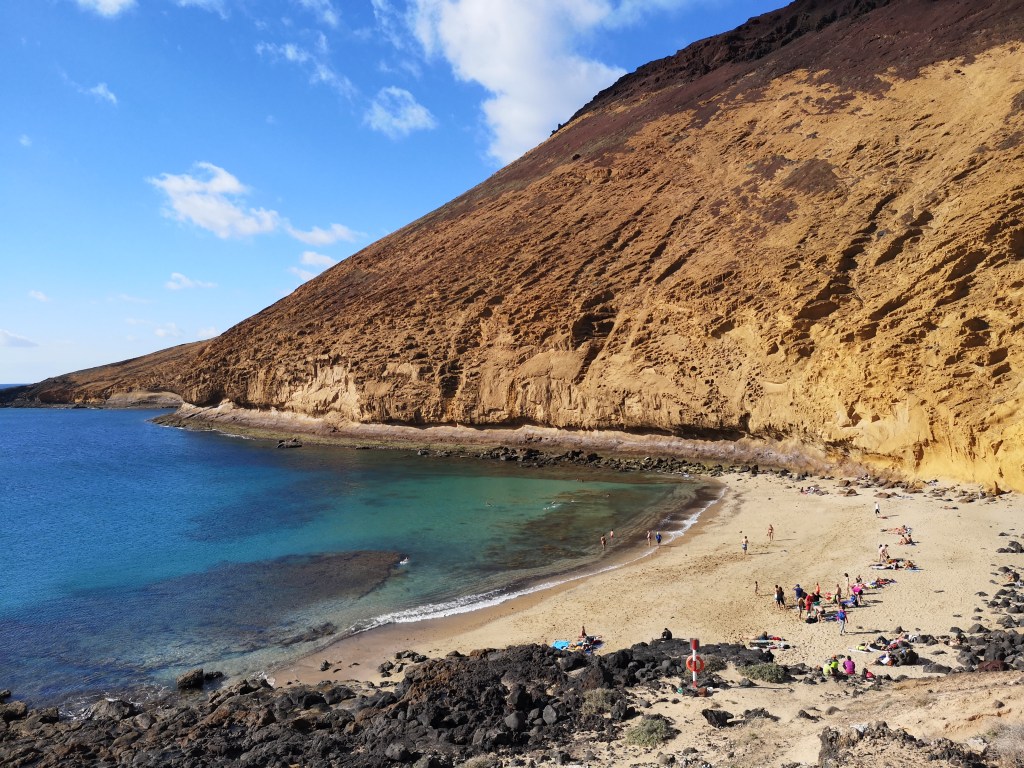
Extra tip: absolutely enjoy a daily trip to La Graciosa and for once switch to Mountain Bikes. The small island is car-free and has absolutely stunning beaches that can be reached by foot or bike via sandy paths. In La Gomera there are some bike rentals, but if you are looking for a decent mountain bike I would suggest hiring one in Lanzarote.
Where to ride in Lanzarote: basically everywhere, you don’t even need to plan routes in advance because every road is perfect for riding. For spicing up your rides with a nice climb I recommend riding up the popular Tabayesco, don’t miss a ride across La Geria wineries too, the area is magic and it has many gentle up and downs on smooth and perfect tarmac.
Rent a bike a bike in Lanzarote: there are loads of rentals offering high-end road bikes for hungry cyclists, especially in Puerto del Carmen area. I personally relied on ProAction Lanzarote but the choice is truly endless, I always suggest booking your bike in advance as there are many cyclists populating the area in Winter and you might not find available bikes.
Sunset at Mirador del Rei, you can climb up here with your road bike tooOne of the many wineries in La Geria, a lovely area where to ride and chill drinking a glass of nice Malvasia One of the amazing beaches of La Gomera, you can explore the small island by foot or with mountain bikes (I highly recommend it)
2. Portugal, but forget about Algarve and land in Douro Valley
Everyone knows Portugal for three things: Lisbon, Porto, Algarve. And the thermonuclear attacks by W52 at the Volta a Portugal, but that is another story. And perhaps also for the pasteis de nata (and if not, this is your sign to try them).
Visiting Portugal I discovered a Country that is much more than its most famous cities and its tourist southern coast. Portugal is convenient, quiet and a nice place to ride.
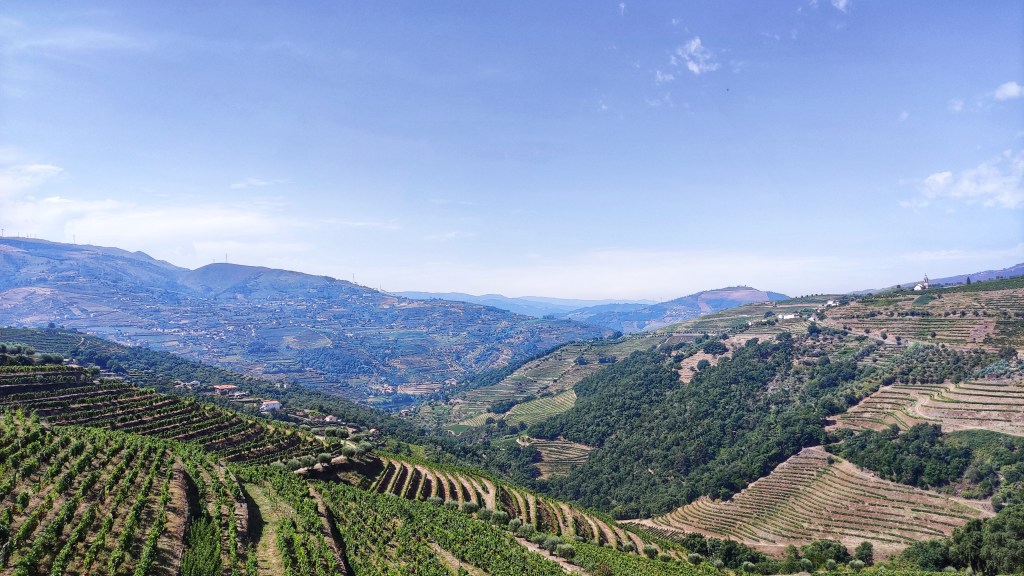
An area that surprised me and that is perfect for a cycling break paired with chilling and good wines is the Douro Valley, Portugal’s wine region and one of World’s oldest wine areas. With its terraced wineyards rising above Douro River and slopes way steeper than expected, the region hides many opportunities, along with endless dreamy staying options and great fine dining experiences.
Weather in Douro Valey: deep winter might not be the best time of the year to visit Douro, with rain making its appearance, but temperatures are warmer than in most of the other European Countries. Pack mid-season clothes and a nice rain jacket.
Where to ride in Douro Valley: following the river along the Estrada Nacional 222 is a great way to both discover the region and enjoy some good hours on the saddle. Slopes aren’t always gentle and sometimes they can get a bit rough. If you are up for some winter climbing challenge you can’t miss the famous Alto da Galafura or Casal de Loivos near Pinhão
What to do in Douro Valley: after your long rides you can’t miss some nice wine tasting experiences in one of the many wineries, such as the old and renowed Quinta de la Rosa. Consider also a visit to Peso da Régua, the capital of the region.
Swimming pool goals in one of the many luxury hotels of the Douro Valley, cool thing is the price aren’t even that high for the offerThe lovely landscapes and wineyards of the Douro region
3. Getting ready for the Milano-Sanremo: a nice stay in Liguria
The title of this feature should have been “A couple of ideas for a winter cycling break”, because three options are too hard to pick. If Canary Island were an obvious choice and Douro Valley looked like a good and unconventional idea, I was faced with many doubts with picking the third location. I had too many ideas and all were too nice yet not so good, but then at the end I decided to go with a place I (and many cyclists) know well and where I used to spend many breaks as a child: Liguria.
Here in Milano we say Liguria is for children and old people, but also cyclist. I don’t know an amateur cyclist living in Milano area who in Winter does not travel at least 3 or 4 times to Liguria for some riding. It’s not like travelling to Canary Islands, but the sea makes Liguria a warmer place and that is quite enough for cyclists.
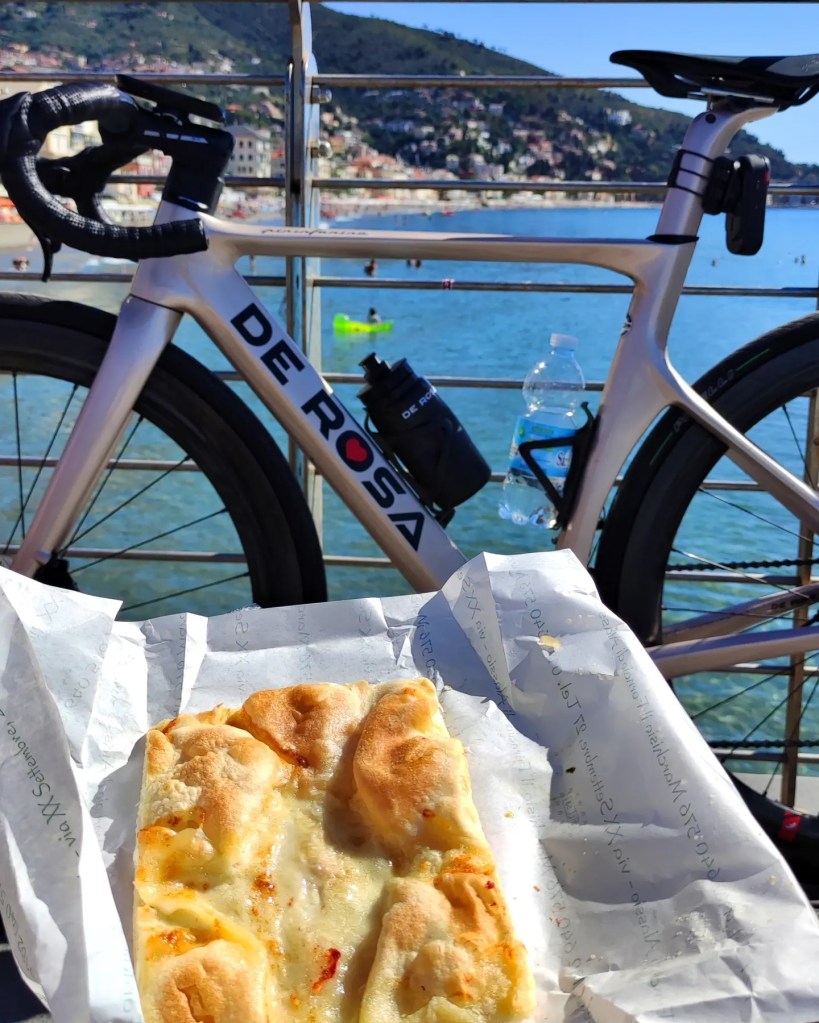
Not only, because Liguria is great for cycling and yes, the coast is often packed with cars, but as soon as you leave the main roads you hardly find someone else. I personally love riding in Liguria, perhaps it is because I have many childhood memories in those places, but the road from Alassio till Sanremo is one of my favourite ones to ride: Capo Mele, Cervo, Berta, Cipressa and Poggio, just wow! If they sound familiar it is because it is also the final part of the Milano – Sanremo, a very gentle up and down along the coast, through maritime trees, colorful little towns and the persistent smell of fried fish and focaccia.
Temperatures in Winter in Liguria: the sea makes temperatures a bit warmer and sometimes on clear sunny days it can be really really pleasant, but generally winter is winter even at the sea so you will need your winter kits and eventually a rain jacket
Where to ride in Liguria: Liguria is a lovely place for riding, the coast is gentle and scenic, the hinterland rougher and quieter. Don’t miss a ride on the Milano – Sanremo route and on the Trofeo Laigueglia climbs, such as the nice loop up Testico but also Passo della Crocetta, Melogno, the choices are truly endless!
What to do in Liguria: depending on where you are staying, there will be plenty of things to do and discover. The small towns, being them on the sea or in the mountains, are generally fascinating, the food is of course great (pesto, focaccia, farinata!) and the endless walks on the coast are always pleasant
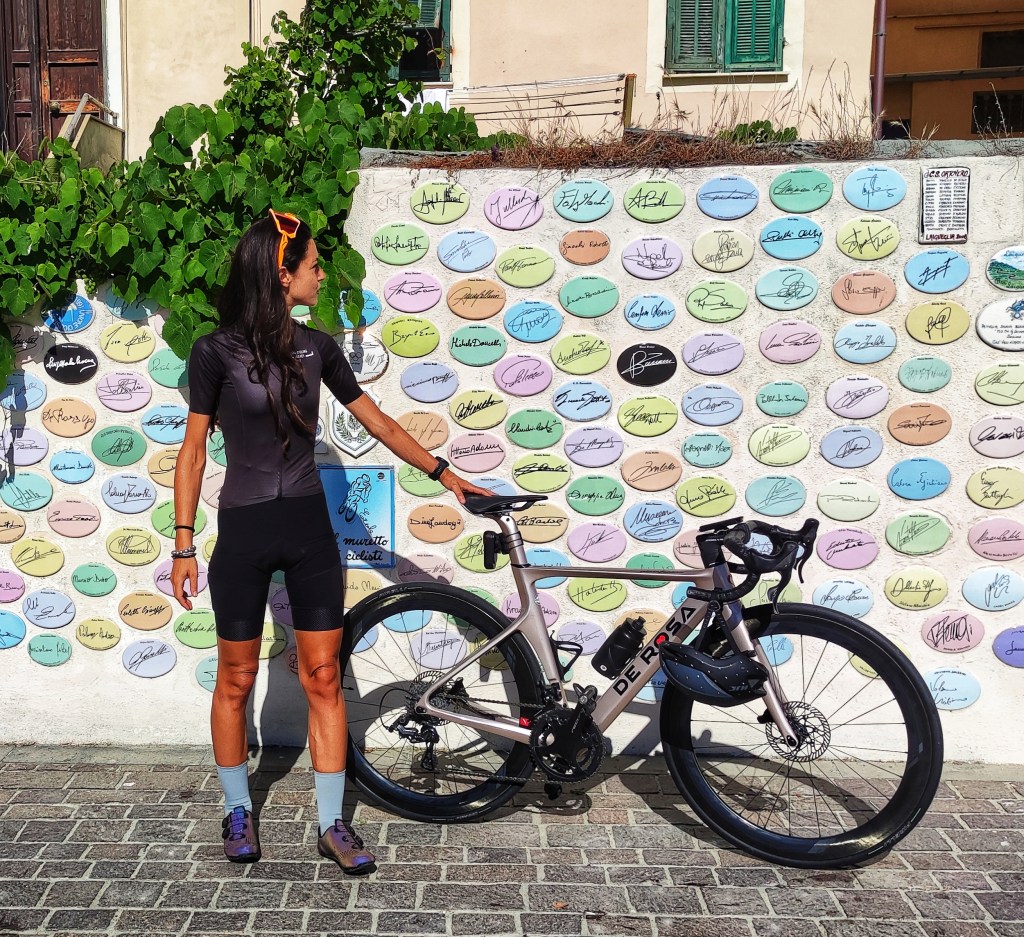
The iconic “Muretto dei Ciclisti” in Laigueglia, each tile is signed by a famous cyclist, in the middle my beloved one by Jan, next to Tonkov oneSome great Focaccia in Alassio, one of the best towns where to stayThe hinterland, here is Testico
And in case these three spots didn’t inspire you, here a list of other places to consider: Andalucia, for sure a warm and stunning region, the Turkish Coast and why not a big Greek Island like Rhodes?
The only things I like about the Christmas Spirit are advent calendars and Panettone, and the Gingerbread latte I guess. Plus, buying gifts stresses me out and I know many share the same feelings. You won’t have to worry any longer because I put together the ultimate gift guide for every cycling addict and every budget. You can’t go wrong with these items!
Mugs & Coffee
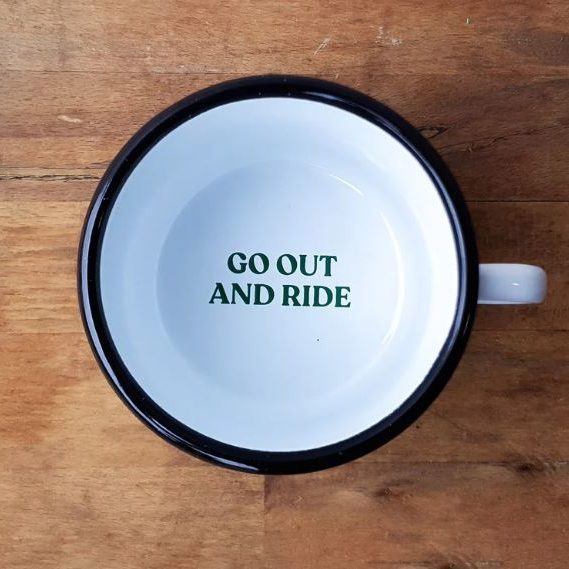
Coffee & Cycling is well known combination that grew its popularity in recent years and let’s be honest, coffee is always a good idea. On the market there are plenty of brands offering cycling-themed coffee beans, for an emotional bond I would love to start the day with some Ghisallo moka coffee in this cup, but the choice is truly massive.
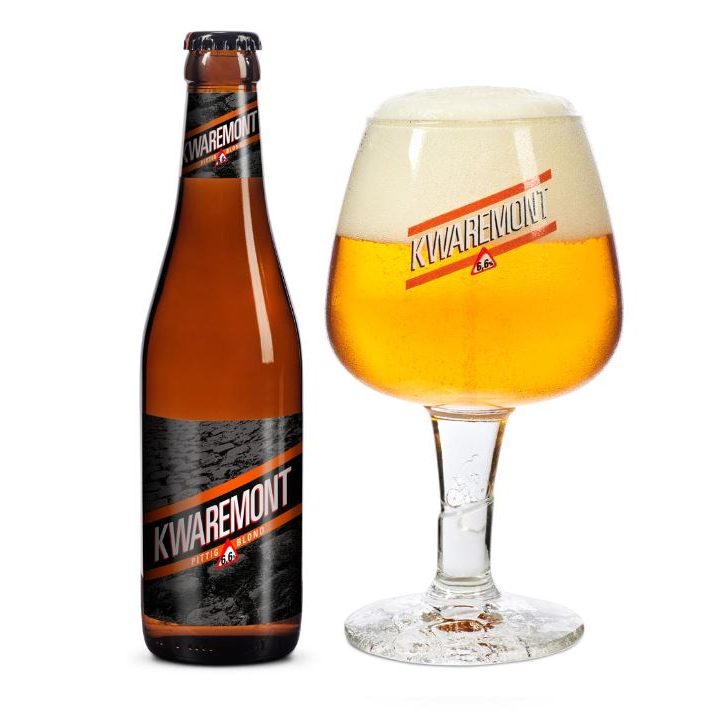
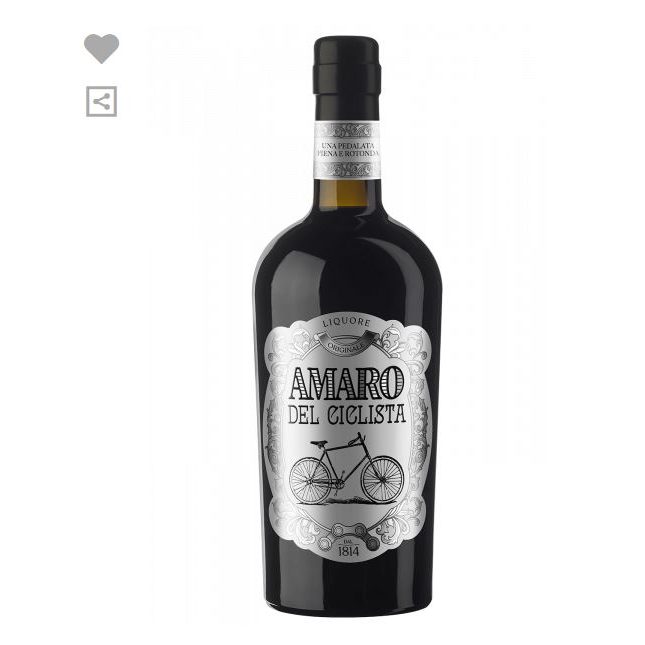
Yes, coffee is always a good idea, but a nice beer for the post-ride recovery is even better and when it comes to cycling-related beers there is only one brand to consider: the iconic Kwaremont. It might not be the finest beer, but its meaning for a cycling addict overcomes every taste limit. And if you don’t like beers (unacceptable, if you ask!) you can chose a cycling related spirit, such as Amaro del Ciclista.
The iconic Kwaremont beer starting from 3€ on their shop you will find a variety of options and gadgets
Amaro del ciclista, a nice spirit after a challenging post-ride dinner – here starting from 14€
Bike Care Gifts
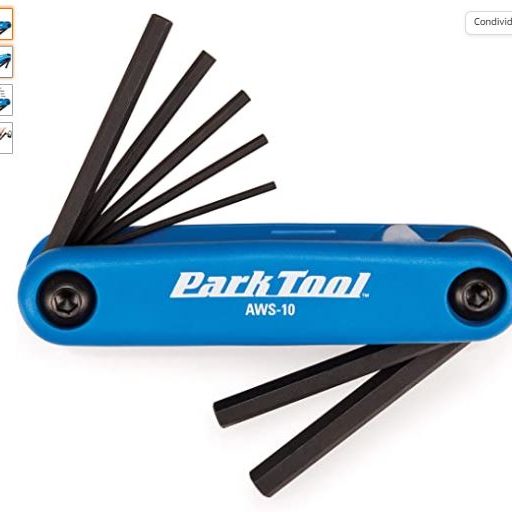
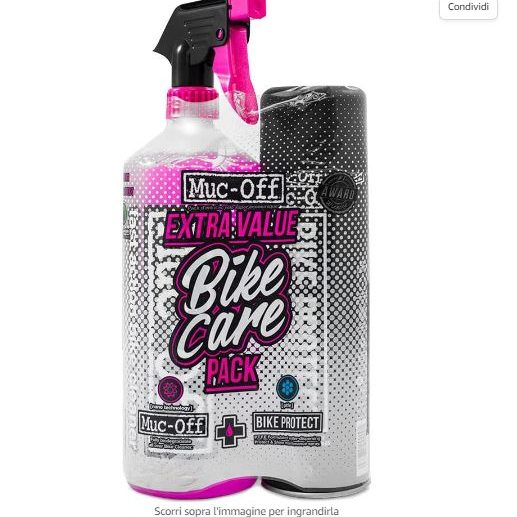
Multitools and bike care products are always a great option, it might look like they lack of the warmness certain gifts bring, but they are useful and this reason is enough to make them a perfect gift for a cyclist.
Pocket-size multi tools are probably my personal favourite gadget, I have many and always bring one with me, even when not on the bike. This one is from Parktool and it costs 9,9€
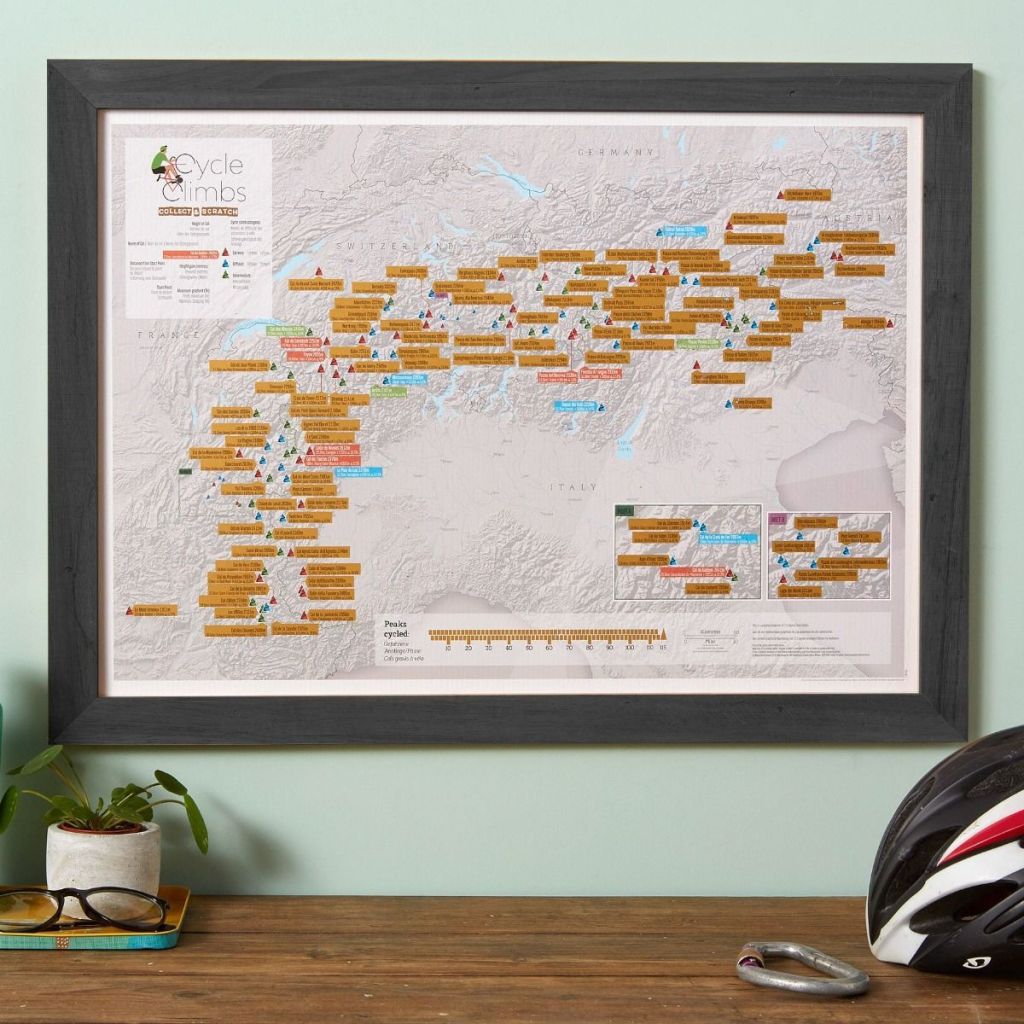
As a child I would spend hours playing with trump cards, as an adult I still spend time playing with them, but only if cycling related, the perfect way to pass the time when on the move. Another cute idea is a scratch map, but not a standard one: an alpine pass map to scratch all the cols you conquered.
I love wearing cycling related items and on the market there are so many nice options that is hard to pick just a couple of them. Personally when it comes to casual wear I always rely on Cois Cycling, I love their prints and Flanders collection, but you can truly find whatever comes to your mind on the web.
Erstwhile is another casual brand I like, it can be pricey but some options are really cute, such as these socks that cost 20€
Bike home decor
Prints are always a great choice and there is no better way to decorate pain caves than with some nice inspiring images, but it is estimated that every cycling lover has at least 3977 cycling prints, time to upgrade the game.
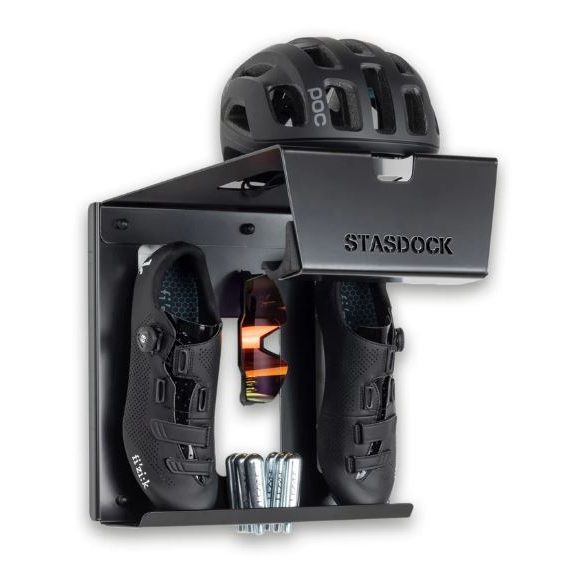
Bike hangers are starting to become a thing, with models like this you can hang the bike and store all your cycling stuff in one place. One big plus: not only useful, it even looks cool. Price for this specific model by Stasdock is 109€
Bike Upgrades
I would never risk with gifting a bike component, the choice is too personal and in 90% of the cases you are going to make the wrong choice. Smaller, cheaper bike upgrades can be the solution.
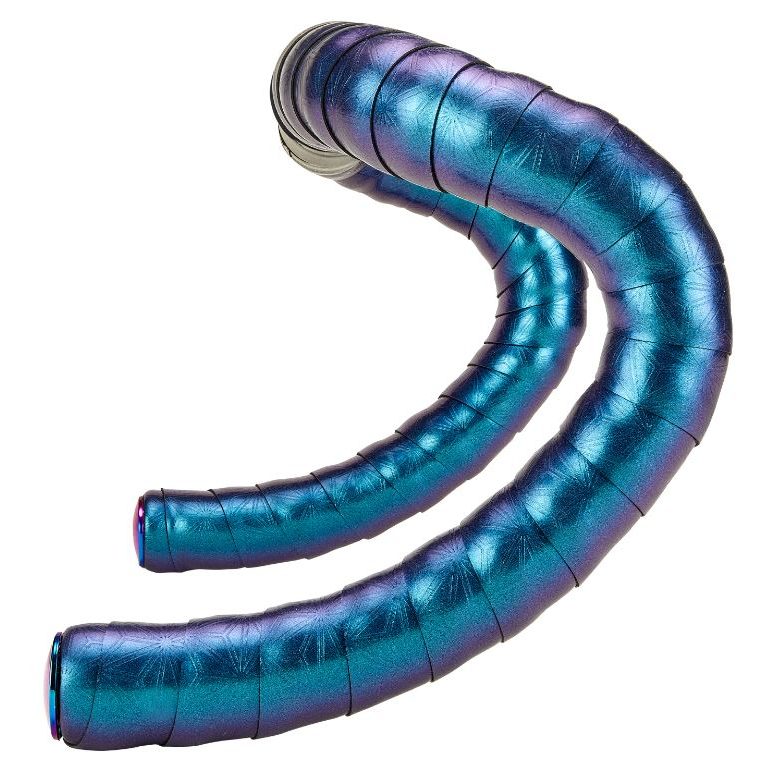
Supacaz has a huge variety of high-quality bar tapes that look ace and stand out, prices start from 25$, models like this cost 50$ but won’t be unnoticed.
Super light carbon bottle cages are the bike upgrade you don’t know you need until you see it and hold it in your hand. This is the model I am using on my bike and price is arounf 50€
Bags, but for cyclists
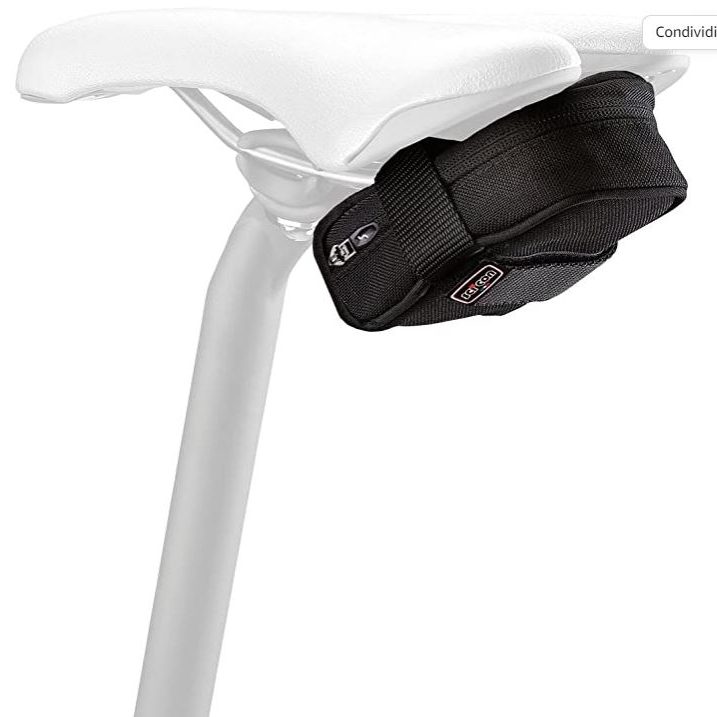
Bags and wallets are probably one of the most common Christmas gifts ever, along with perfumes and guess what? You can gift bags and wallets to cyclists too, just a little bit different from your standard ones.
Bigger budgets? Then you can’t go wrong with good Cycling Tech
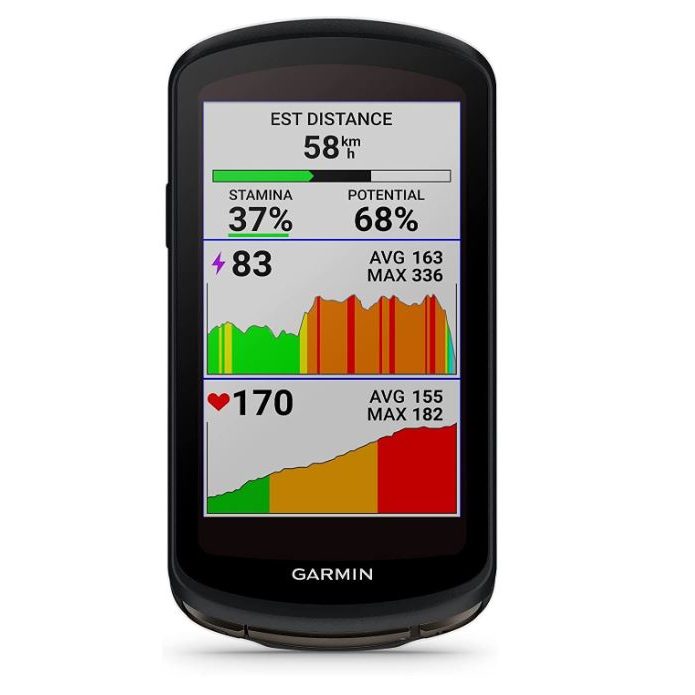
If I was in charge of picking the best cycling tech of the year, I would undoubtedly pick the Garmin Edge 1040 Solar, a gamechanger. Used it for 10 months and more than 7,000 km and charged it twice! Yes, it is expensive but totally worth it. You can find it here at 689€
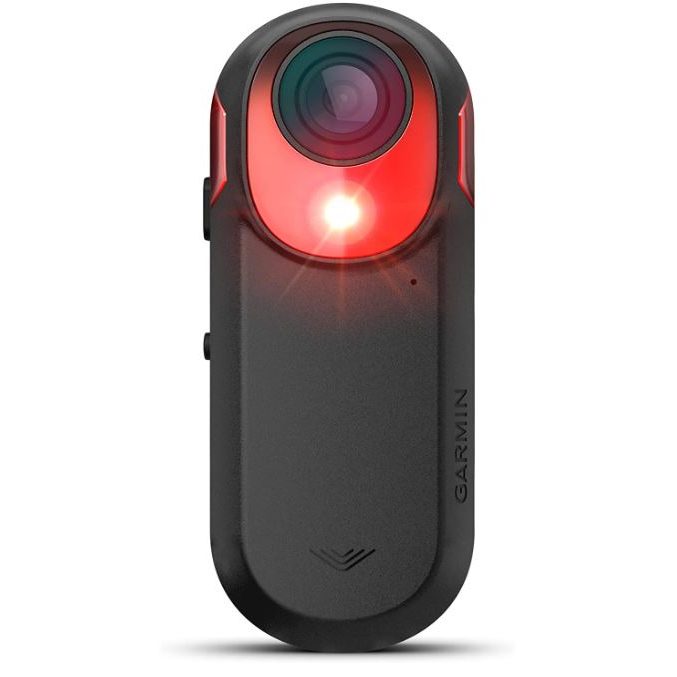
Another great cycling technology is the Garmin Varia, that makes you visible and records what is happening behind you, this model costs 359€.
Unusual cycling wear
Gifting cycling wear is like gifting bike components: no way you can get it right with the different size charts, the different styles and the many options. A good alternative can be represented by less usual cycling wear, such as great vintage cycling caps or cheeky water bottles.
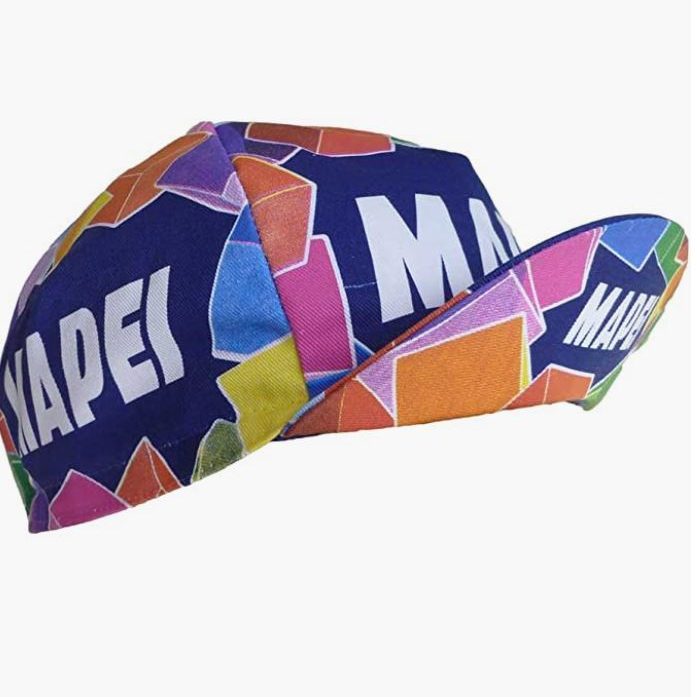
This brand I found on Amazon has a huge variety of vintage cycling caps. The Mapei one is only 15€ and you can’t go wrong with a Mapei gadget.
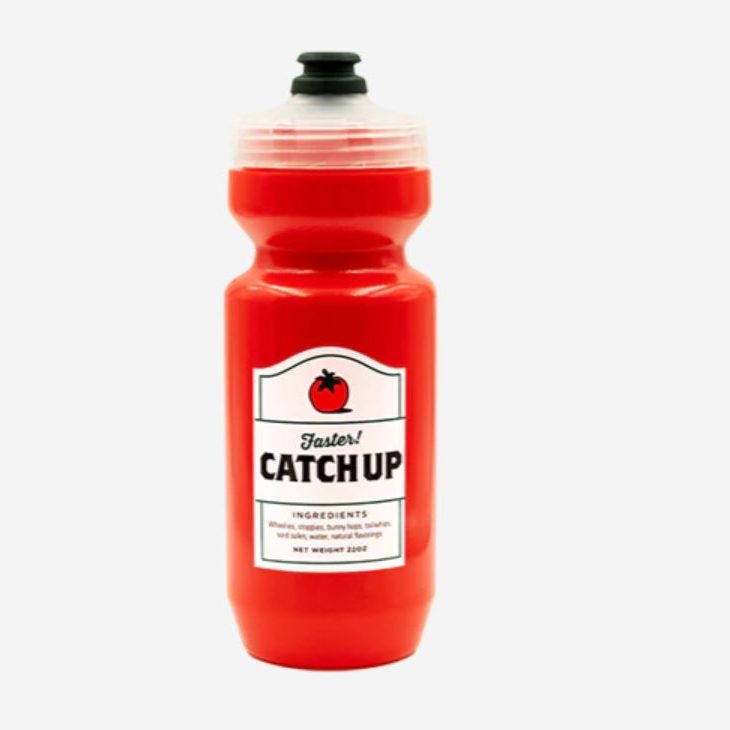
I found this water bottle at Eurobike and I find it pretty brilliant, it is only 12$ and on their website they offer 2 other versions.
Hope this small guide helped you in sorting out the Christmas gifting or the auto-gifting. About me, if you are in doubt, gift me a month of sun, possibly in Tenerife!
In the last 20,000 kilometres ridden on my bike I tried a consistently large number of cycling kits, I picked and reviewed the ones I preferred and that, for different reasons, I consider worth our money. Different price ranges and items to meet the different needs, hope it might help your black week shopping!
Short Bibs
Le Col – Pro Aero Bib Shorts
The most trustable pair of bib shorts I ever had, also if incredibly pricy. They are perfect for long days on the saddle and adapt to different temperatures.
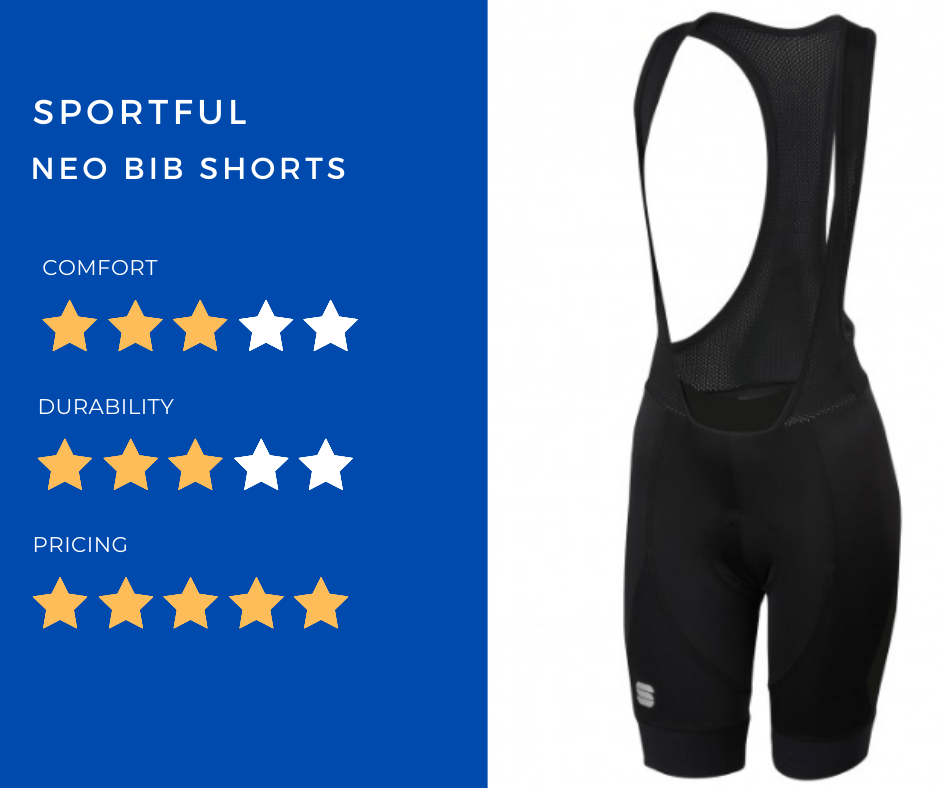
Basic bibs for short rides or indoor training at a very competitive and convenient price. They are like a basic black tee, you always need one in your wardrobe.
Amazing fabric, good comfort and great fitting, the more performance-oriented. Love them especially in warm weather, resist perfectly to high temperatures.
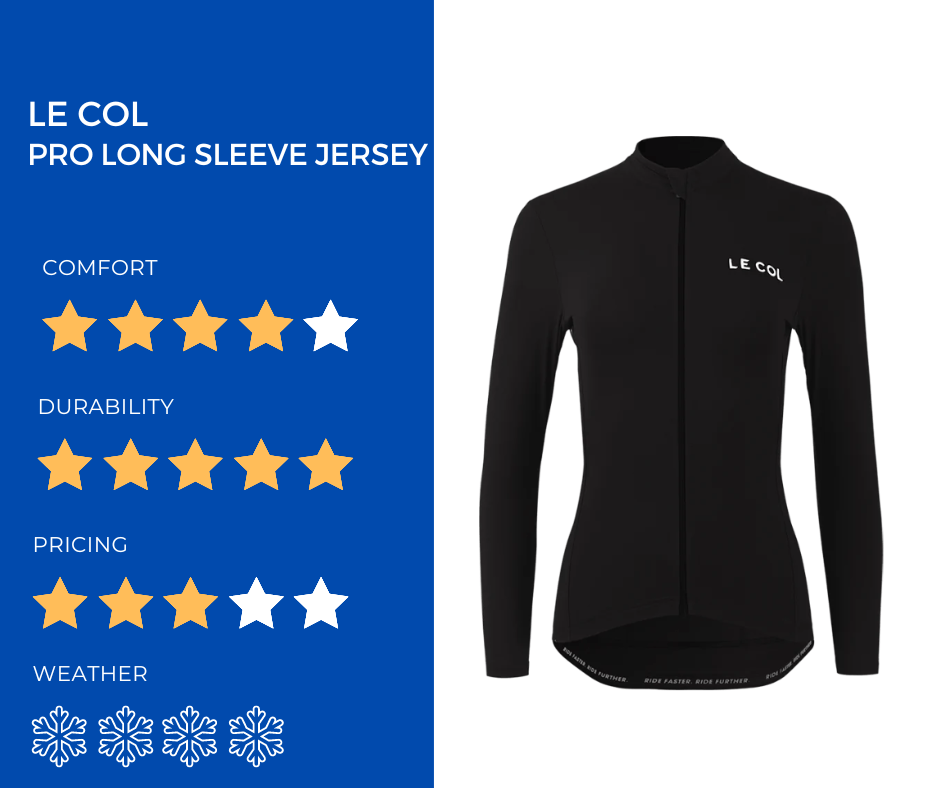
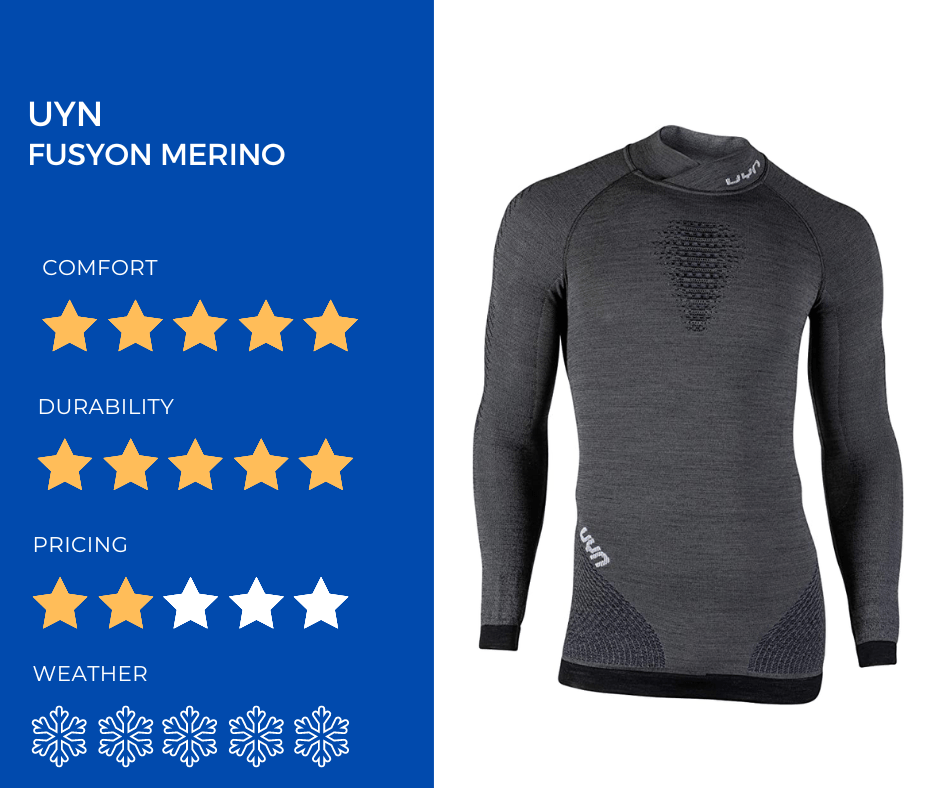
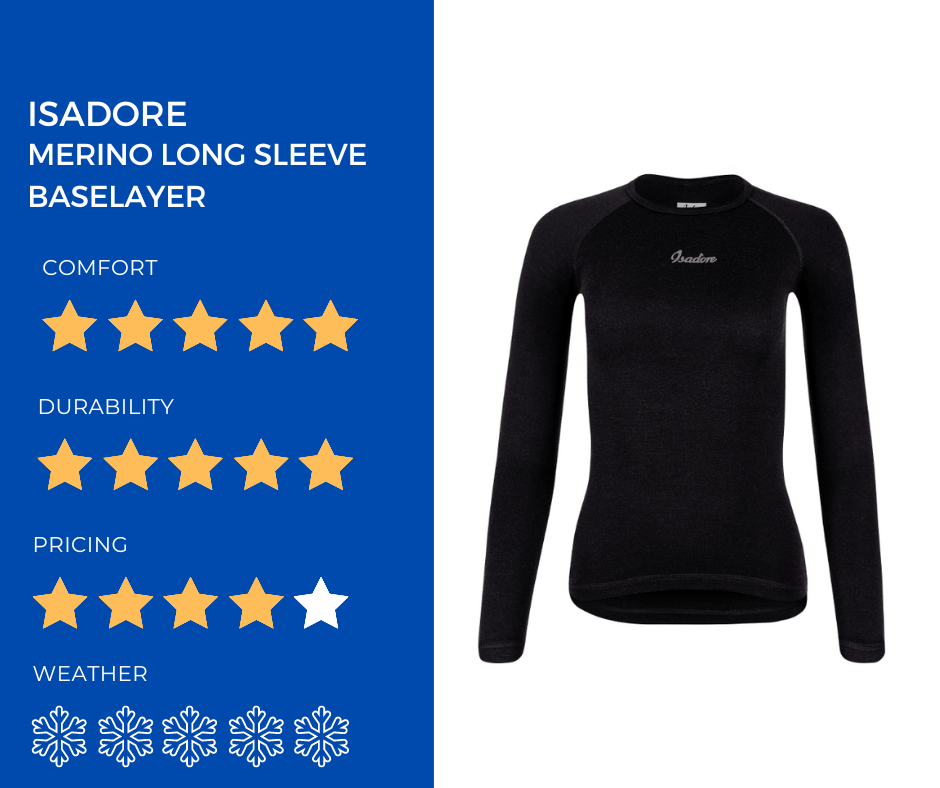
Probably the warmest long jersey I ever had, paired with the merino baselayer it feels unstoppable. Tried the combo with 2-3 degrees and didn’t suffer cold at all.
I spent a weekend cycling in Kapadokya with Boostcamp Live, here how it went and my best advice to enjoy the region at its best
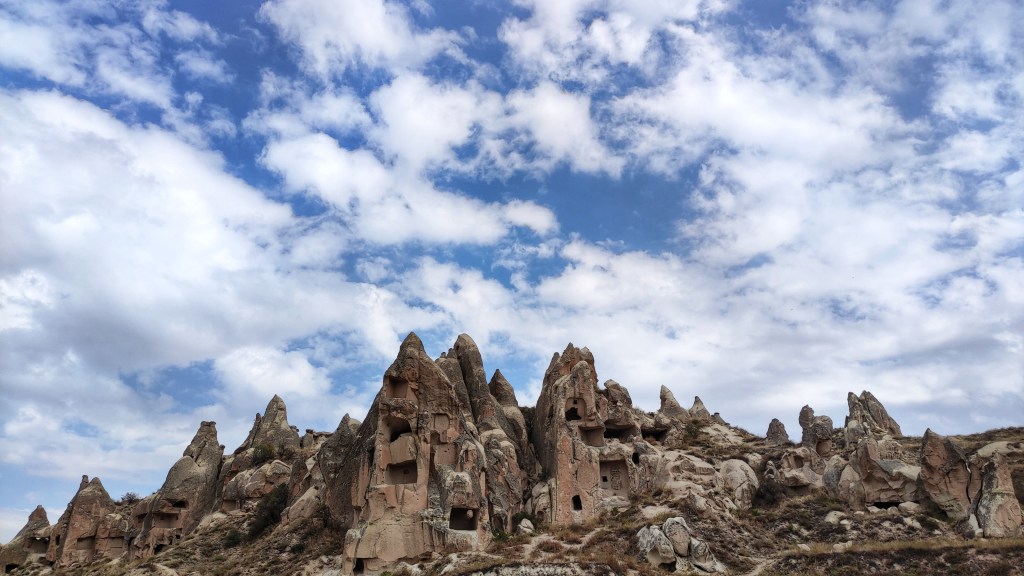
The stunning scenery in Göreme
The collective imaginery of Cappadocia features two things: the fairy chimneys and the baloons, but Kapadokya is much more than that.
Nestled in central Turkey on a plateau over 1000 meters of altitude, Cappadocia is easily accessible by air from Istanbul with daily flights towards the two airports of Kayseri and Nevşehir. Something interesting you might want to know is that for international flights with Turkish Airlines until the end of the year you can carry your bike for free, this applies to all flights arriving to Antalya, Alanya, Adana, Kayseri and Nevşehir.
I had the chance to have a taste of Kapadokya fairiness thanks to Boostcamp Live, a growing cycling holiday concept that puts together riding and training with tourism and the chance to experience the land and its culture, taking care of all the organization and offering participants the opportunity to bound with other cycling addicts from around the globe.
Cycling in Cappadocia: a few tips and an itinerary to discover its most famous landmarks
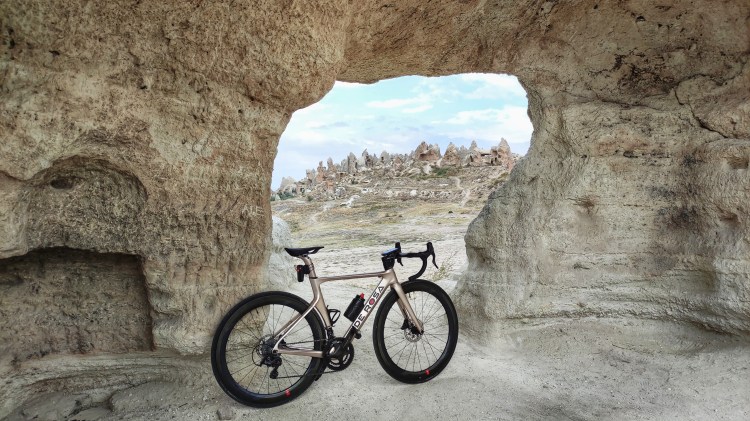
I was standing in front of the amazing scenery of Göreme, waiting for some tourist buses to leave when I truly realized why bike is a great option to visit the Turkish region: it gives the opportunity to distance yourself enough from the classic tourist itineraries, whilst diving into the surroundings and appreciating them for real, breathing in the majestity of the land and going beyond the postcard settings.
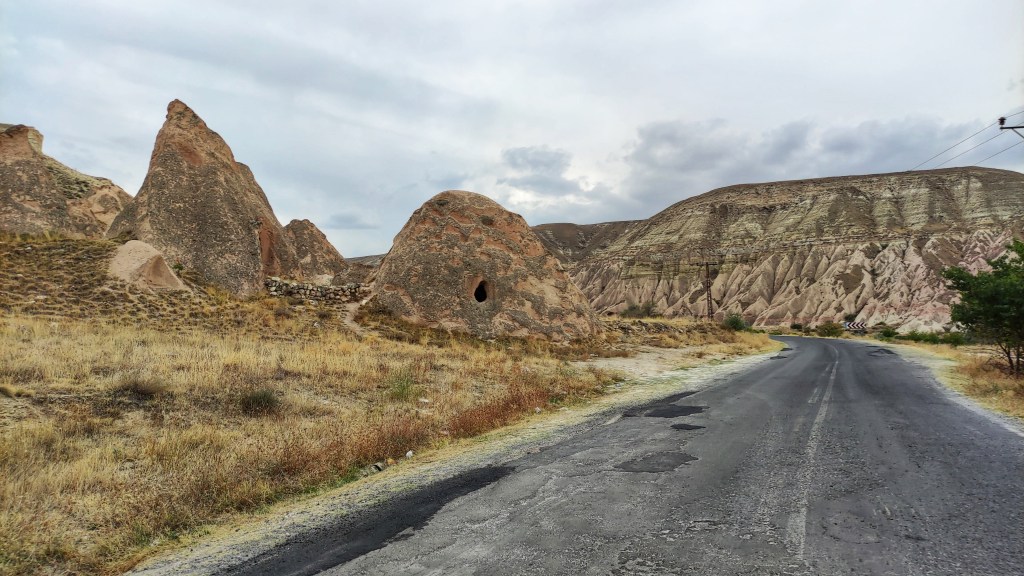
The view from Uchistar, probably my favourite spotThe distinctive rocks of GoremeThe road towards Zelve open air museum, I rode it at sunrise too, don’t miss it!
Cappadocia is a mountain and windy region, that might need a bit of training to be appreciated on a bike. The main roads can be busy, but the tarmac is fresh and smooth, on the contrary secondary roads are almost empty, but the asphalt isn’t always great. Fatter tires and gravel bikes could be a great option, but I had no issue with my slim tires and road bike, at the end it comes to you and what you prefer. In general, the region is a cycling treasure waiting to be discovered, on Boostcamp Live Strava profile you can find some routes, such as this one. I designed a short itinerary putting together some of the rides I enjoyed, this will give you the chance to discover some of Cappadocia most famous spots while riding:
Cappadocia is a growing gravel grinders destination and I can totally get why, for further inspiration about it, you can keep an eye on Fat Pigeon social pages, they put out high quality work and being excellent gravel riders, they will be able to inspire your next rides in the area (but also in the rest of the globe).
In general Cappadocia is a very touristic destination, well organized to host the thousands of tourist traveling here for a Insta-friendly shot with the colorful baloons. The majesty of the landscape and the distinctive rock configurations make the trip a must-do one. Personally I had really high expectations and they were met and I consider this short trip as an “appetizer”, as I will definitely plan a longer stay to discover more of it.
What not to miss in Cappadocia:
Zelve Open Air Museum, a Byzantine monastic retreat carved into the rock
Uçhisar Castle, a mystic citadel standing on a rock spur and dominating Cappadocia from the top
Göreme National Park, with its rocks sculpted by erosion that once hosted churches and underground cities
Sculpture Park “Time And Space”, that is said to be the largest contemporary land art landscape in the world
Kaymakli Underground City
Where to stay and extra tips
Avanos, where I was based, is a good base camp to explore the area, the town has everything you need and a small but pretty old centre hosting small restaurants and wine tasting locations. When here, do not miss Güray Müze, an underground gallery with a small cafè and a workshop hosting pot artists, you can also buy their crafts at a very fair price in the dedicated shop.
My editing skills are very limited, but I want to give you a taste of Cappadocia roads as seen from my Garmin Varia™ RCT715, ready? Have a look at this:
About Boostcamp Live: riding bikes, discovering new places and making friends
As briefly metioned, the Boostcamp Live concept is a nice combination of riding, training, chilling and sightseeing. During the year, the organization puts together Camps in different locations, among them: Antalya, Marmaris and Cappadocia. From what I learned talking with the aficionados who already took part in several editions of the Boostcamps, some events are more performance-oriented, such as the one in Marmaris at the beginning of the season, some more chilling-oriented, like the one in Cappadocia, perfect way to end a long and busy season.
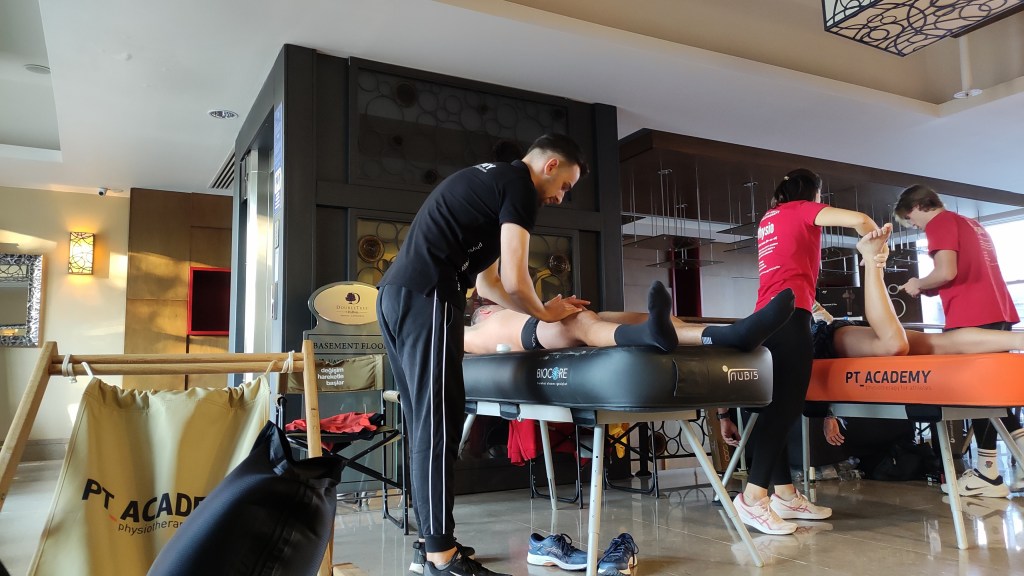
The organization takes care of everything: accomodation, bike route planning, assistance before, during and after the ride, post-ride recovery, but also chilling and fun. The only thing you have to worry about is showing up in the selected location. Rides are at the core of the Camp, around them activities for every taste, such as touristic tours, workshops on perfomance and training with experts and former pro riders, or even physiotherapy sessions.
You can find more information about the events here.
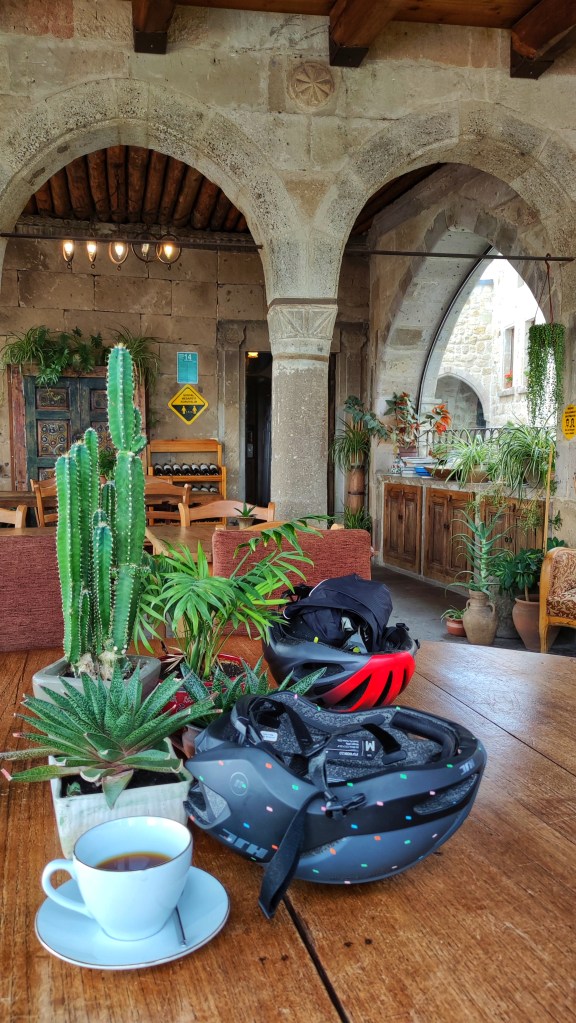
The Boostcamp Live Location: Hilton Hotel in Avanos Benefits for the participants: physiotherapy sessions with PT Academy A very cozy coffee stop in Uchisar
Given my very gipsy soul, I usually travel independently, taking care of the whole organization and getting lost on the bike. I must say that for once I enjoyed having everything ready and having the chance to rely on expert guides for the rides. The thing that hit me more was the strict connection among the participants, that take part to different Camps year over year and suggest me I wasn’t the only one enjoying the concept. I find Boostcamp Live a great chance to put some kilometers in the legs while discovering new exciting places and creating new connections, plus I want to take this chance to thank all the people I met during my stay, it was a pleasure getting to know so many dedicated cyclist and learning about the rising cycling scene in Turkey, I truly hope to see you again, in the meantime: happy riding!
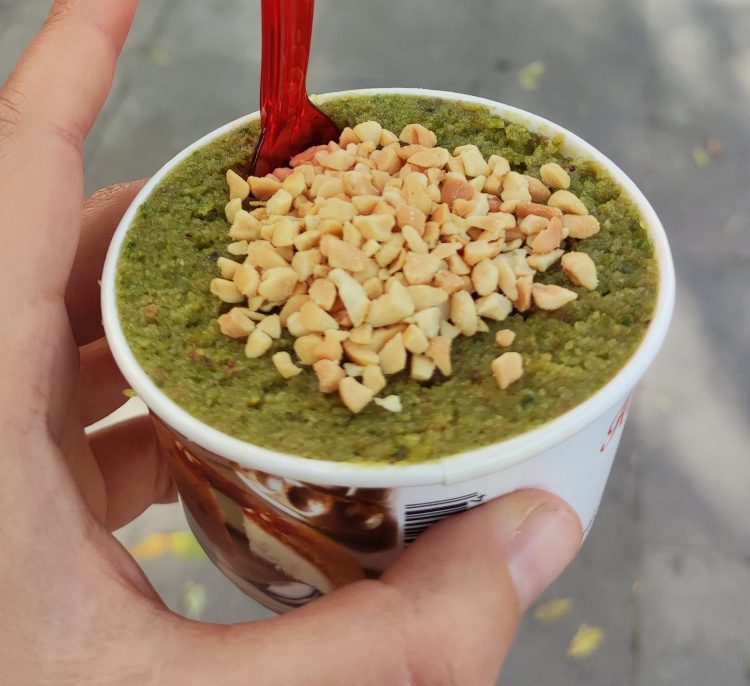
Bonus track: if you have been following me for a while you already know about my unconditional love for Greek and Turkish sweets, don’t miss my new entry: ice-cream topped with pistachio halva!
Planning a stay on Lecco Lake? Prepare your road bike and take notes, here five climbs you can’t miss (and some must-have recovery food!)
Lecco and Como are among the most famous tourist destinations in Northern Italy and I am lucky enough to live a ride away from them. Year over year I had the chance to ride some of the most renowned climb, that saw me at my best and more often at my worst. This is my personal classification of the rides you can’t miss.
#1 Madonna del Ghisallo
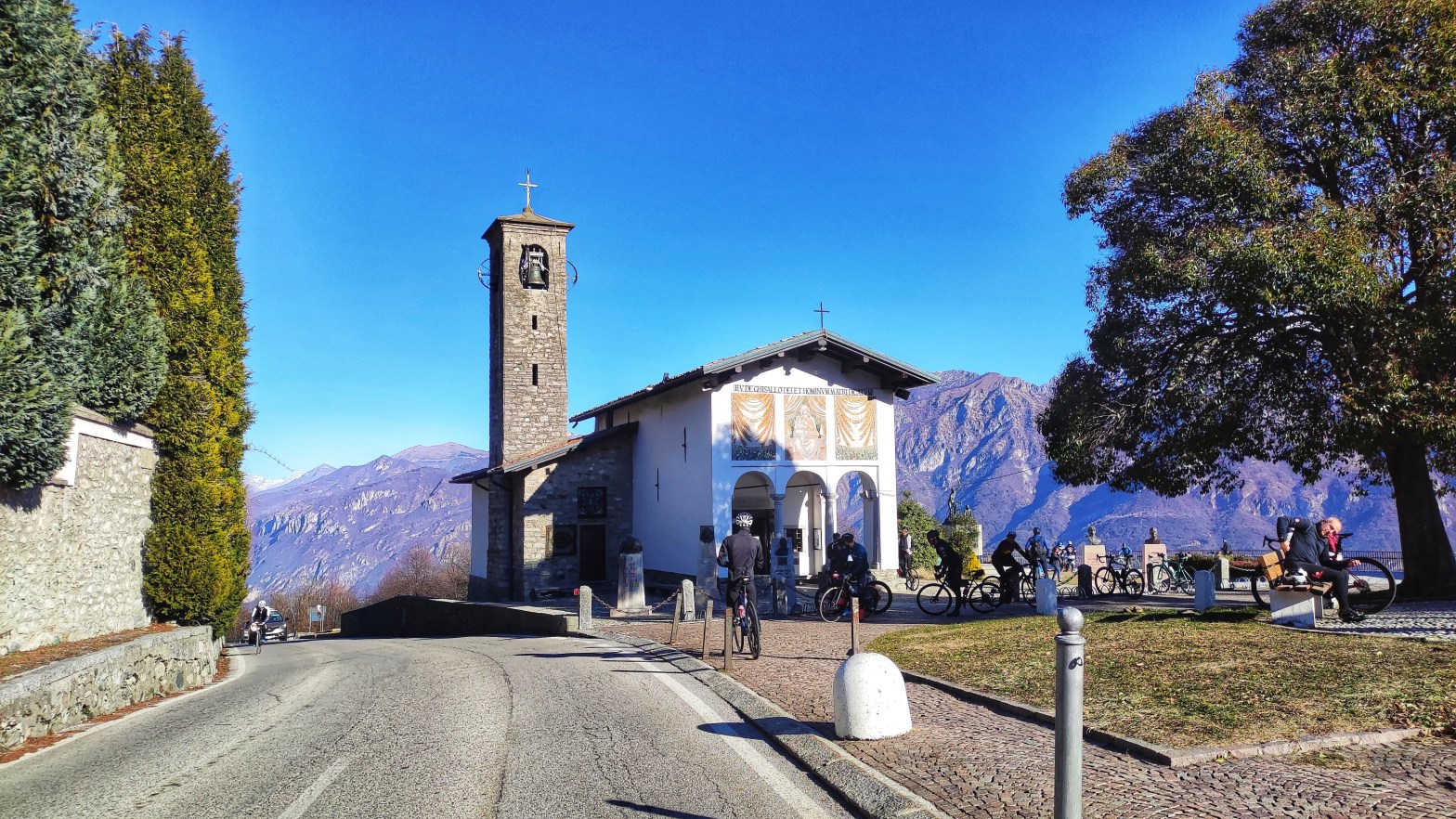
Madonna del Ghisallo: the Sanctuary at the top of the climb, inside cycling memorabilia of all sorts
Madonna del Ghisallo doesn’t need any introduction, every cyclist around the World knows this iconic climb with its Cyclist’s Sanctuary.
The climb itself isn’t epic, it starts in Bellagio (you can also climb it from the opposite side, but we use to call it “Ghisallino” as it is way longer and easier and well, a bit boring, the Bellagio side is the “correct” one). The first 4 kilometres can be demanding if not in shape, with gradients peaking at 14-15%, but you will be able to recover in the central section with 3 kms with very few ascending, the road will go up again in the last 1,5 kms. At the top you can experience a majestic view of the Lake and you will have the privilege to visit the tiny Church and the Cycling Museum. The church isn’t a normal church, it’s the Cyclist’s Sanctuary, inside stand countless cycling memorabilia, including bikes once ridden by Fausto Coppi, Gianni Motta and Francesco Moser, many jerseys including some from Bugno, Evans or Bettini and a lot of medals. If you are into road cycling and its history, it can be quite moving. Personally, I visit it once a year and have a talk with Fausto bike, it started as a joke and ended up as a ritual, the first long ride of the season or the first ride with a new bike is usually up here, it’s a private thing among me and Fausto bike, never mind.
Inside the small Sanctuary: here Fausto Coppi and Eddy Merckx bikes
Not only the tiny Sanctuary, the Museo del Ghisallo is a ultra-modern cycling museum, really well organized and super interesting for every cycling soul.
Extra tip: once you make it to the top of the climb, don’t start descending yet, take the turn on the right towards Piano Rancio / Monte San Primo, you ride an additional 5 kilometres (average around 7 – 7,5%), then the asphalt road comes to an end and you are faced with different choices: doing a trekking and experience the best Lake views, find a Mountain bike and explore the area or, the correct one, make a stop to eat a dish of Polenta Concia.
Polenta is one of Italy most traditional dishes and I always find it very difficult to translate it, let’s say it is a corn porridge/mush usually served with cheese, meat, mushrooms, whatever you like and in the form you prefer (for example it can be solified and grilled or fried). Polenta Concia is typical from this specific area, it consists in a generous amount of polenta covered in cheese and butter, or better: covered in tons and tons and other tons of cheese and butter.
Ghisallo final notes: a must-do climb, not for the climb itself but for it means to cycling and cyclists. Remember to visit both the Museum and the Sanctuary, take a picture in front of the giant statue and breath in the fresh air looking at the landscape.
(And polenta, don’t forget the polenta concia!)
#2 Colma di Sormano + Muro di Sormano
Hell on asphalt: the Muro di Sormano, it might not look steep but trust me, it is.
Colma di Sormano is a really basic climb without any special remark, one you can easily forget, at least until you see a small red arrow pointing left. It says “Muro di Sormano”, below a childish draw of a bicycle. A danger sign would be more appropriate, but it is what it is.
Back in the days Muro di Sormano was the only road allowing to go from the town of Sormano to the top of the mountain, the Colma. It had been briefly part of the Giro di Lombardia in the Sixties, but it was soon forgot. A new, longer and larger road was built and the Muro stood there, abandoned and lonely with its trees, until some masochist cyclists decided it was a good idea to bring it back in the cycling scenario and it was later re-introduced in the Italian Classic in 2012.
If you ask me, going for a ride to Muro di Sormano is never a good idea (lie alert!) and I always wonder who could think riding a bicycle up there was an idea at all. Truth is I damn like it. I like going so slow that my Garmin thinks I am walking and not knowing if I will make it till the next corner, having such a low cadence on such a low gear that ehi something must be broken, with the heart pulsating and the sound of silence interrupted by that voice screaming “Ma chi me l’ha fatto fare?”. Truth is Muro di Sormano has the charm every demanding segment out there has: the pure pleasure of saying “I did it!” and ticking off another one of the “Climbs to do at least once in a lifetime”. It is there, with its steep painted road and you ride it just because that’s what you like: pushing your limitis, enjoying it.
If you consider the whole climb, the road from Erba is 17 kilometres long, averaging 4,7%, the Muro is only 1,7 kilometers but it has an average gradient setting at 15,5%.
Sormano final notes: a must-do for its epicness, avoid if not trained enough (or take the normal road avoiding the Muro). From the top you can enjoy the beautiful descent towards Nesso and if you still have legs climb the Ghisallo.
#3 Morterone
The beautiful hairpins of the Morterone
Morterone is possibly my favourite climb here, simply my exact type of climb: mild gradients, crazy beautiful hairpins, surely the most camera-friendly road among the ones listed.
The climb for Lecco is pretty long (around 14 kilometers), but never demanding. The ascent from Lecco is nice, but the real beauty starts after approximately 5 kilometres once you are in Ballabio. From there the road starts going through the lush vegetation and makes it to the famous hairpins that stole my heart so many years ago.
Once the climb is over I absolutely recommend not stopping and reaching the town of Morterone, that it is said to be Italy’s smallest town, with its three inhabitants and one tavern, where you can stop to have a slice of homemade cake. Pay attention because the views and the vegetation are lovely, but the tarmac isn’t. No Giro di Lombardia or Giro d’Italia makes it to the cute little town, so the asphalt is long forgotten.
Morterone final notes – Ghisallo and Sormano might have the reputation, but Morterone has what counts: views, peacefulness, hairpins and more views. Climb the others to thick them off your must-do list, but climb this one for the pure pleasure of riding. You don’t need to be particularly trained (no crazy gradients), but being a quite long ascent you of course need some preparation.
#4 Monte Cornizzolo
At the top: Monte CornizzoloThe view from Monte Cornizzolo
Cornizzolo is what I consider a hard climb, I might have ridden harden roads, but for a combination of factors this one always hits me hard, especially for its incostant gradiends (hard life of a puncheur trapped in the body of a climber).
The climb towards the top of Monte Cornizzolo starts from Pusiano Lake and it goes through the small towns of Pusiano, Eupilio and Campora, here just before and after this last urbanized area there are two pretty demanding segments. After Campora it is only trees, the road is small and the asphalt crooked, making it more even more difficult to climb those double digit gradients. The rough sectors are many and they often reach >20%, the chances to take a breath just a few, you must be decently prepared.
The scenery is amazing and the view at the top is great, moreover there are many trekking paths and you can also experience paragliding as there is a launch camp.
Pay attention: from outside the urbanization no cars are allowed, therefore there are two bars closing the road to motorized vehicles, you can of course pass with the bike but you might need to jump off to overcome them. Alert number two, there is only one restaurant at the top and it is usually closed, so make sure to pack an extra bar.
Cornizzolo final notes: Its roughness might make it hard to climb, but the nature surrounding it and the views at the top make it a must-do, if decently prepared. Please consider it also for a no-bike day, as it is a great area for hiking.
#5 Valcava (from Torre de’ Busi)
Our beloved Valcava, on the other side its most famous landmark: a cell tower
Among this crazy climbs Valcava is for sure the Ugly Duckling, just that it doesn’t turn beautiful. It isn’t a scenic climb, the asphalt is poor in many bits and at the top you won’t find any Sanctuary and neither Glory, just a small van selling overpriced sodas, sometimes two vans selling (really good) cheeses and salame.
So why putting it here in the must-do climbs of the area?
Truth is that for some reason I love Valcava, because it is one of my home climbs, because is always cloudy even when the sun is shining everywhere else and because it is one of the more demanding of the area.
Here we are all obsessed with Valcava and just like every road brings to Rome, it looks like every road in between Bergamo and Lecco brings you to Valcava. You can climb it from different sides: Roncola, Bedulita, Valsecca, but the right side is of course the fearful one from Torre de’ Busi.
The climb is 11 kilometres with an average gradient you might take seriously (8%), especially for the couple of segments reaching >20% gradients and the second half being the harder one. If you are not in the mood of facing the harder part, you can decide to climb Colle Sogno instead. It is an unpopular climb, probably because no round trip is possible as the asphalt road finishes at the top, you will hardly find anyone climbing it (but sometimes you can find me!). At the top hidden in between the many trees the small town, even more hidden among its tiny cobbled roads you can spot the only tavern, offering great homemade apple pie and crostata.
But if you are in the mood for some serious gradients, then pick Valcava instead and at the top experience its most scenic bit: two giant cell towers. I am being a bit unfair, because the views going up (and then down on the other side) are pretty and above all are my views, making them extra special for me. Please, mind that the asphalt especially from the opposite side towards Sant’Omobono is really poor, so hands on brakes.
I tested for you most of the Valcava restaurants and they aren’t remarkable, but if you go down from the opposite side you end up really close to a restaurant I like very much and it might not be ideal for a stop in your cycling wear, but it is for a fancy dinner, so mark it: Locanda dell’Annunciata, great dishes that originate from traditional local recipes to evolve in creative yet highly enjoyable ones (Please don’t skip one of the best bits, the desserts!). I have many recommendations in Bergamo area, so I definitely need to write down a guide on climbs you can’t miss there and food stops, but that will take a while because to me no climb in BG can be missed. For now, let’s stop here!
Valcava Final Notes: if you want to experience these roads like a local then you need to pay a visit to Valcava and its rough terrain, moreover it is an awesome introduction to your next trip in Bergamo area!




















 Ginevra Rides & Travels