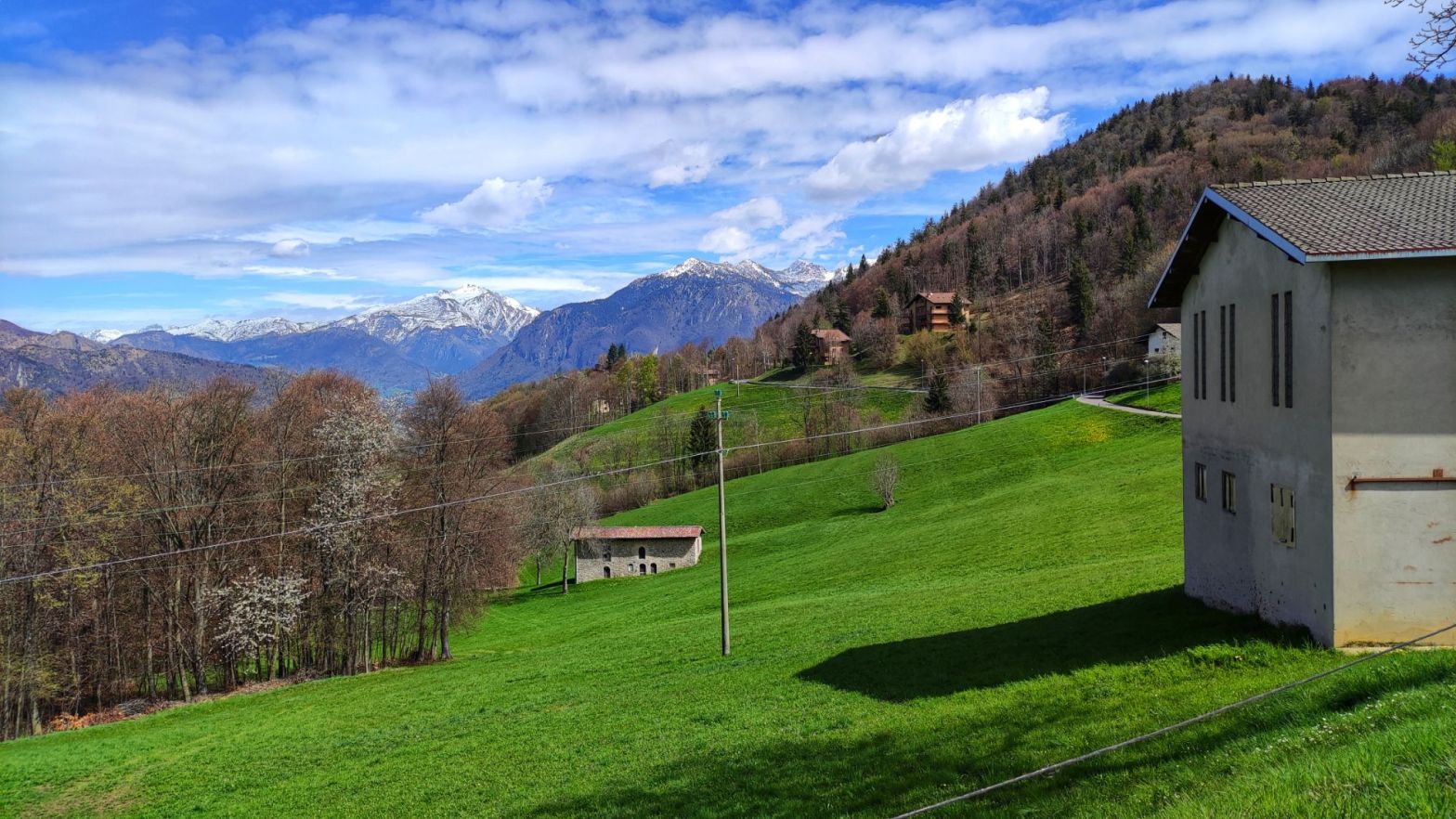
Steep climbs with double-digit gradients, long and sweet passes, lesser-known detours, but also medieval villages and tastings of local delicacies: welcome to Val Brembana.
Leggi l’articolo in italiano qui
Val Brembana isn’t so well-known abroad, yet nestled within the Milan-Bergamo area and easily reachable also via air, it has nothing to envy of Italy’s most famous cycling destinations.
Perhaps it’s because it’s right here on my doorstep and I can reach it with just 35 kilometers through gray, industrial areas, but I always loved it and cycled every corner. I took turns without knowing where they would lead, stopped to recharge at rustic, slightly old-fashioned trattorie, and visited every single water fountain looking for a bit of relief.
Nestled among the Orobie Prealps, my gateway to Val Brembana is the small road through Ubiale Clanezzo, that between castles and medieval bridges, leads to the Brembo River and the town of Zogno. From here the Paradise for mountain lovers, with an endless variety of climbs and routes to choose from.
Road cycling climbs in Val Brembana: the great Classics
- Passo San Marco
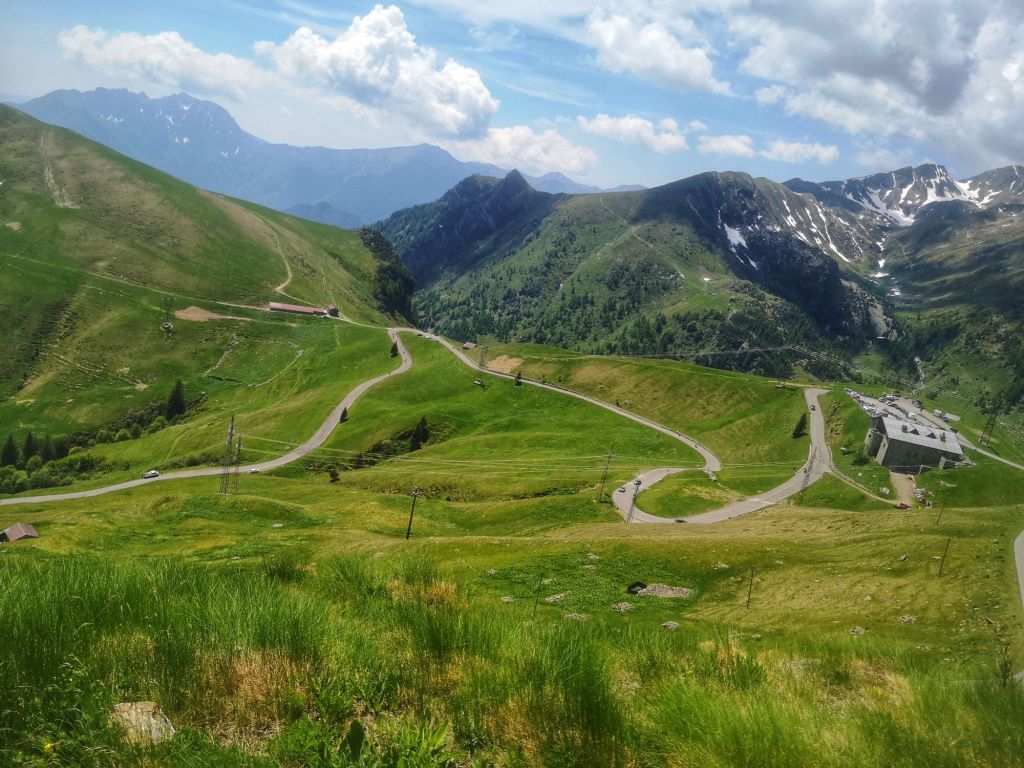
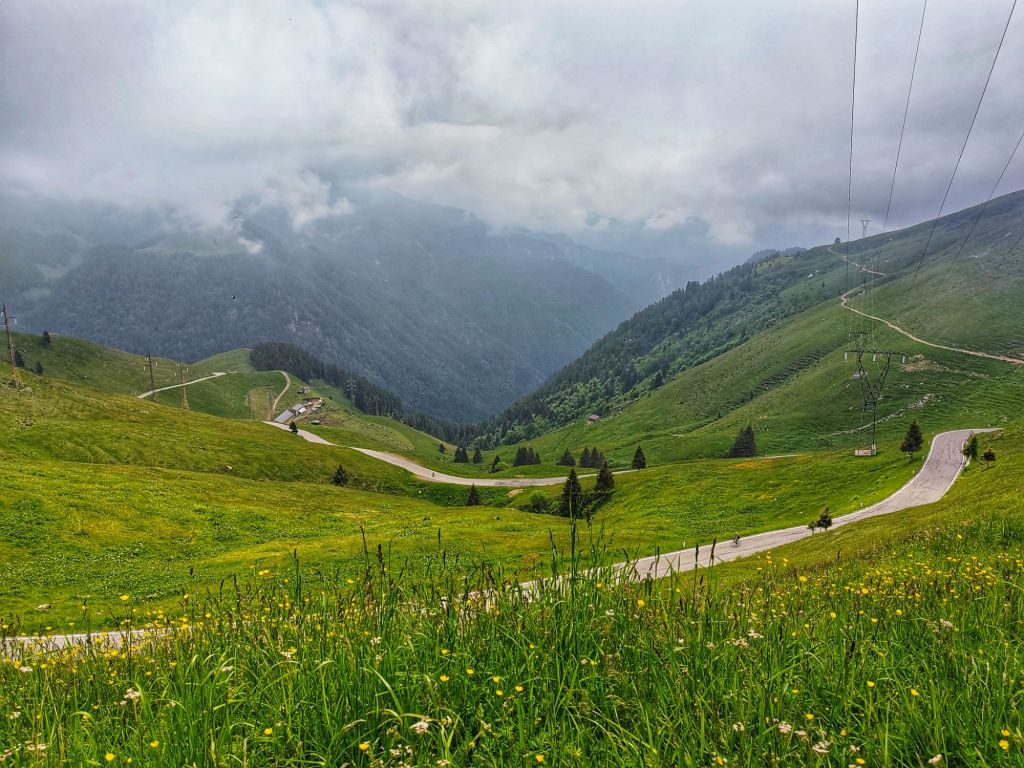
A trip to Val Brembana wouldn’t be complete without tackling the majestic Passo San Marco. At 1,992 meters above sea level, it marks the border between Val Brembana and Valtellina, a natural borden between casoncelli and pizzoccheri, Valcalepio wine and Inferno wine. Often referred to as a “Little Stelvio,” the climb from the Bergamo side starts in Olmo al Brembo (check out the Strava segment here) and is about 20 km long, with an average gradient of 7.2%.
The Passo San Marco is a challenging climb that requires good physical preparation, but it’s fairly consistent, with no sharp spike in the gradients. During peak season, the road can get quite busy with many motorcyclists, so be cautious, especially on the descent.
As part of a broader cycling promotion program, the pass is closed to traffic for at least two weekends every summer. The 2025 dates are not yet available, but keep an eye on this site for updates on pass closures.
This epic climb becomes increasingly scenic as you approach the summit. After reaching the peak, if you’ve got the time (and the legs) you can descend towards Morbegno to complete a loop, but be prepared for a serious test of endurance. Alternatively, you can stop for slice of crostata and descend on the same road (I always opt for this option).
2. Val Taleggio and Culmine di San Pietro
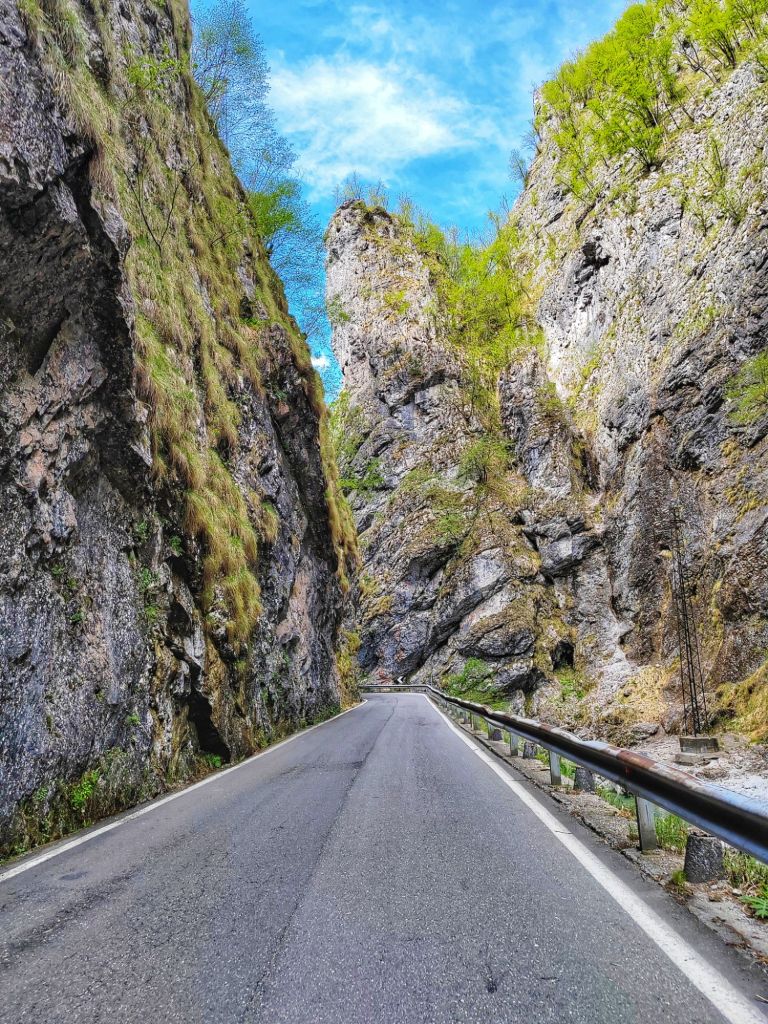
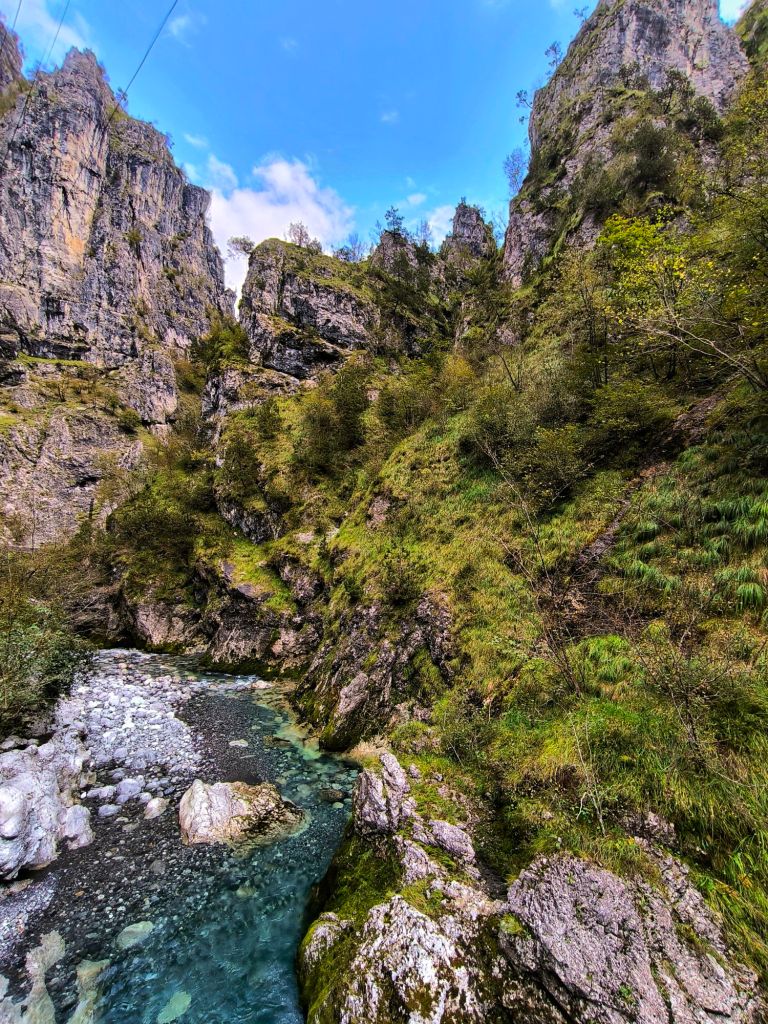
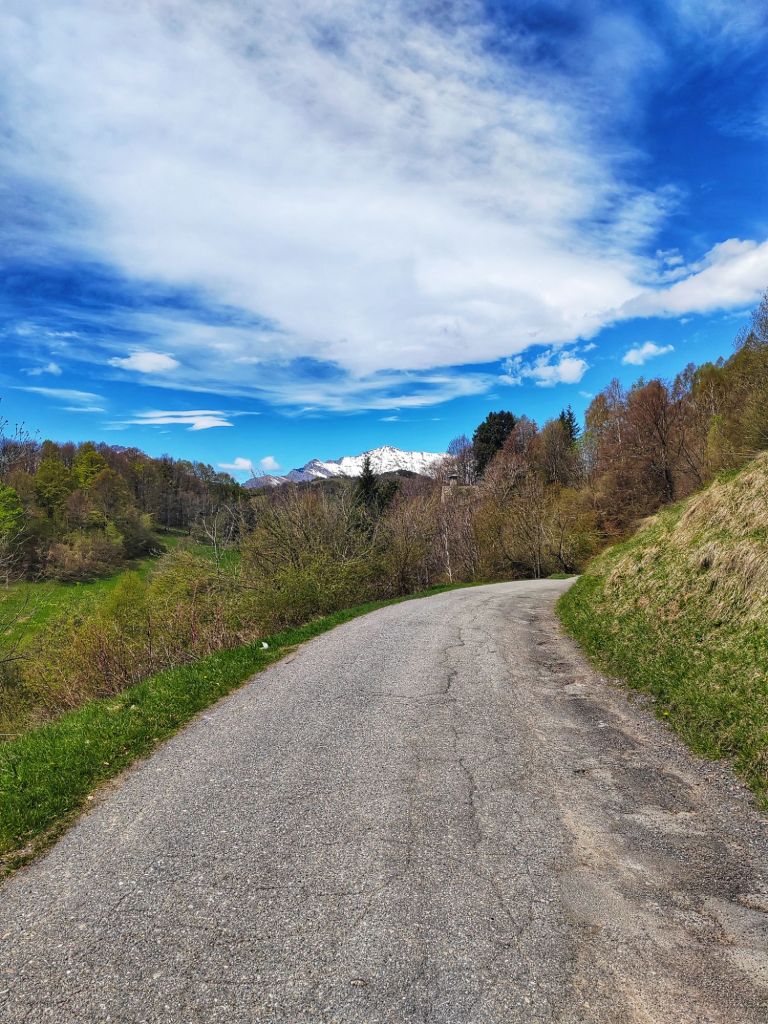
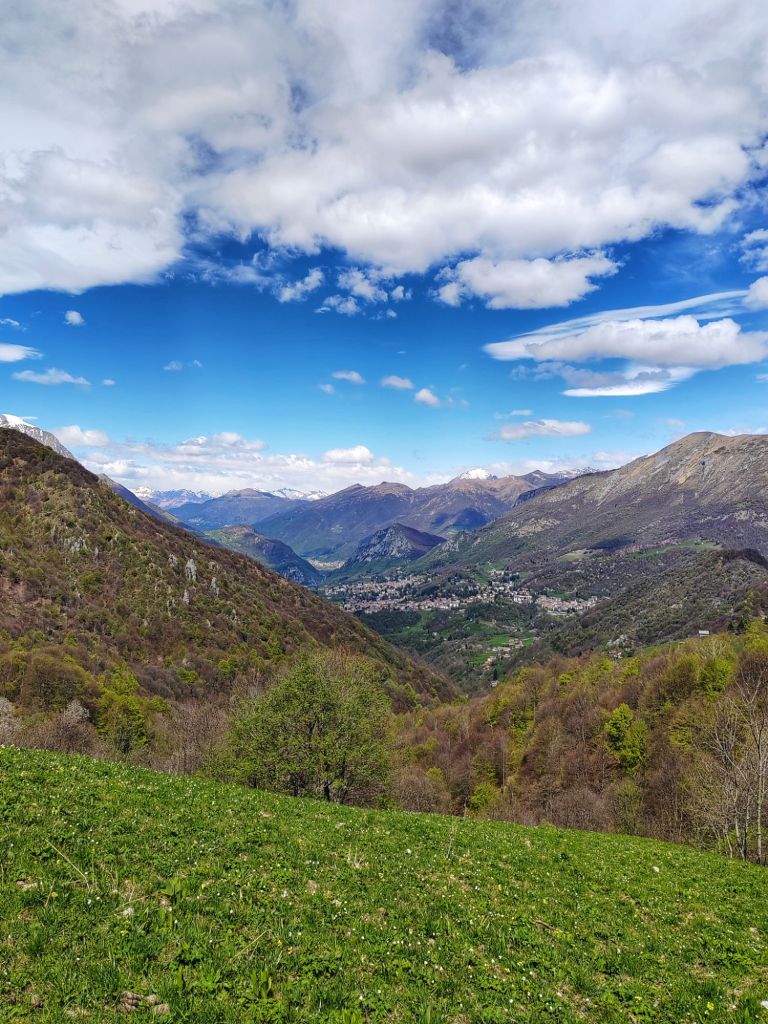
Further west, specifically in Val Taleggio, western branch of Val Brembana, lies the Culmine di San Pietro. At just 1,250 meters of altitude, it may not offer the majestic views of Passo San Marco, but it serves one of the most beautiful routes in the area. Starting in Zogno, the ride continues through San Pellegrino and San Giovanni Bianco, ascending the Val Taleggio, where a stop for a cheese sandwich is almost obligatory. Once in Olda, you take the poorly maintained road that climbs not so gently the Culmine. Once at the top, reward yourself with a slice of cake (or if you are bold enough a plate of polenta) at Rifugio Passo Culmine and go down from the Lecco side, passing through Ballabio and riding along the lake. You can find the Strava route here: starting from Ponte San Pietro, the ride is just under 100 km with a total elevation gain of 1,500 meters, all concentrated in the first half of the route.
3. The many Giro and Lombardia climbs from Zogno: Miragolo, Sant’Antonio Abbandonato, Dossena and Zambla
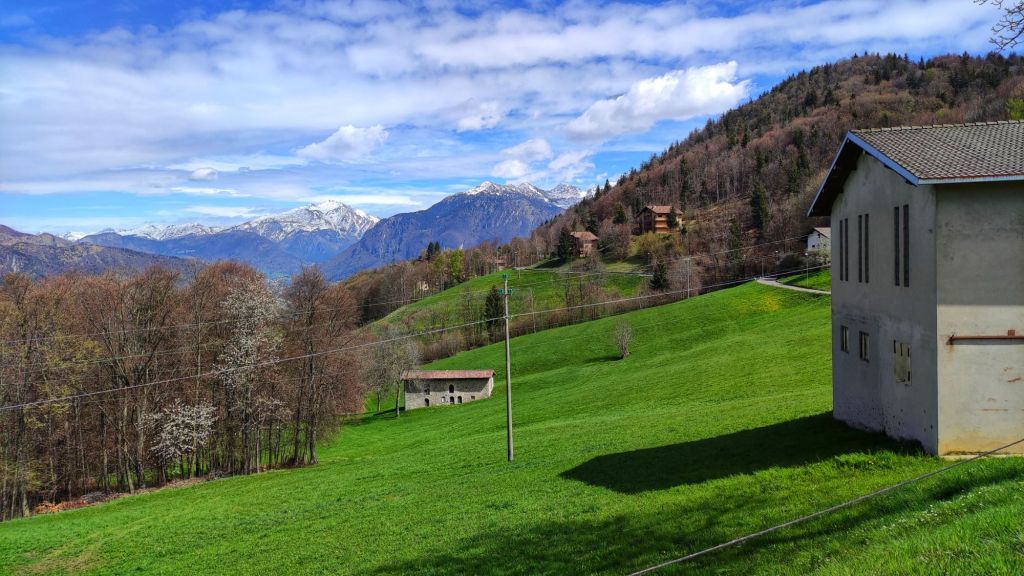
The climbs starting from Zogno, the closest Val Brembana access point for those coming from Milano and Bergamo, are numerous and fairly well-known, partly because they are occasionally featured in Giro d’Italia and Giro di Lombardia. Among them, the most remarkable ones are certainly Sant’Antonio Abbandonato, a climb that’s far from easy, with several stretches around 12-13%, Miragolo San Marco, and Dossena, from which you can descend back to San Pellegrino. For a more challenging ride, you can choose to tackle Dossena from San Pellegrino and continue towards Passo di Zambla (you can find the route here, though incomplete due to heavy rain).
While in Zogno, don’t miss a lunch at Ristorante La Torre, one of the best in the area or enjoy a plate of local cured meats and cheeses with polenta taragna at the Latteria Branzi (their panna cotta is also a must-try, you won’t regret it!)
Val Brembana: less known but outstanding climbs
- Baite di Mezzeno
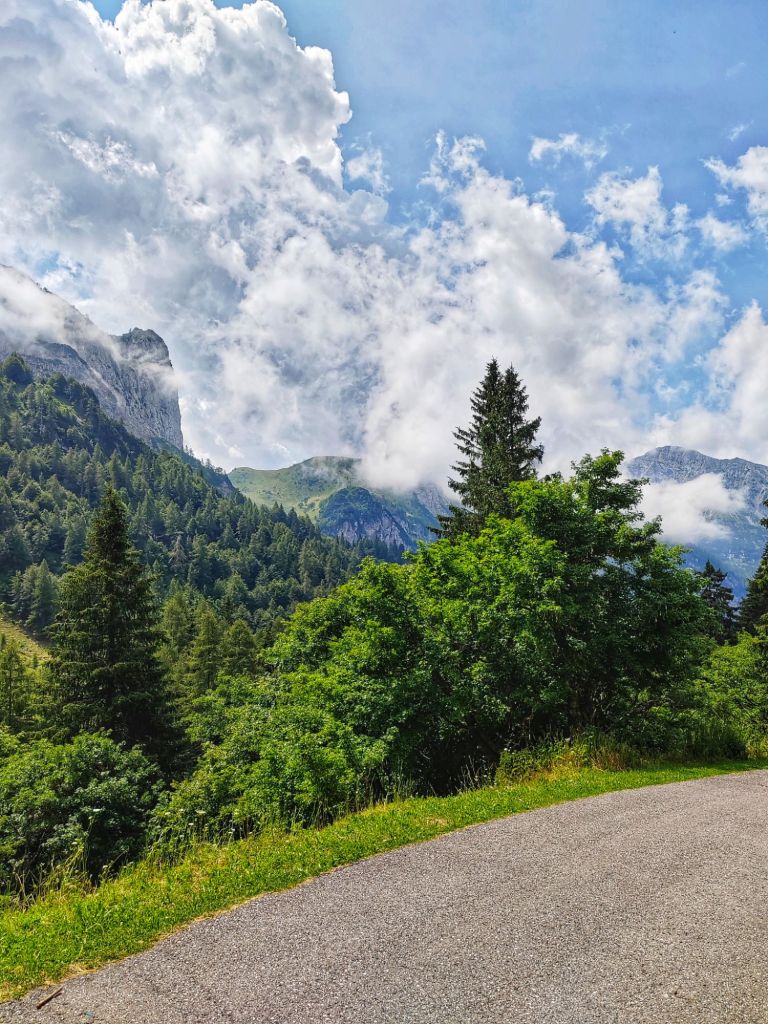
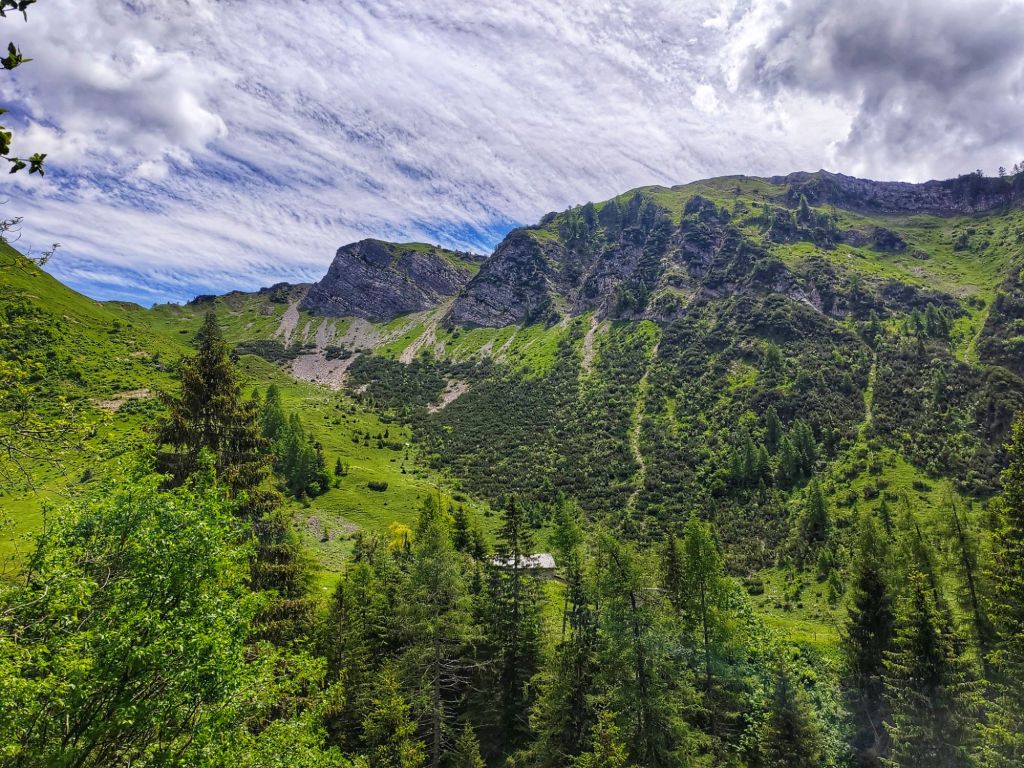
The climb to Baite di Mezzeno isn’t exactly easy and it is better not to underestimate it. The ascent starts in Lenna (here’s the Strava segment), but the elevation profile doesn’t do justice to the 15 kilometers of climbing, which alternates between flatter stretches and sections where it truly ramps up. The final kilometers, after the village of Roncobello, are the more challenging ones: here the road narrows and it crosses the pine forests, with several segments above 15%.
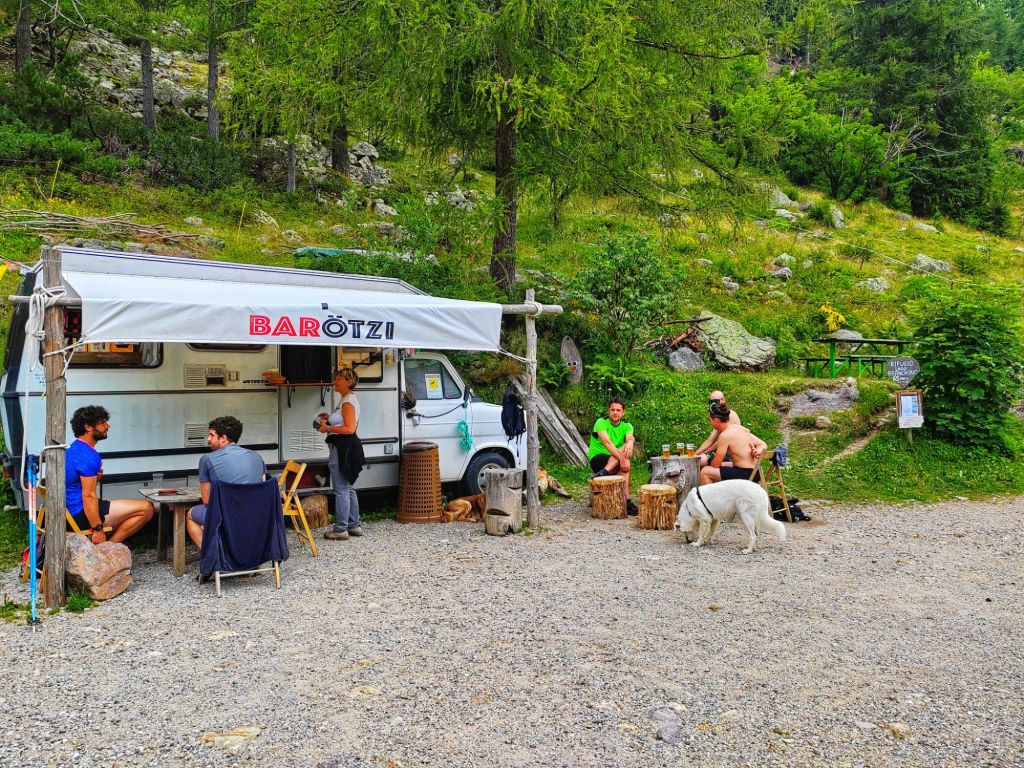
The climb is stunning, only slightly busy on weekends when many drive up to start the hike towards the beautiful Laghi Gemelli. At the top, you will be greeted by a breathtaking view of the Orobie mountains, a small trailer selling coffee and drinks (likely accompanied by a good dose of grappa) and a fountain with fresh water.
2. Monte Avaro
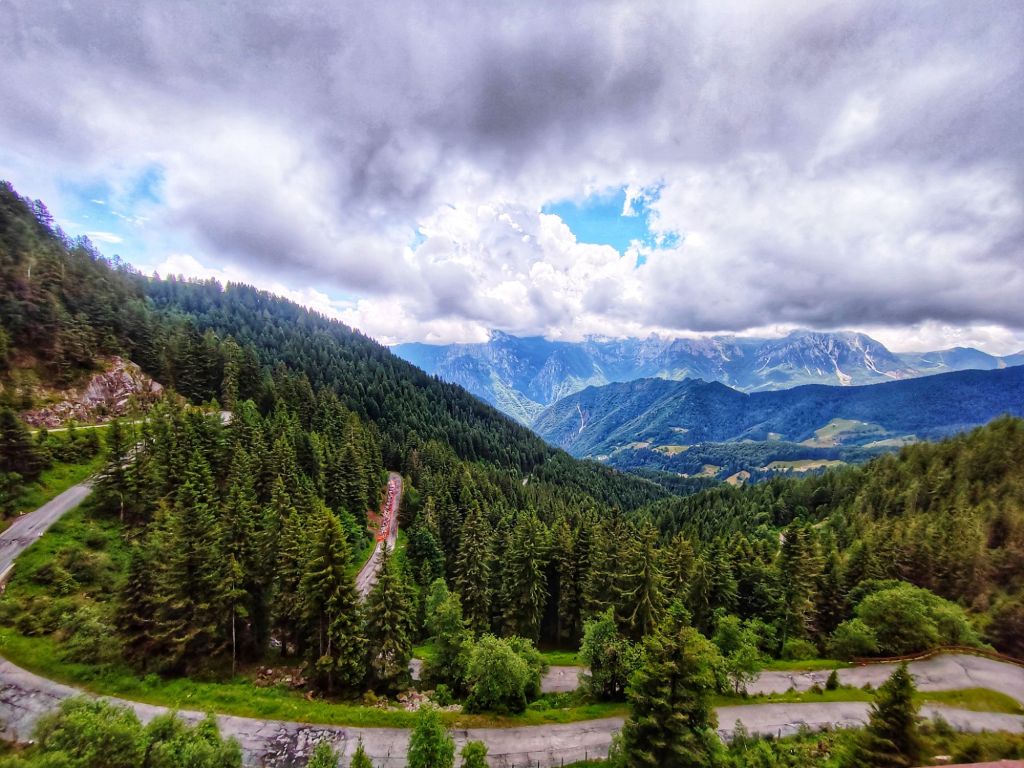
The climb to Monte Avaro, along with Baite di Mezzeno, is my favorite one in the area. It is another ascent that is better not to be underestimated, with the road starting to climb right from Piazza Brembana, becoming more challenging after Olmo al Brembo. From Olmo, the climb measures 15 kilometers at an average gradient of 7.2% (or 19 kilometers at 6.1% if counting from Piazza Brembana). The gradients get tougher in the second half, often hitting 15% in several segments.
While small improvements are made to the asphalt every year, the road surface remains rough in many spots. However, the traffic is almost non-existent, allowing you to ride undisturbed, immersed in the peaceful mountain surroundings.
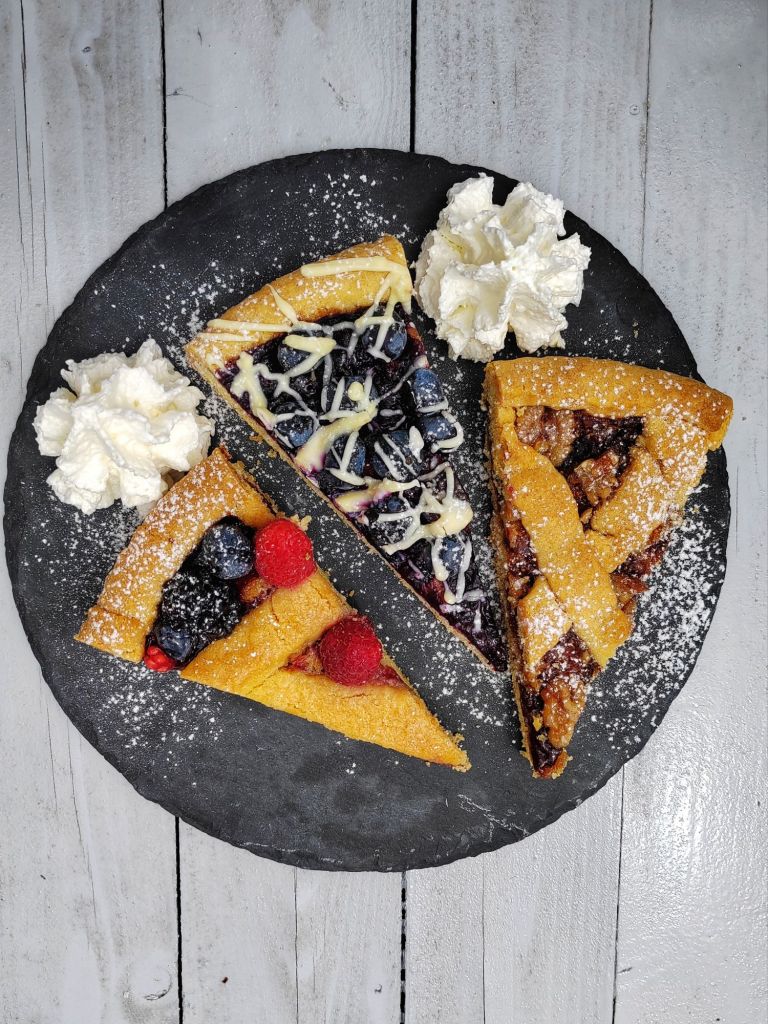
At the summit, the view opens up to reveal a breathtaking mountain scenery. Several restaurants await, but the must-visit is Chiosco Al Ciar: a small chalet offering local products and the best homemade cakes in the whole valley. Behind the chalet, you can find a simple terrace with a few tables and stools, perfect for enjoying the spectacular view.
3. Madonna del Perello (Sambusita)
A climb unfamiliar also to many locals, the outsider of the list, that you can find partly on Strava as Algua – Sambusita. The ascent to the Madonna del Perello Sanctuary is a medium length climb (around 7,5 km) and the only one of its kind on this list. The road starts rather gently, but becomes tough towards the end, where it rarely drops below 10%. From Algua, once you reach the small town of Sambusita, you continue towards La Passata Restaurant, from where you can either reach the Sanctuary or take the road that leads to Selvino. Alternatively, from Sambusita, you can take the detour towards Miragolo, which, after some ups and downs, leads you back down towards Zogno.
Cycling in Val Brembana: a few alternatives for a more relaxed ride and some must-do excursions
Val Brembana is also suitable for who prefers a gentler, slower cycling: the Val Brembana bike path follows the old railway line and it connects Zogno with Piazza Brembana, passing through ancient tunnels and stone bridges. The route is just over 20 kilometers long and suitable for everyone.
Not only bikes: the famous San Pellegrino area, known worldwide for the green glass bottles of water that make the table of every posh restaurant, offers an ideal place for some relax, with its spas and beautiful Art Nouveau buildings, including the very AccidentallyWesAnderson Grand Hotel of San Pellegrino.
A must-do visit is the one to Cornello dei Tasso, a medieval village on the mountain that was recognized as one of the most beautiful villages in Italy.
For those who love heights, the new Ponte del Sole in Dossena is worth a visit: it is the longest Tibetan bridge in the world, measuring an impressive 505 meters. Also in Dossena, a visit to the ancient mines is possible.
What to eat in Val Brembana
The Val Brembana gastronomy is rich and full of flavor, often revolving around cheese and polenta, some must-try:
- Stuffed pasta, including the famous Casoncelli alla Bergamasca (with meat) and Scarpinocc (the vegetarian version of Casoncelli), but also the lesser-known Bertù, filled with sausage and cheese.
- Polenta, especially the classic polenta taragna, made with corn and buckwheat and enriched with cheese and butter.
- Meat dishes, such as the nosècc (cabbage rolls stuffed with meat) and Bergamo-style rabbit.
- Cheese, offering a wide selection: Branzi, Strachitunt, Formai de Mut, Taleggio, Nero and Rosso Imperiale, as well as many goat cheeses and the must-try Bésse de Brans (grilled Branzi curd pieces), as well as cured meats, with the standout being salame.
- To accompany the meals, a glass of Valcalepio wine, one of the many herbal liqueurs, or a beer from the growing number of local microbreweries.
 Ginevra Rides & Travels