Three amazing sportives that are worth a trip to Italy, some secrets to survive them and a few extra tips to make the best out of your little holiday

I must make a premise: I will be highly banal in my top 3 must-do Italian sportives. If you are looking for some unknown race, you won’t find it here. What you will find are three sportives, or Granfondo, how we call them in Italy, that are absolutely worth a long or short trip to Italy and that will leave you nice memories and little stories to tell.
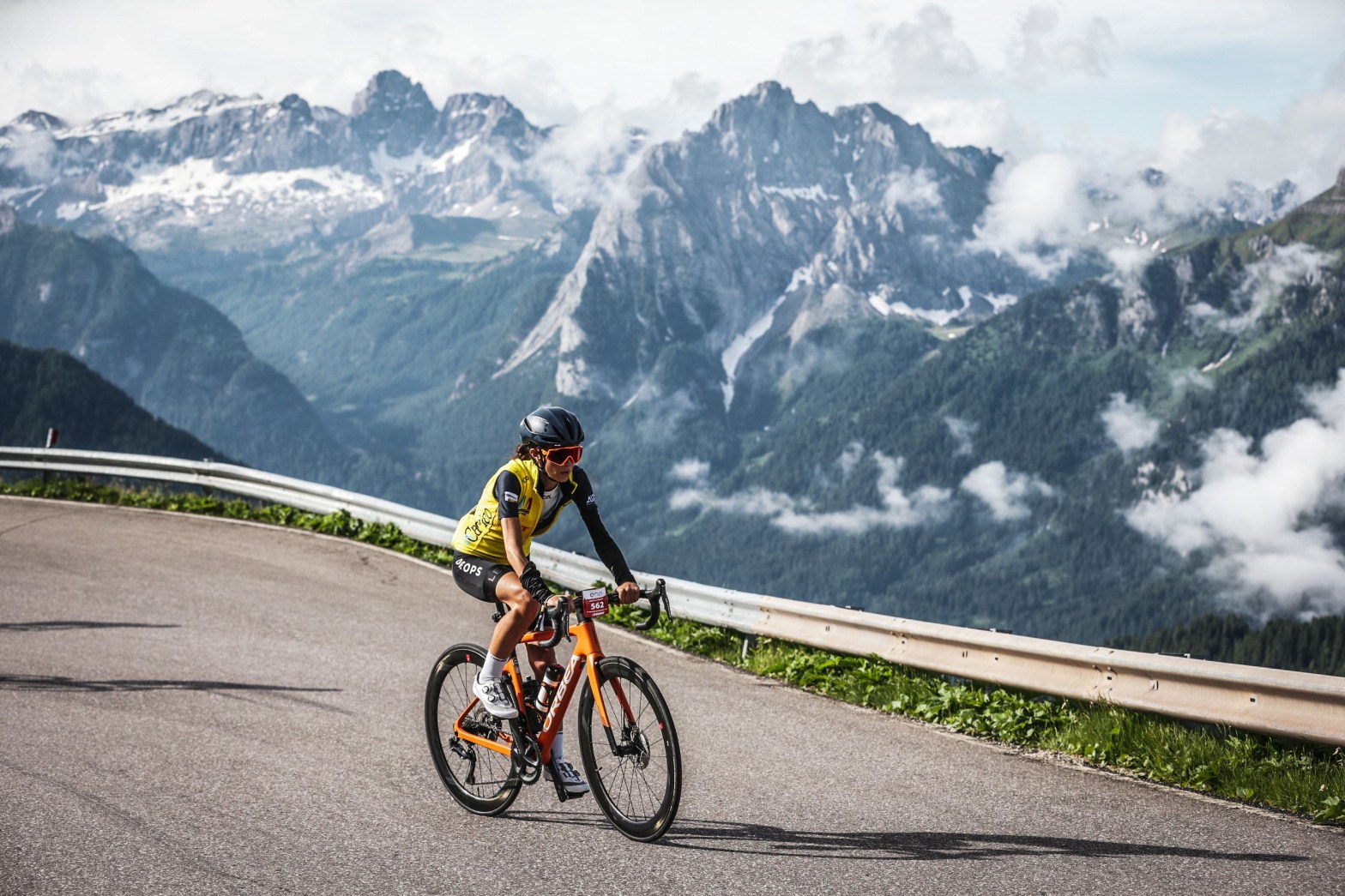
The first pick is also the most famous one: the one and only Maratona dles Dolomites. Dolomites are unmatchable: riding through them is a dream and riding through them surrounded by thousands of cycling lovers without any traffic it will be the best day on your bike.
I had the chance to ride the Maratona last year. The ride has three routes: the Sellaronda, that is the easier one (even if it is not that easy with only 55 kilometers but 1780 meters of climbing), the Medium route with 3130 meters of climbing in 106 kilometers featuring the Sellaronda route plus a double climb of Campolongo and Falzarego and then the Monster, the long route, that adds the Giau, with a total 4230 meters of climbing in only 138 kilometers.
Now I am not a number fan, but these numbers are pretty easy to understand: the Maratona is challenging. It is far from impossible, but unthinkable to ride without a decent preparation to long climbs or longer efforts. It’s not like to complete it you have to undergo a specific training program, but if you want to enjoy its beauty, you should prepare your body a bit, and then it will be only pleasure.
I decided to take the Medium route and I completed it in 5 hours, that I consider as a decent performance.
Many of you already know their business pretty much (I see you all with your training programs and FTP tests and strict diets!), for the others newer to cycling or less into competition, the best advice I can give you about Maratona is one: take it easy.
Trust me and take it easy. At the start everyone will be rushing and they will climb Campolongo with the same grit of a Tour de France contender, let them go. Hundreds and hundreds of people will overtake you, let them go and stay in your comfort zone, or even below that. You will overtake them again later. Don’t dare to give too much, stay in you Z3, look at the scenery and appreciate the beauty of the Dolomites , the ride is too long and you must take it easy. Let the crazy horses ride away and follow my advice, at the end you will do way better than expected!
A really brief overview of the route:
- Campolongo – short and easy, the only difficult part is managing to take it easy
- Pordoi – long but harmless as you still have fresh legs
- Sella and Gardena – not a threat, they will be over before you realize it
- Campolongo x2 is fine, you just wonder “why again?”, finding a small group to follow will make it better
- From Campolongo to Falzarego (or Giau, depending if you take the medium or long route) make sure to find some wheels to follow, so you can even recover a bit (just wish I had found some too)
- Falzarego – long, but if you took it easy at the start you won’t have issues here
- Giau – I have a bad news: it is a demanding one, can’t encourage you on this, but ehi it will be over in a bit less than 10 kilometres
- Mur del Giat – the last effort, looks scarier than it is
- The END
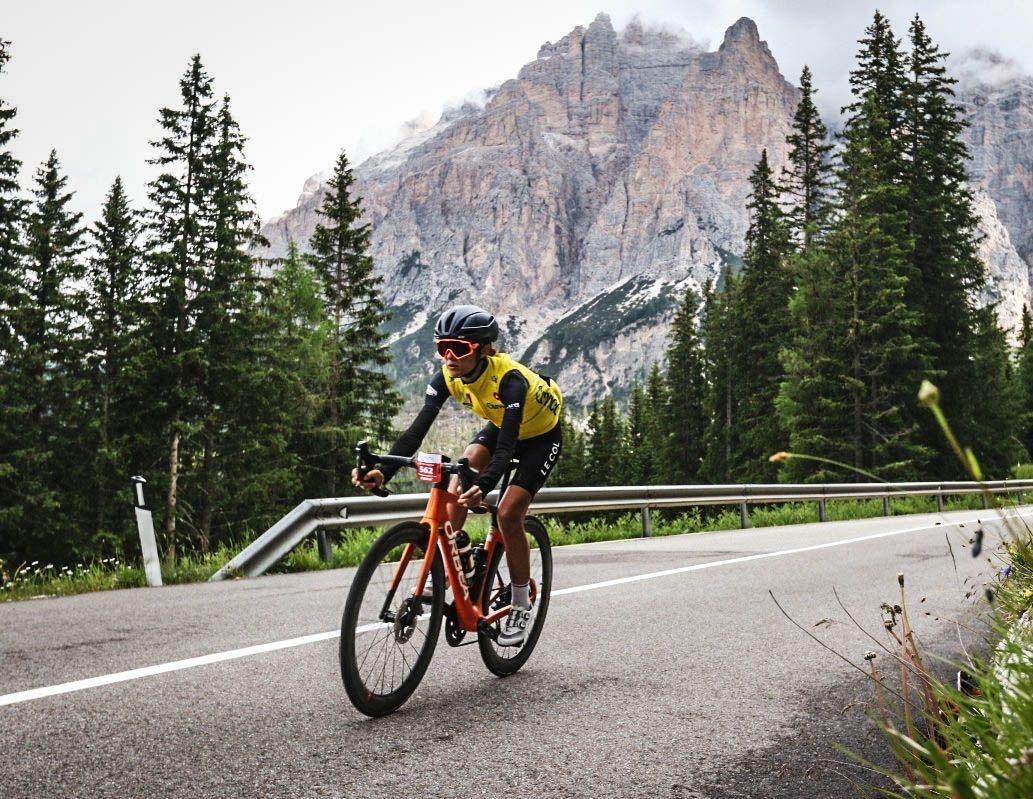
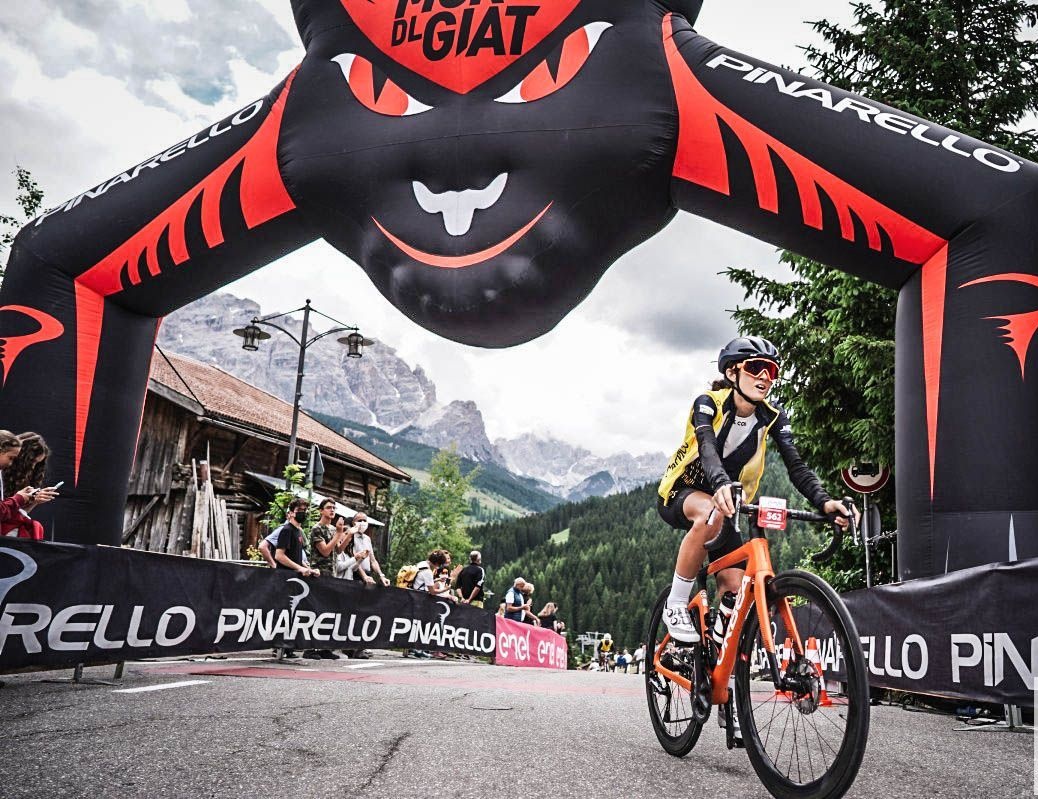
The organization is amazing and as I heard someone saying “riding the maratona is like going to a luxury hotel after a life spent in hostels”, there are also many collateral events and it is just like being at a huge cycling festival.
As you drove all the way to Alta Badia, just know that the area is an absolute gem for some holidays too, but I am sure you already know it. Some brief extra tips on what to do beyond the Maratona:
- Hike Piz Boè and Seceda
- Discover the small lake Lech Da Sompunt and the Pisciadù waterfalls
- Ride at least some of the remaining climbs like the fearsome Fedaia from Malga Ciapela, its majesty Tre Cime di Lavaredo, Passo delle Erbe and so many mores!
- Discover the local food because you can’t leave without eating Canederli (bread dumplings in broth or served with butter), Turtres (spinach fritters) and apple fritters
Granfondo Strade Bianche
There are three reasons Granfondo Strade Bianche in an absolute must: Tuscan landscapes, Sterrato in all its grace and the finishing line in Piazza del Campo.
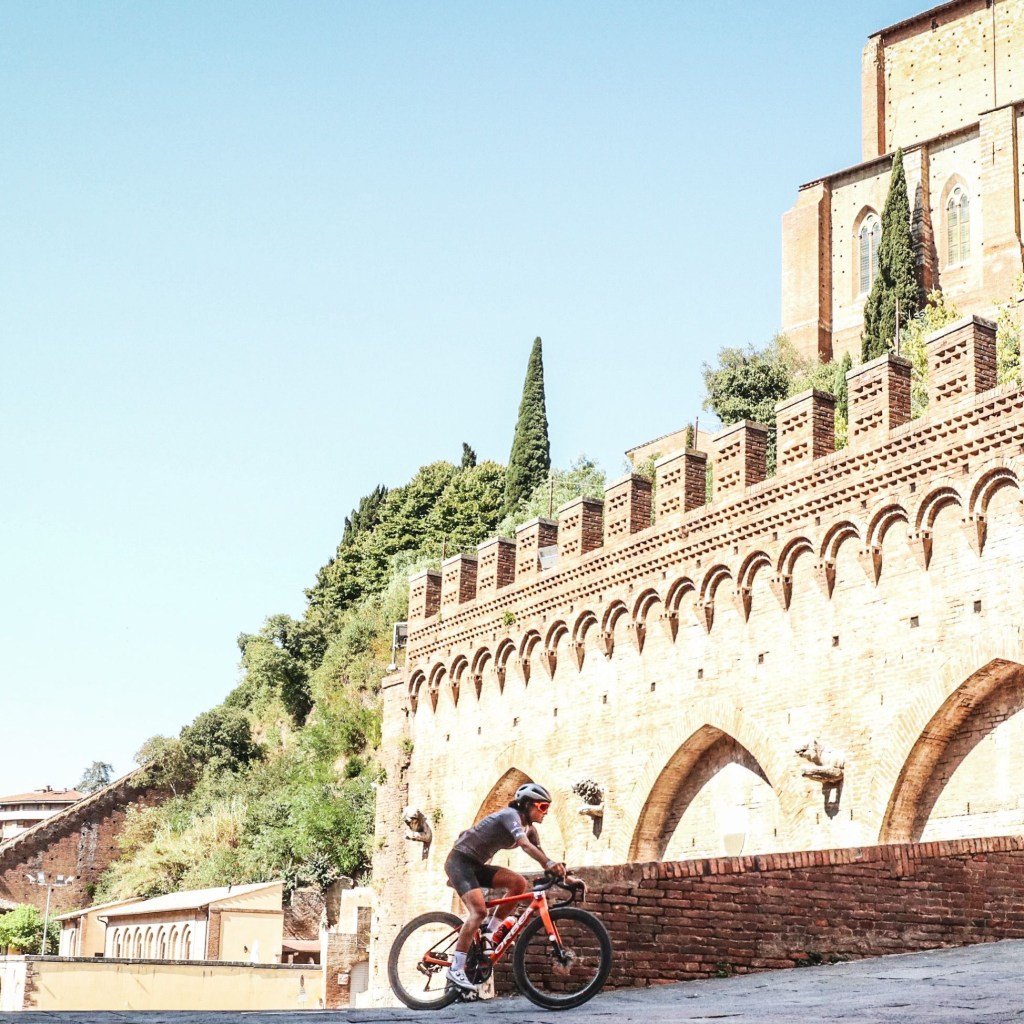
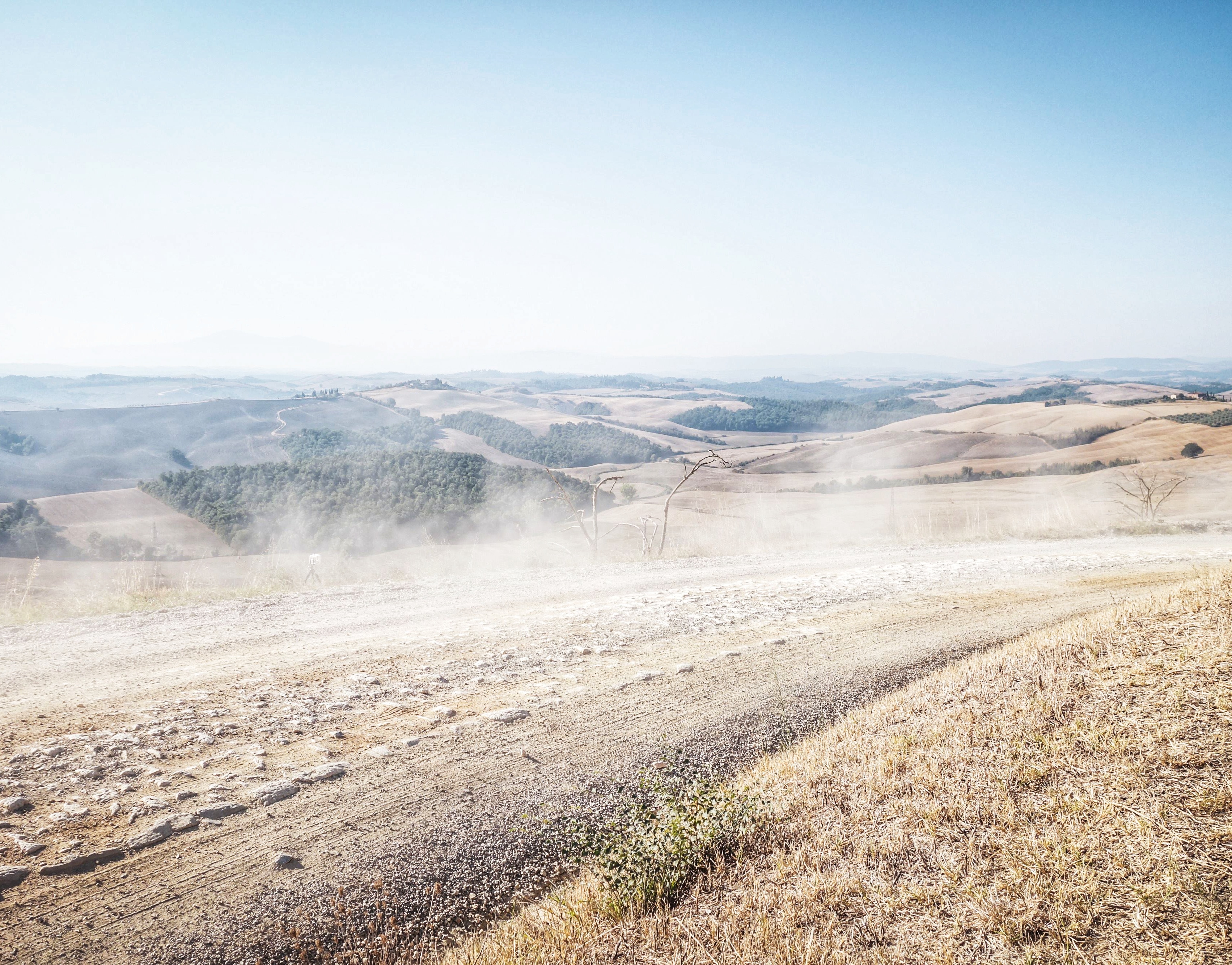
Granfondo Strade Bianche was my first love, I have always enjoyed dust and powder action and the rough up & downs, that’s my type of route. I live in a flat area, the nearest mountains are 40 kilometers away, therefore short rides are always flat and to make them more interesting I have a long story of off-road escapades and strappetti hunting. And I guess this is the reason I was never into gravel, because I have always ridden in different conditions on the same road bike and on the same slim tires, and on the same wheels, thing take makes many cringe but if you buy something nice and expensive you better make the best out of it. I will never be one of those buying an expensive upgrade just to leave it in the garage for the “big occasions”.
Back to the topic: the first time I rode Granfondo Strade Bianche, it took place the day after the pro race and the gravel sectors were much smoother. Last year due to the pandemic the ride was postponed, there was no pro race the day before and that meant the gravel sectors were way rougher and eaten by the summer sun.
The route isn’t too challenging, there are demanding gradients but the climbs are short, nothing you can’t handle. What makes the sportive challenging is the sterrato, and to be more precise: riding the sterrato surrounded by thousands of amateurs. It just means you must maintain a certain level of concentration, an eye to the road and the other to make sure no one is crashing around you.
The first half of the route, until you hit the first gravel sectors, is faster than you can expect and I would suggest finding a big group and sticking in there to make it even faster. The difficult part comes in the second half and here I would suggest trying a way to isolate and have your own riding space, to be safe from the others mistakes and save them from yours.
Flats are the biggest threat at Strade Bianche, I was lucky, twice. I am not particularly heavy so it kinda helps but having good quality tires can make the difference. The first time I used the Schwalbe Durano Plus, they are incredibly resilient but also a bit square. Last year I used 26 Pirelli P Zero and to me it was the winning choice, trustable off-road and not slow on the smooth tarmac. As I mentioned I am not new to sterrato, powder and pebbles, so I never considered mounting thicker tires, but if you are newer to this terrain or you don’t feel comfortable on it, opt for bigger ones, no one is going to judge you, except me. Kidding! 🙂
Now I would like to tell you about the beauty of the Tuscan landscapes, but I won’t, because they don’t need me babbling about them and the best way to understand how beautiful that land is, is going there and admire it with a glass of red wine in one hand and the bottle in the other one.
What I will spend a few words about is the finishing part of the Grandfondo. The last couple of kilometers (if you ever watched the pro race you are already familiar with them) are the best last kilometers a sportive can have and to me only Paris-Roubaix Challenge has a more emotional epilogue.
At Strade Bianche you will have to find the energies to face, or better climb, the last diabolic strappo, Santa Caterina climb. From the bottom it looks like a stairway to hell and it kinda is. The gradients are higher than they should be and being tired won’t help. What does help is knowing is that it is one of the rare cases in which “dopo la curva spiana” (in Italy one of the most common things you can hear while riding uphill is people telling you “go go, don’t worry, after the turn the climb is over” even if you are at the first hairpin of the Stelvio). Anyway, the climb is hellish, but after the turn on the right it is over, and then it is all down till the finishing line, that is only a kilometre away in the outstanding Piazza del Campo.
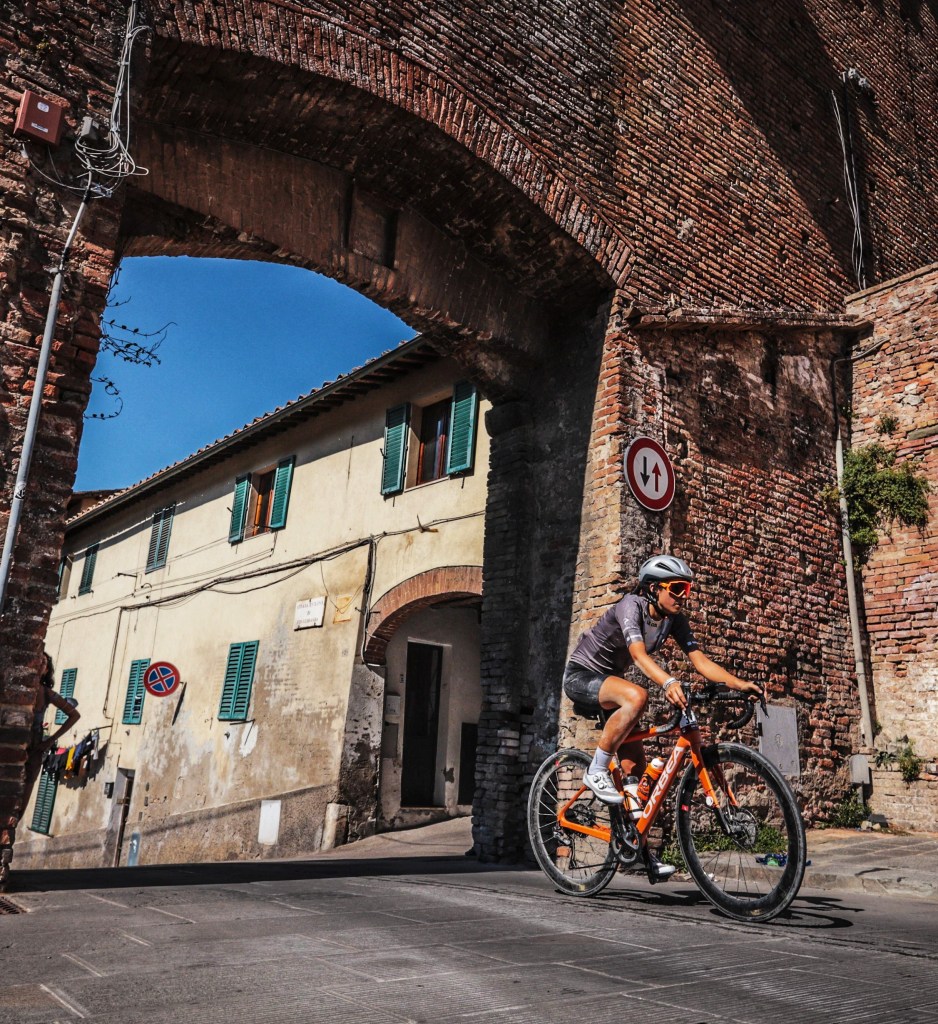
Piazza del Campo is an indescribable work of art, with its peculiar clamshell shape, its colour palette and Medioeval beauty. Squint and breath, your ride is done and literally dusted, time to appreciate you being here.
One of the main perks of riding Granfondo Strade Bianche is using it as an excuse to explore the area and have a little holiday in Tuscany, some extra tips for a short break in the area:
- Visit Siena, of course
- Pay a visit to San Gimignano, Monteriggioni, Pienza, Montepulciano and Montalcino and enjoy some relax on the hills
- Eat local: red wine, pici con ragù di cinghiale (pasta with boar sauce), Panforte (dessert of fruits and nuts), cured meat & cheese
Giro di Lombardia
The main reason my third pick is Granfondo Giro di Lombardia it is mainly because it is my home race. Not properly my home roads, but my “a ride away from home” roads, so I feel kinda attached to them. Not only, because the Lombardia features two of the must-do climbs every cycling addict must do at least once in a lifetime: the one and only Muro di Sormano and the Sanctuary of the cyclists, Madonna del Ghisallo. This is your chance to ride them and check them off from your “must do climbs” list.
The climb that brings to the Muro is a really standard one, without any remarkable highlight, just that at a certain point you abandon the main road and take a small path on the left. There starts the Muro, the Emperor of the double digit gradients roads.
Muro di Sormano is only 1,7 kilometres long. 1,7 kilometres on a bike might seem a rather small number, but if you have some experience with bikes, you know small numbers always hide something. The muro hides 280 meters of altitude at an average of 15,5% with a maximum gradient peaking at 27%. It could be worse, it could be raining. Indeed last time I climbed it, it was raining and there were dead leaves making the road as slippery as it could get.
I am not sure who first thought riding bikes up there was a good idea, but it wasn’t. The most demanding parts are two: one is just after the beginning, one is strategically located half way up. But don’t get me wrong, on a road with a 15,5% average gradient also the less demanding bits are still very demanding.
All my recent road bikes mounted 50/34 11/30, but if you ask me, a 32 would be very welcomed here. Normal people approach the Muro with a 34-30, of course, but I am not a standard one and my personal strategy is to approach it on the 34-28, saving the 30 for the steepest segment (the one in the middle). The chain is never happy with this choice, but it survives. Needless to say this strategy doesn’t give you any specific advantage, but I benefit from knowing I still have a small one to ride. I also never stand up on the pedals, but that is not part of a strategy, it is just my bottom being glued to the saddle, always. The only strategy you can benefit from is one: try to push every watt you have.
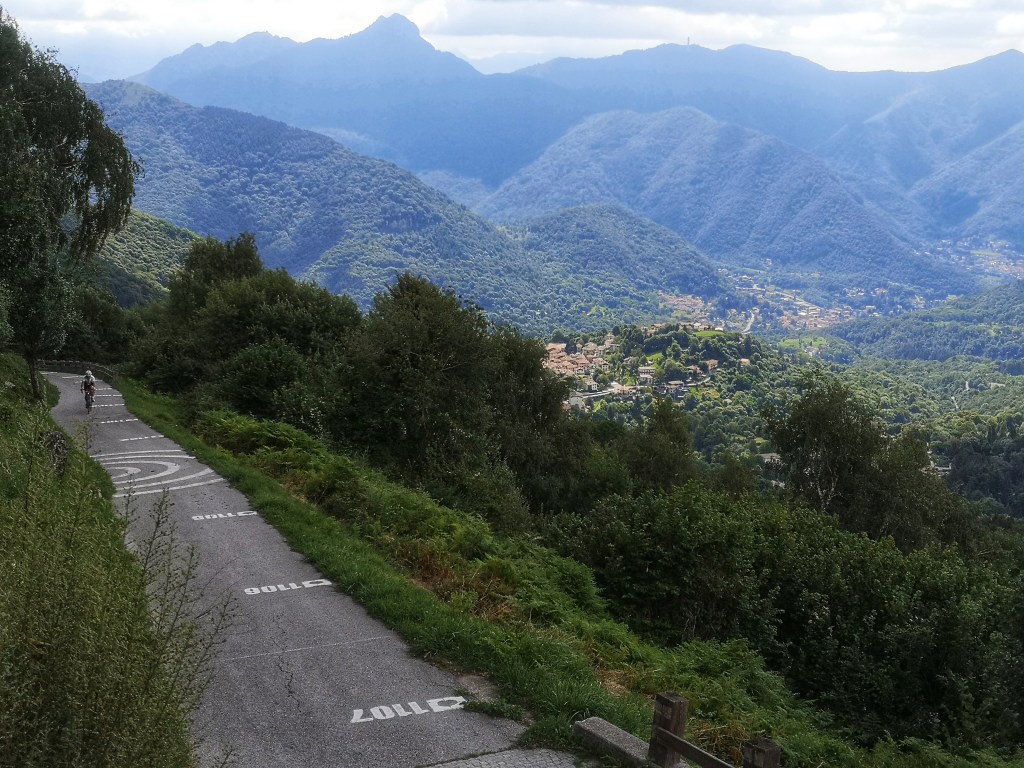
After the Muro you will be rewarded with a nice and fast descent and from the stunning views that bring you to Bellagio, where the Ghisallo starts. The climb isn’t too difficult, but your legs will probably be a bit heavy from the Sormano effort. On the top a little church, that is said to protect cyclists, full of cycling memorabilia that will have your eyes sparkling. My favourite piece: Fausto Coppi bike, whenever I climb Ghisallo I pay it a visit and have a word with it. My final work at High School was a paper about Italy post WW II narrated through episodes of Coppi life and career: from the solo win at Milano – Sanremo 1946, symbol of an Italy that struggling was making its way out of the dark moments of the war, till his death in 1960, when Italians were changing and starting to ride Vespa instead of Bianchi going through the epic duels with Bartali, representing the two souls of that Italy, but this is another story and hopefully I will find time to tell you about it.
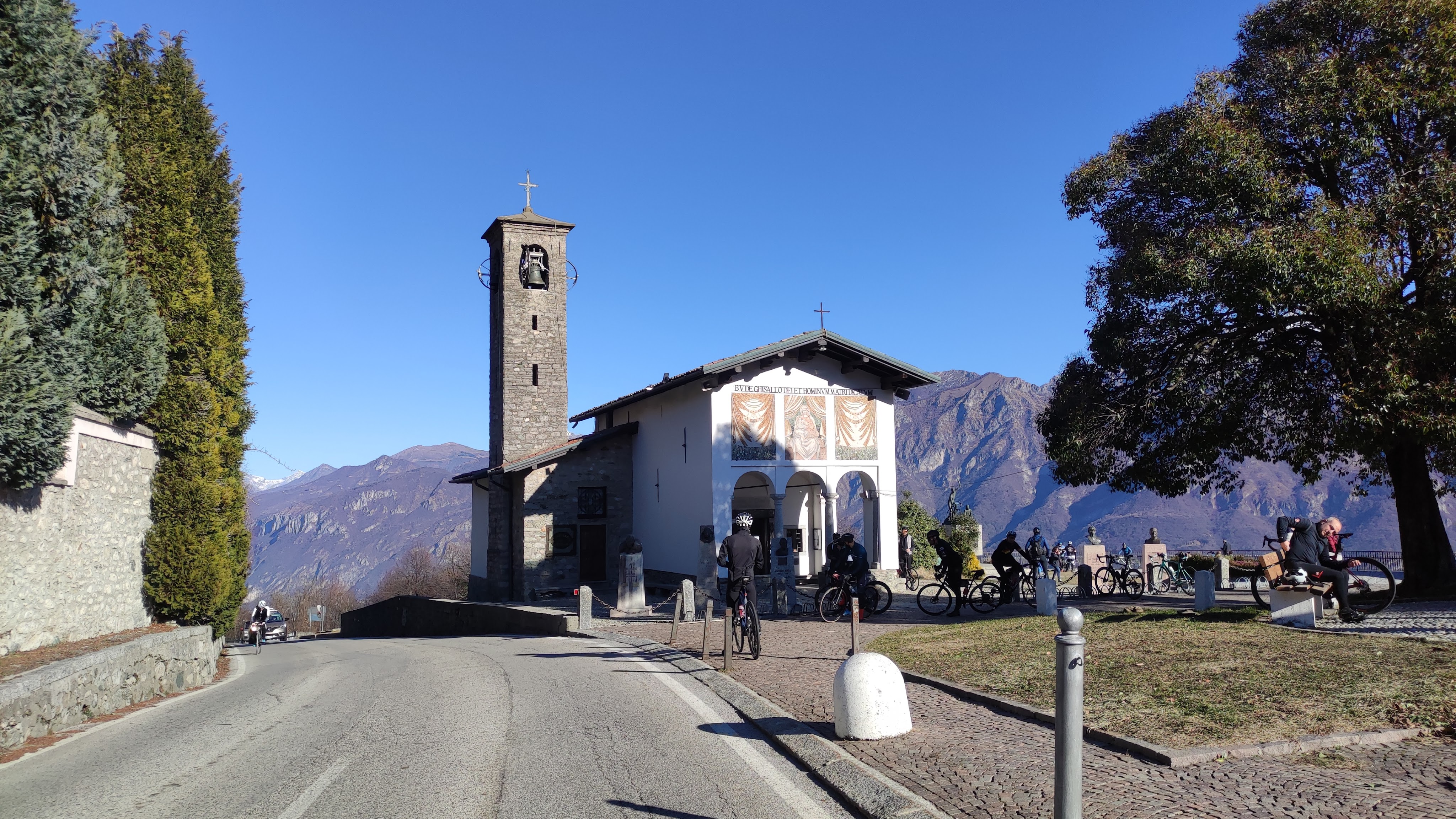
On the left of the church you find the Cycling Museum, you won’t have time to visit it during the Granfondo, but I highly reccomend you to come back later and pay it a visit.
Back to the sportive, remember to spare a few energy for the last 20 kilometres, where there are some up and downs put there with the only purpose to annoy you.
By the way, if you aren’t in the mood for climbing the Muro, you can skip it and arrive at the top using the regular road, that is longer and more gentle. The organization allows both options, it is up to you and your legs.
Extra Tips: Lecco area is really nice for a short relaxing break, but if you are planning to ride the whole time, you can have a look at my map collecting the local climbs here
What was the best Sportive you have ever ridden? Let me know, I am looking for some inspiration! 🙂
 Ginevra Rides & Travels